Free Car Grants for Single Mothers in 2026 (Updated List)
Car grants for single mothers in 2026: free donated vehicles, a $628 car in NC, a $950 one in MD. Nearly every program needs a local agency referral first.

 Click to zoom
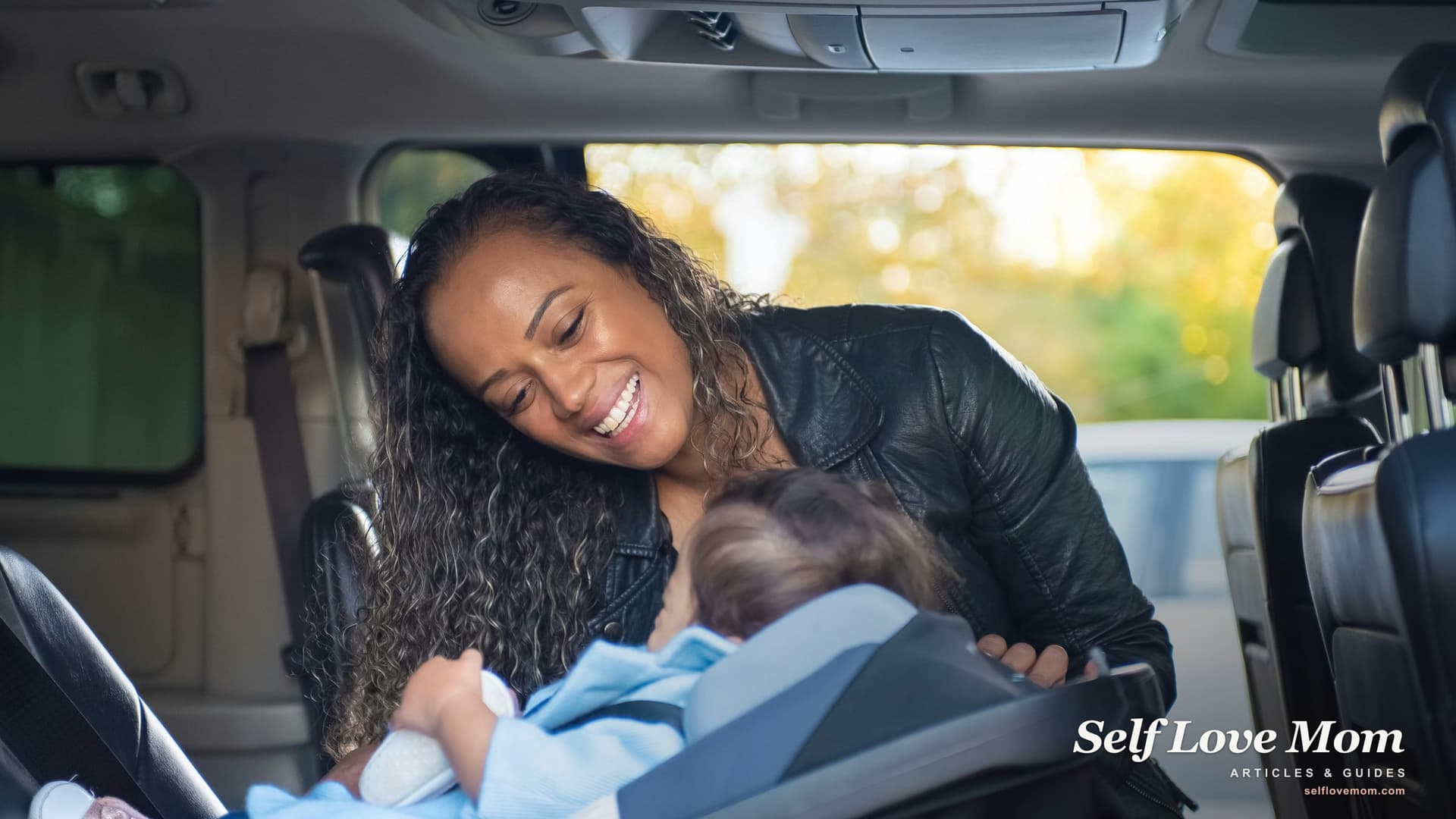
A smiling single mother leans into the back seat of her car to settle her baby into a car seat on a sunlit afternoon, the kind of reliable transportation single moms work to secure through car grant programs.
For a single mom, a working car is not a convenience. It is the difference between holding a flexible side hustle and losing it, between getting your kid to daycare and missing the rent cutoff, between an ER visit and a 911 call. And it is also the single biggest line item most single-mom budgets cannot absorb on their own.
Car grants for single mothers exist precisely because the people who need a vehicle most are the people least able to walk into a dealership. This guide covers every active national program in 2026, what each one actually pays, who qualifies, and the order you should apply in to maximize your odds. Every figure below was checked against the operating nonprofit's own eligibility page, most recently in September 2026.
| Headline figure | What it covers | Source |
|---|---|---|
| $90M | lifetime vehicle value awarded to families and veterans by 1-800-Charity Cars | 1-800-Charity Cars, 2026 |
| $950 | program fee for a refurbished Vehicles for Change car, plus title, registration and tag fees | Vehicles for Change, 2026 |
| $628 | full purchase price of a donated car through Working Wheels in western North Carolina | Working Wheels, 2026 |
What you need to know first
- Car grants for single mothers fall into four buckets, free donated vehicles, low-cost refurbished cars with payment plans, low-interest loans for purchase, and repair grants for the car you already have
- Most programs require verifiable employment or a job offer, the vehicle is positioned as the bridge between unemployment and stable work, not as a stand-alone benefit
- Income limits range from below poverty line up to 250% FPL depending on the program, so do not assume you "earn too much" without checking the specific cap
- Most car programs will not take your application directly, they only accept referrals from a partner agency, so getting connected locally is step one, not a backup plan
- Repair grants are dramatically more available than replacement grants, if your current car needs a $1,500 transmission, fix-it programs are easier to access than getting a new vehicle
Free donated-vehicle programs (national)
The most-cited free car program for single moms is 1-800-Charity Cars, also known as Free Charity Cars. The nonprofit takes donated vehicles from individuals and corporate partners, then matches them to people who qualify. That includes single-parent households, families moving off public assistance, veterans, military families, and survivors of domestic violence. The homepage now puts the lifetime total at $90 million in vehicle value awarded since the charity was founded in 1996.
Applying is free. You complete the vehicle request form on freecharitycars.org, document your need, and wait for a match. Here is the detail almost nobody acts on. When a car is donated near you, the charity reviews the most recent applications first, and it deletes every application after three months.
So a single application is worse than useless after 90 days, because it is gone. Diarise a reminder and reapply. The charity also warns that applying is always free and it will never ask for your card details, which is worth knowing given how many copycat sites target this search.
You must be a US resident with a clean driver's license. You also need to cover tags, title, emissions, and insurance once the car is yours.
1-800-Charity Cars (Free Charity Cars): donated vehicle, no purchase cost · single moms eligible · US resident with valid license · apply at Free Charity Cars vehicle request
Three smaller charities run the same car donation model and are the names people search for by name. None of them covers the whole country, so read the geography line before you read anything else.
Wheels from the Heart, founded in Delray Beach, Florida in 2011, is the rare one that takes an application straight from you instead of through an agency. It asks for at least one child under 18 at home, a valid license, financial need, and a plain account of how a car changes your work or study.
Newgate School in Minneapolis runs Wheels for Women, giving away cars its auto-body students rebuild. It is the most specific list here: the seven-county Twin Cities metro, resident for a year or more, working or studying full time, no vehicle already in the household, and income under $35,000 a year.
Cars for Moms is the one to understand before you spend an evening on it. You cannot apply. Somebody else has to nominate your family, so the move that works is asking a caseworker, teacher, pastor or employer to put your name in rather than looking for a form.
Wheels from the Heart (FL): free vehicle · direct application, no referral needed · child under 18 + valid license · Wheels from the Heart application
Newgate School, Wheels for Women (Twin Cities, MN): free rebuilt car · income under $35,000 · 7-county metro, 1+ year residency · online form only · Wheels for Women selection criteria
Cars for Moms: car, ride or transit gift · nomination only, you cannot apply for yourself · Cars for Moms nomination form
Low-cost refurbished cars, Vehicles for Change and Wheels of Success
If your situation is "I have some income but cannot afford a $15,000 car," the refurbished-with-payment-plan model is built for you. Vehicles for Change runs the Keys to Independence program, and recipients pay a program fee of $950 to $1,000 plus title, registration and tag fees. Financing is available through partner banks if you cannot pay it outright.
Read the geography before you get your hopes up. Keys to Independence is currently limited to Maryland residents, and you need a Maryland license with no DUI or DWI in the last three years.
Vehicles for Change does not accept applications from individuals at all. Every referral comes through a sponsoring agency. You also need 30 hours of work a week or a job offer letter, no vehicle in your own name, a certified 3-year driving record, and 30 days of recent pay stubs.
One line on the agency list is easy to miss and changes your route entirely. If you receive Temporary Cash Assistance, you go through the Transportation Assistance Program instead, and your local Department of Social Services makes that referral rather than a nonprofit.
Wheels of Success serves Florida with repair, replacement, and free car-care classes. The income cap runs up to 250% of the poverty level, and there is a floor too, applicants must be above the poverty line. In return you work at least 32 hours a week, pay a monthly amount set by income, and give 3 service hours a month.
One condition disqualifies a lot of readers, so check it first. Wheels of Success will not take applicants receiving government assistance other than unemployment compensation, Medicaid, or food stamps. Cash assistance puts you outside the program. You also need a Florida license and a referral from an agency, church, employer, or board member.
Vehicles for Change (MD): refurbished car, $950 to $1,000 fee + title and tags · 30+ hrs or job offer · Maryland residents only · no direct applications, referral only, partner list at Vehicles for Change sponsoring agencies
Wheels of Success (FL): repair, replacement, or car-care class · above poverty line up to 250% · 32+ hrs · no cash assistance · agency referral + FL license · Wheels of Success eligibility
Low-interest car loan programs
Not all car grants for single mothers are grants at all. Regional nonprofits sell donated cars outright at a price no dealer can match, which beats borrowing at subprime rates. Working Wheels in western North Carolina sells a donated car for $628, the whole price, with a 3-month or 3,000-mile warranty. Budget another $20 to $40 for North Carolina property tax within 60 days.
The condition is the interesting part. You must already be a client of one of their community partners, receiving case management for at least three months, and your case manager submits the referral. Working Wheels is explicit that it cannot connect you to a partner agency itself.
That pattern repeats almost everywhere. The car program is the last door, not the first. Some nonprofit credit unions also run car loans and matched-savings accounts for the same families, and those are worth asking your local agency about by name.
Working Wheels (western NC): donated car for $628 · 3-month / 3,000-mile warranty · NC license + proof of employment · partner client for 3+ months, case-manager referral only · Working Wheels vehicle purchase
Finding the agency that refers you: search by zip, county, or service at the Community Action Agency locator · the network puts its own coverage at 99% of US counties
What happened to the NCLC find-a-car-program directory?
If you were sent here looking for the National Consumer Law Center's Working Cars for Working Families directory, here is the short answer. It is gone, and not in the tidy way most guides describe. The domain that hosted it no longer serves the site at all: its security certificate has expired, so a browser shows a warning page instead, and the server behind it answers every request with a 403.
We checked the archive to date it. The last working copy of that search page was saved on June 16, 2025, so it went offline at some point after that. For years it was the one place you could type a zip code and see nonprofit car programs near you. No replacement has been announced.
Most guides have not caught up, so if one still tells you to search that directory, it has not been checked recently. Use the Community Action Agency locator instead. It covers every county, and since almost every car program wants a referral rather than an application, the agency is the door anyway. Dialing 211 reaches the same people.
NCLC Working Cars for Working Families: directory offline · domain now lands on the NCLC auto-finance page · last archived copy June 16, 2025 · use a Community Action Agency or dial 211 instead
Nonprofit and religious assistance, the local path
National programs get the press, but the fastest path to a car for most single moms runs through local nonprofits. Modest Needs awards self-sufficiency grants up to $1,000 for an unexpected emergency expense or an overdue bill, and a repair invoice fits both descriptions.
Check the record before you spend an evening on the form. The charity's founder and former chief executive pled guilty in August 2025 to taking more than $2.5 million from it and inventing a board of directors to hide the spending. The organization still exists, but modestneeds.org has not answered a connection on any check since September 2026.
Catholic Charities and the Salvation Army run transportation assistance programs. What is on offer varies by diocese or service area, much like the utility-assistance pipeline single moms use for summer cooling help.
St. Vincent de Paul chapters in many cities run their own free-car programs sourced from donated vehicles. Local United Way 211 referral lines are the single best starting point, dial 211 from any US phone and explain you need help with transportation.
Modest Needs Self-Sufficiency Grants: up to $1,000 for an emergency expense or an overdue bill · founder convicted of charity fraud in 2025 and the site has stopped responding · treat as unverified, not as a live application route
Local nonprofits (Catholic Charities, Salvation Army, St. Vincent de Paul, United Way): programs vary by location · dial 211 from any US phone for free referrals to transportation programs in your county
Car repair grants, when you already have a vehicle
Single moms with a working car that breaks down face a different math problem, and this is where car grants for single mothers are easiest to actually win. Most replacement programs require you to not own a vehicle, so a $1,500 transmission repair is its own category.
Wheels of Success treats repair as a core service in Florida. Goodwill Wheels to Work runs vehicle and repair help out of individual Goodwill affiliates, so call yours and ask by name.
Be realistic about the odds on that last one. Goodwill Middle Tennessee handed over its 22nd car in July 2026, after thirteen years of running the program. Repair help moves faster than car awards because each grant costs the charity less.
State-level repair help also exists in many TANF programs as a "supportive services" line item. Ask your county Family Support office (or the equivalent in your state) about transportation support attached to your Temporary Assistance case.
Goodwill Wheels to Work: repair grants + reduced-cost vehicle programs · select metros · find your local Goodwill at Goodwill's ZIP code locator
State TANF transportation help
If you receive your state's Temporary Assistance benefit, supportive services funding may sit behind your case. No federal rule entitles you to it, states choose what to fund, so the amounts and rules vary widely. Where it exists it covers car insurance, gas reimbursement, or bus passes, and some states fund a one-time purchase or repair. Our New York guide shows one version of this. Missouri runs a different one.
The way to access this is rarely advertised. Ask your caseworker, in writing, "What supportive services funding is available to maintain my employment or training activity?" That phrasing matters because it is the language the federal rules use.
There is a second reason to ask while you are working. Federal rules say transportation support given to families who are employed is not counted as "assistance" at all. Because your lifetime TANF clock only runs on assistance, car help you receive while working should not eat into it.
State TANF supportive services: gas, insurance, repair, or vehicle help · varies by state · request in writing from your county Family Support / Department of Human Services caseworker
How to apply, the order that actually works
The mistake most single moms make when chasing car grants for single mothers is applying to one big national program (usually 1-800-Charity Cars) and waiting. The match rate on a single national application is low precisely because demand vastly exceeds supply. The order below works better.
First, dial 211 and ask for transportation assistance referrals in your county. You will get 2 to 5 local programs you would never have found on your own. Second, ask your TANF caseworker in writing about supportive services if you receive any state cash assistance.
Third, find your Community Action Agency and open a case. Because most car programs only accept referrals, an agency relationship is the credential that unlocks them. Fourth, file the 1-800-Charity Cars vehicle request as a parallel track, not as your primary plan.
Best-odds application order: 211 referral → state TANF supportive services → open a Community Action Agency case → 1-800-Charity Cars vehicle request as a parallel app · every program says timing depends on donated stock, so run all four at once
What is the easiest car grant for a single mom to actually get?
A repair grant, not a car. Fixing a transmission or an alternator costs a charity far less than handing over a vehicle, so those decisions come faster. Ask your Community Action Agency and your TANF caseworker about repair money first. For a replacement vehicle, the route that moves is a local agency referral.
Do I have to have a job to qualify for a free car?
For most programs, yes. Vehicles for Change wants 30+ hours a week or a job offer letter. Wheels of Success wants 32+. Working Wheels in North Carolina wants proof of employment plus three months with a partner agency. 1-800-Charity Cars is the most flexible and lists families moving from public assistance to work among its recipients.
How long does it take to actually get a free car?
Nobody publishes a number, and that is the honest answer. Vehicles for Change says wait times vary with inventory and demand. Working Wheels matches you when a suitable donated car arrives. Plan in months rather than weeks, and understand the slowest path is waiting on one national application with no parallel tracks running.
Can I get help paying for car insurance, gas, or repairs instead of a whole car?
Yes. State TANF supportive-services funding, Community Action Agency emergency funds, Goodwill Wheels to Work programs, and many local nonprofits fund car maintenance, gas reimbursement, and insurance payments. These programs are often easier to access than full vehicle awards because the per-grant cost is lower and turnover is faster.
What is the income limit for car grant programs for single mothers?
Limits vary a lot, and the ceiling is higher than most people assume. Wheels of Success goes up to 250% of the poverty level, which HHS puts at $68,300 a year for a household of three in 2026. 1-800-Charity Cars sets no hard income line and weighs need instead. Check the program before assuming you earn too much.
Does Habitat for Humanity give cars to single mothers?
No, and the search results mislead people badly here. Habitat runs Cars for Homes, which takes donated vehicles and sells them to fund housing, more than $180 million since 2004. The car moves toward Habitat, not away from it.
Sources
- 1-800-Charity Cars, who can apply · retrieved 2026-09-23
- Vehicles for Change, Keys to Independence eligibility · retrieved 2026-09-23
- Wheels of Success eligibility guidelines · retrieved 2026-09-23
- Working Wheels, vehicle purchase program (western North Carolina) · retrieved 2026-09-23
- US Attorney, Southern District of New York, Modest Needs founder pleads guilty to charity fraud and tax evasion · retrieved 2026-09-23
- Community Action Partnership, find your local agency · retrieved 2026-08-23
- National Consumer Law Center, Auto Sales & Finance (where the old directory domain now lands) · retrieved 2026-08-23
- Internet Archive, last working capture of the Working Cars for Working Families search page · retrieved 2026-09-23
- HHS 2026 poverty guidelines, chart of percentage multiples (ASPE) · retrieved 2026-09-23
- 45 CFR 260.31, what the term "assistance" means (eCFR) · retrieved 2026-09-23
- Goodwill Industries, find your local Goodwill organization · retrieved 2026-09-23
- Federal TANF program overview, US Office of Family Assistance · retrieved 2026-08-23
- 1-800-Charity Cars, vehicle request form and the three-month deletion rule · retrieved 2026-09-23
- Vehicles for Change, sponsoring agency list · retrieved 2026-09-23
- Wheels from the Heart, apply for a vehicle · retrieved 2026-09-23
- Newgate School, Wheels for Women selection criteria · retrieved 2026-09-23
- Cars for Moms, nominate a single-parent family · retrieved 2026-09-23
- Habitat for Humanity, Cars for Homes vehicle donation · retrieved 2026-09-23
✻ Share this article
✻ About the contributor · Folio N°.185

Written by Subha
Psychologist and writer covering the topics that matter most to single moms, money, mental health, and the small daily rituals that keep a family running. Every article is research-backed and edited four times before publish.
- Articles
- 185
- Desks
- 05
- Edited
- 4×
More from this writer
✻ Edited four times before publish