Free Gas Cards for Single Moms: Who Actually Gives Them
Free gas cards for single moms come from job programs, Medicaid mileage, cancer charities, schools and local charities. Who pays for each trip, plus scams.

 Click to zoom
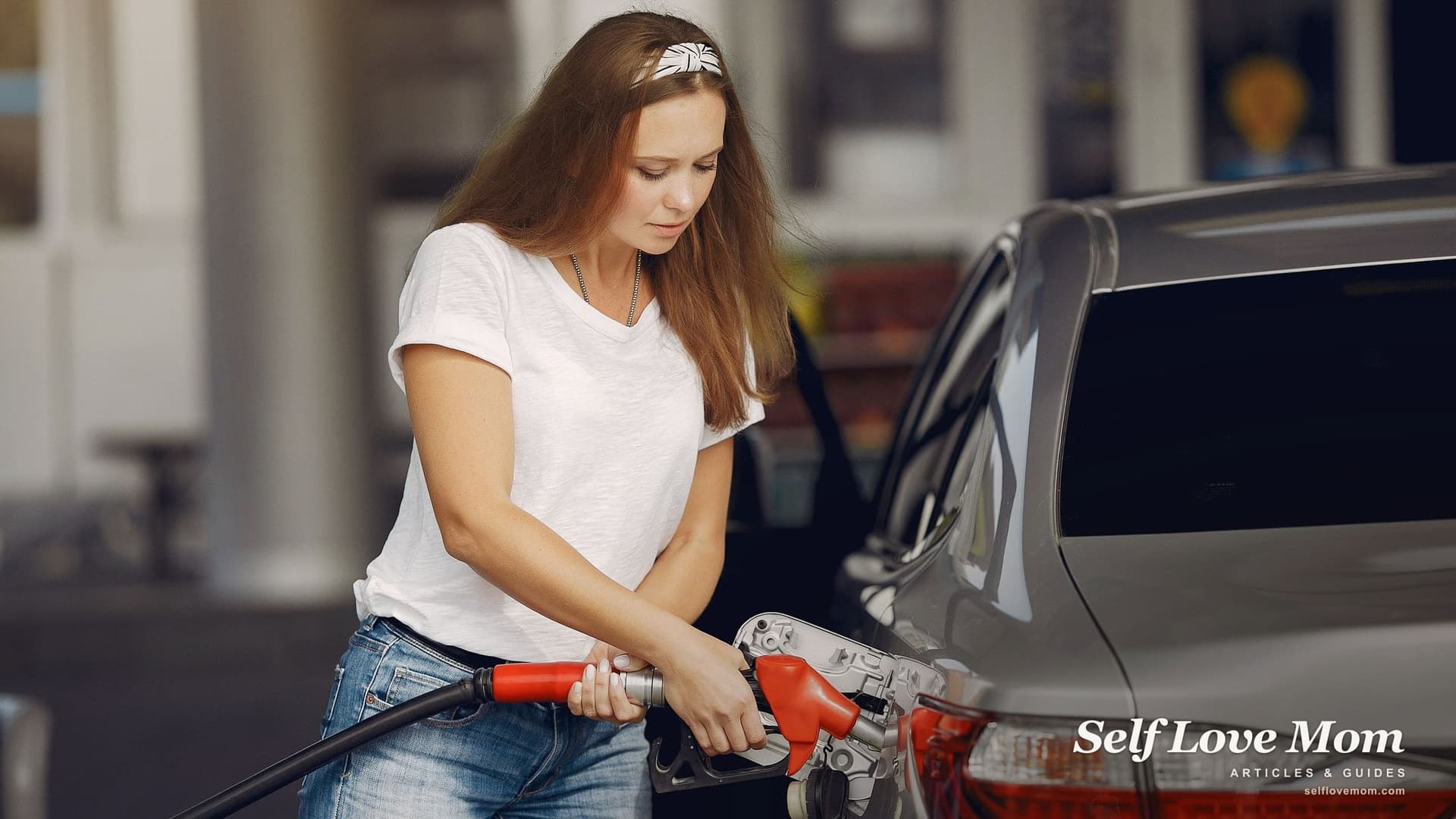
A young mom fills her car at the pump before the school and work run, the daily cost that free gas cards and mileage programs can help cover.
Free gas cards exist, but almost nobody hands them out just for asking. They come attached to a trip someone else has a reason to fund: a first week at a new job, a training class, a Medicaid checkup, chemo two counties away, or a child's ride back to the school she attended before the family lost its home.
That is the useful way for a single mom to hunt for gas money. Start with where the car has to go this week, then ask the office that pays for that kind of trip. Each program below was checked against the agency rule, statute or nonprofit page on October 30, 2026, and the post says plainly when a program pays mileage or rides instead of handing over a card.
The short version for a mom running on fumes
- Work or training: TANF, WIOA and SNAP job programs can pay for transportation, and some states issue prepaid gas cards.
- Doctor visits: Medicaid must arrange rides, and some states repay mileage when a friend drives you.
- One bad week: some Salvation Army and St. Vincent de Paul branches give gas vouchers or cards, and 211 can point you to them.
- Anyone asking you to pay a fee for a "free" gas card is running a scam.
Match the trip to the office that pays for it
Most free gas cards for single moms come from a program with a narrow purpose. A caseworker can approve fuel for a job search, but not for a weekend visit to grandma. Knowing the purpose before you call saves a wasted afternoon on hold, and it tells you whether to ask for free gas cards, a bus pass or mileage.
| The trip | Who to ask | What the help usually looks like |
|---|---|---|
| A new job or work activity while on cash aid | Your TANF caseworker | Gas card, upfront payment or mileage, depending on the state |
| Job training through an American Job Center | The local WIOA program | Transportation help set by local policy, sometimes gas cards |
| A SNAP job or training program | Your state SNAP E&T office | Repayment or an advance for travel costs; some states use gas cards |
| A Medicaid-covered appointment | The Medicaid ride line or broker | A booked ride, a bus pass, or money back per mile |
| Cancer or specialist care far from home | A treatment-travel charity | Gas cards, often sent after the trip |
| Getting a child to school while homeless | The district's homeless liaison | District choice: gas cards, vouchers or mileage repayment |
| A one-time crisis | Salvation Army, St. Vincent de Paul, or 211 for a referral | At some branches, a small voucher or card while funds last |
| Leaving an abusive home | A local domestic violence program | Donated prepaid gas cards or a fuel card in some areas |
Gas money for getting to work or a class
Federal TANF rules treat transportation for working families as a support service, not as welfare "assistance" (45 CFR 260.31). The line is drawn by work status: for a mom who has a job, transportation help sits outside "assistance," while for one who is not employed it counts as assistance. The rule also sets apart short crisis payments that last no more than four months.
States decide the form. Georgia's TANF manual says upfront payments can come as a gift card, gas card or check when a single mother needs them to meet her family service plan or to start or keep a job, and she has to document the need (Georgia DFCS TANF manual, section 1830).
Texas requires every local workforce board's transportation policy for TANF Choices, WIOA and SNAP job programs to cover gas cards and bus passes, with a dollar cap per week, month or quarter. Its March 2024 letter uses a $40 weekly gas card limit as an example, so the real cap depends on the board (TWC WD Letter 07-17, Change 1).
WIOA, the federal job-training law, lists "assistance with transportation" among supportive services, and each local workforce board writes its own policy (20 CFR 680.900). RochesterWorks in New York, under a policy revised July 6, 2026, offers a $25 gas card to trainees who drive at least 130 miles a month to class (RochesterWorks Policy 103).
In New York's Broome and Tioga counties, a single mom who lands a job can get gas cards or a bus pass until her first paycheck or two weeks of full-time work, whichever comes first. She returns each gas receipt before the next card is issued (Broome-Tioga Workforce supportive service policy, approved December 12, 2025).
SNAP has its own track. A mom in SNAP Employment and Training can be repaid for transportation, and the state can pay before the cost hits instead of after (7 CFR 273.7(d)(4)). USDA's participant page names "bus passes and gas cards" as examples of that help (USDA FNA, SNAP E&T for participants).
If the car itself is the problem, gas cards are only half of it. The guide to free car repairs for single moms covers the repair side. For a mom with no working vehicle, car grants for single mothers come first.
Medicaid trips: you may be owed money per mile
Every state Medicaid plan has to promise necessary transportation to and from covered care (42 CFR 431.53). Federal rules count the cost of getting there "by ambulance, taxicab, common carrier, or other appropriate means," plus meals and lodging on longer trips, as travel expenses (42 CFR 440.170).
This benefit is usually a ride or a mileage check, not free gas cards. Oregon pays $0.49 a mile when the member, a family member, friend or neighbor drives, effective January 1, 2026 (Oregon Health Authority NEMT memo, February 12, 2026). A 40-mile round trip to the pediatrician works out to $19.60 back.
Florida's Medicaid ride broker handbook says you can drive yourself or have a friend or relative drive and be "paid back for miles driven." The catch: you call before the appointment and get the provider's signature (Modivcare Florida member handbook). A single mom juggling two kids' checkups can set that reminder the day she books.
Treatment far from home: cards versus rides
Precision matters here, because several websites blur two different kinds of help. The American Cancer Society's Road To Recovery program gives free rides to cancer appointments with trained volunteer drivers. It is a ride, not a gas card (American Cancer Society, Road To Recovery).
Mercy Medical Angels does send gas cards nationwide. Its rules require medical need, household income at or below 300% of the federal poverty guidelines, and a facility usually 50 or more miles away one-way (Mercy Medical Angels eligibility). The gas cards are usually mailed after the trip as repayment; urgent trips within three days go by phone at 800-296-3797 (Mercy Medical Angels, for patients).
A hospital or clinic social worker is the shortcut to smaller local funds. CancerCare's oncology social workers help people find local transportation resources at no charge through 800-813-4673 (CancerCare fact sheet, Transportation Resources).
School drop-off after losing your home
If a single mom and her kids are doubled up, in a motel or in a shelter, the McKinney-Vento Act requires schools to provide transportation to the child's school of origin when the parent asks (42 U.S.C. 11432(g)(1)(J)(iii)). That covers the old school even after a move across town.
The district picks the method. The federal homeless-education center tells districts to "develop a system of providing gas vouchers/cards or reimbursements to parents" who can drive (NCHE, Transporting Children and Youth Experiencing Homelessness, 2025). Ask the district's homeless liaison, by title, whether gas cards are an option; repayment after the fact can be hard when the tank is empty today.
One-time help from charities and churches
Local charities are where the phrase "free gas cards" most often means a real card. Each branch sets its own rules and budget, so the examples below are local, not national promises.
- Salvation Army. The Chippewa Valley branch in Wisconsin gives gas vouchers to people who show a valid driver's license and an unexpired registration (Salvation Army Chippewa Valley, programs and services).
- St. Vincent de Paul and Catholic Charities. On Winnebago County, Wisconsin's transportation resource list, St. Vincent de Paul provides gas cards and bus passes, while Catholic Charities offers financial help with transportation and car repairs through an application (Winnebago County transportation resources).
- Churches. Some congregations keep a small benevolence fund. Call the church office on a weekday, say what the gas is for, and ask whether they pay a station directly.
- 211. Dialing 211 reaches a local, confidential referral line; the network made more than 19 million referrals in 2025 (211.org). Tell the specialist what the trip is for and ask which local groups give gas vouchers.
For bigger crisis bills such as rent or a shutoff notice, the emergency assistance guide for single mothers lists who to call first. Charity help is set branch by branch and depends on funding, so it pays to line up two sources.
Leaving an abusive home on an empty tank
The National Domestic Violence Hotline (800-799-7233, or text START to 88788) connects callers with local programs, but it says it does not give direct financial help itself (The National Domestic Violence Hotline). The gas money, when it exists, sits with the local shelter. Shelters that hand out free gas cards often depend on donations, so supply rises and falls.
LACASA in Michigan, for example, asked the public in May 2025 for prepaid gas cards for clients in its shelter and transitional housing, so survivors could reach medical visits, counseling and job interviews (The Livingston Post, May 5, 2025).
Families to Freedom in Texas offers fuel to survivors leaving the Dallas-Fort Worth or Houston area for a shelter 50 or more miles away or family in another state, and referrals from a domestic violence program, police or CPS get priority (Families to Freedom, fuel assistance).
A script for asking about free gas cards
Caseworkers and charity volunteers hear vague requests all day. A specific one gets a yes sooner. Before calling, a single mother can jot down:
- The trip and the date. "I start at the warehouse Monday, 18 miles each way."
- The gap. "First paycheck lands on the 15th; I have a quarter tank."
- Proof. An offer letter, class schedule, appointment card or school enrollment notice.
- Car papers. Driver's license, registration and insurance card, since some programs check all three.
- The ask. "Do you give free gas cards, pay the station directly, or repay mileage?"
Even when an office has no free gas cards this month, ask the same last question: "If you cannot help, who in this county does?" Volunteers often know which church fund still has money this month.
Making a tank you pay for go further
None of these tools are free gas cards; they lower the price. They are named here as options to compare, not as ads.
Costco fuel requires showing a membership card at the pump, so the fee only makes sense for a mom who already shops there (Costco gasoline). GasBuddy's app lists station prices near you; it also sells a payment card it says saves up to 33 cents a gallon (GasBuddy).
Gas is one line in a tight month. A written budget for a single mom shows how much fuel the week needs before payday, which is the number a caseworker asks for.
When free gas cards are a scam
Real help comes from an office you contacted. Fake free gas cards arrive on their own, by text, social post, phone call or postcard. DC's financial regulator describes a $200 "Shell" gas card offer that asked for a $2 shipping fee, then ran up unauthorized charges on the victim's card (DC DISB, Beware of Gas Card Scams).
In July 2026, West Virginia's attorney general warned about a postcard from "AAPP," not AARP, claiming gas and grocery vouchers were being held. A $5 "processing fee" turned into $51 in total charges (West Virginia Attorney General, July 21, 2026).
The FTC says texts offering a survey and a free gift card in exchange for "shipping" are scams (FTC consumer alert, August 2022). It also says only scammers ask to be paid in gift cards (FTC consumer alert, October 2024). Report these offers at ReportFraud.ftc.gov.
The real programs around gas money are listed in the grants for single moms overview, none of which charge a fee to apply.
Gas money questions single moms ask
Can I get free gas cards online without calling anyone?
Rarely. Legitimate programs need to confirm the trip and your need, which means an application, a caseworker or a phone screen. Mercy Medical Angels takes requests online, but only for medical travel. A site that promises an instant card for filling in a form or survey is collecting data, not giving gas.
Does SNAP or EBT pay for gas at the pump?
No. SNAP food benefits buy groceries, not fuel. The gas help tied to SNAP comes only through its Employment and Training program, where your state repays or advances travel costs for approved job or school activities. Ask your SNAP office whether E&T is offered in your county and which providers run it.
Can my sister get paid for driving me to the doctor?
In many states, yes. Oregon repays a family member, friend or neighbor per mile, and Florida lets a relative or friend drive and claim the miles. The trip has to be to Medicaid-covered care, and Florida's ride line wants a call before the visit, so ask about driver forms when you book.
How many times can a charity give me gas money?
There is no national rule; each branch decides. The Chippewa Valley Salvation Army, for one, says it sets the number of vouchers case by case. Ask about the limit on the first call, and save that agency for a real gap, such as the week between a job start and the first paycheck.
Where do gas vouchers come from when payday is days away?
Short-notice gas assistance usually means a local charity branch or a shelter, since agency programs pay only after you are enrolled in work, training or a booked Medicaid trip. When you call 211 or a church office, ask for help with gas money for one named trip and date. A specific request is simpler for a volunteer to approve.
What if I have no car at all?
Many of the same offices give bus passes or arrange rides instead. Medicaid can book a trip to a covered appointment, Road To Recovery drives cancer patients, and job programs often pay transit fares. Tell the caseworker you have no vehicle so they look at the right option from the start.
Sources
- Electronic Code of Federal Regulations. 45 CFR 260.31, What does the term assistance mean?. ecfr.gov (retrieved October 30, 2026)
- Georgia Division of Family and Children Services. TANF manual, 1830 Employment Support Services. pamms.dhs.ga.gov (retrieved October 30, 2026)
- Texas Workforce Commission. WD Letter 07-17, Change 1, Local Workforce Development Board Transportation Policies, March 18, 2024 (effective April 15, 2024). twc.texas.gov (retrieved October 30, 2026)
- Electronic Code of Federal Regulations. 20 CFR 680.900, Supportive services for adults and dislocated workers. ecfr.gov (retrieved October 30, 2026)
- RochesterWorks. Policy 103, WIOA Supportive Services, revised July 6, 2026. rochesterworks.org (retrieved October 30, 2026)
- Broome-Tioga Workforce. Adult and Dislocated Worker supportive service policy, approved December 12, 2025. broometiogaworks.com (retrieved October 30, 2026)
- Electronic Code of Federal Regulations. 7 CFR 273.7, Work provisions (participant reimbursements). ecfr.gov (retrieved October 30, 2026)
- USDA Food and Nutrition Administration. SNAP Employment and Training, participants. fna.usda.gov (retrieved October 30, 2026)
- Electronic Code of Federal Regulations. 42 CFR 431.53, Assurance of transportation. ecfr.gov (retrieved October 30, 2026)
- Electronic Code of Federal Regulations. 42 CFR 440.170, Any other medical care or remedial care. ecfr.gov (retrieved October 30, 2026)
- Oregon Health Authority. New NEMT mileage reimbursement rate effective Jan. 1, 2026 (memo dated Feb. 12, 2026). oregon.gov (retrieved October 30, 2026)
- Modivcare for Florida AHCA. Florida NEMT member handbook. mymodivcare.com (retrieved October 30, 2026)
- American Cancer Society. Road To Recovery. cancer.org (retrieved October 30, 2026)
- Mercy Medical Angels. Patient eligibility. mercymedical.org (retrieved October 30, 2026)
- Mercy Medical Angels. For patients. mercymedical.org (retrieved October 30, 2026)
- CancerCare. Transportation Resources fact sheet. cancercare.org (retrieved October 30, 2026)
- Legal Information Institute. 42 U.S. Code 11432, McKinney-Vento education for homeless children and youths. law.cornell.edu (retrieved October 30, 2026)
- National Center for Homeless Education. Transporting Children and Youth Experiencing Homelessness, 2025. nche.ed.gov (retrieved October 30, 2026)
- The Salvation Army, Chippewa Valley. Programs and services. centralusa.salvationarmy.org (retrieved October 30, 2026)
- Winnebago County, Wisconsin. Transportation Resources. winnebagocountywi.gov (retrieved October 30, 2026)
- 211. Help starts here. 211.org (retrieved October 30, 2026)
- The National Domestic Violence Hotline. Get help. thehotline.org (retrieved October 30, 2026)
- The Livingston Post. LACASA urgently needs prepaid gas cards for clients (May 5, 2025). thelivingstonpost.com (retrieved October 30, 2026)
- Families to Freedom. Fuel assistance. familiestofreedom.org (retrieved October 30, 2026)
- Costco. Gasoline. costco.com (retrieved October 30, 2026)
- GasBuddy. Home page. gasbuddy.com (retrieved October 30, 2026)
- DC Department of Insurance, Securities and Banking. Beware of Gas Card Scams. disb.dc.gov (retrieved October 30, 2026)
- West Virginia Attorney General. Consumer alert on free gas and grocery card scam mailer, July 21, 2026. ago.wv.gov (retrieved October 30, 2026)
- Federal Trade Commission. Don't click on that random text. It's a scam (August 2022). consumer.ftc.gov (retrieved October 30, 2026)
- Federal Trade Commission. Only scammers tell you to buy a gift card to pay them (October 4, 2024). consumer.ftc.gov (retrieved October 30, 2026)
✻ Share this article
✻ About the contributor · Folio N°.235

Written by Subha
Writer and researcher covering the topics that matter most to single moms, money, mental health, and the small daily rituals that keep a family running. Every article is research-backed and checked against official sources.
- Articles
- 235
- Desks
- 05
- Edited
- 4×
More from this writer
✻ Checked against official sources