Free Glasses for Low Income Families: Who Pays in 2026
Medicaid must cover glasses for kids under 21, but 20 states skipped adult glasses in 2022. Where free glasses come from, and which one is paused.

 Click to zoom
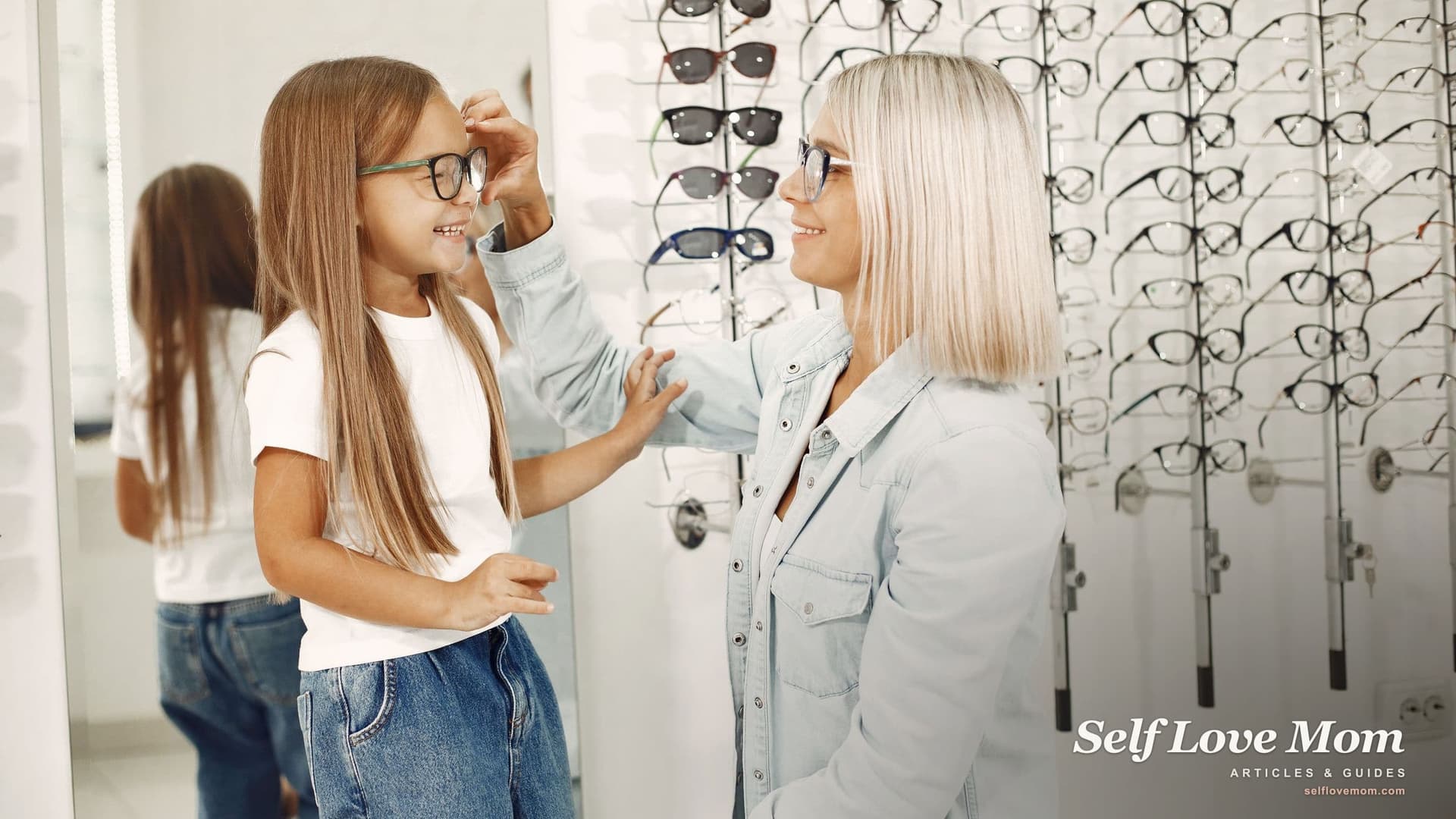
A smiling mother helps her young daughter try on new eyeglasses in front of a wall of frames at an optical shop.
Free glasses for a low income family usually come from two places: Medicaid or CHIP for the kids, and a charity voucher or a state Medicaid plan for the adults. Kids are the easy part. Federal Medicaid rules require eyeglasses for enrolled children under 21, while adult coverage depends on your state.
This guide covers who pays for each family member, which charity programs still take applications, and which famous one is paused. Every rule below was read on the program's own page on October 2, 2026.
| The figure | What it is | Source |
|---|---|---|
| Under 21 | Medicaid must cover eyeglasses for enrolled children up to this age | Medicaid.gov |
| 20 states | did not cover adult glasses in fee-for-service Medicaid in 2022 | Health Affairs |
| 250% | of poverty is the income limit for a New Eyes glasses voucher | New Eyes |
The short version
- Kids on Medicaid get glasses as a required benefit, and CHIP covers children's vision care too
- Adults on Medicaid may or may not get glasses, depending on the state and the plan
- New Eyes mails free glasses, a basic pair, to families under 250% of poverty, after a non-refundable application fee
- VSP Eyes of Hope certificates are paused, so only ones already handed out still work
- Schools are the fastest route for kids, through the nurse or a mobile program like Vision To Learn
Does Medicaid cover glasses for kids?
Yes. Medicaid's Early and Periodic Screening, Diagnostic, and Treatment (EPSDT) benefit covers children under 21. At a minimum, its vision services include screening, diagnosis and treatment for defects in vision, such as eyeglasses, on a set schedule and whenever medically necessary (Medicaid.gov, EPSDT). That makes free glasses for a child on Medicaid a right, not a favor.
CHIP works the same way for vision. The National Eye Institute says Medicaid and CHIP cover the cost of vision care for children, though each state sets its own rules to qualify (National Eye Institute). If your kids are not enrolled yet, the health insurance guide for single moms explains how Medicaid and CHIP limits work for a family.
Marketplace plans cover children too. Pediatric services, including vision care, are one of the 10 essential health benefits every Marketplace plan must include. Adult vision is not on that list (HealthCare.gov).
How to use the benefit
Call the number on your child's Medicaid or CHIP card and ask for an eye doctor in the plan's network. Ask the office how often the plan replaces glasses and whether it covers a lost or broken pair, since those rules vary by state. Bring the card to the visit, and pick a frame from the covered selection.
Many Medicaid managed care plans also add extras for members, called value-added benefits. The free car seat guide shows how moms use them to get a car seat for a baby.
Does Medicaid cover glasses for adults?
It depends on your state. Adult vision is an optional Medicaid benefit, and a 2024 Health Affairs study found that 20 states did not cover adult eyeglasses in fee-for-service Medicaid in 2022. Of the states that did, 8 covered exams and glasses at least yearly, 18 every 2 years and 3 less often (Health Affairs, Lipton et al.).
Managed care can change the answer. The same study found that some states without fee-for-service glasses had managed care plans that covered them in full (Health Affairs). So call your plan, not just the state, and ask two questions: are adult glasses covered, and how often.
If your plan says no, a charity voucher is the next route to free glasses. Medicaid is only one of the programs for single moms that can cut a family's medical bills, so it is worth checking the rest while you wait.
How do you get free glasses from New Eyes?
New Eyes is a nonprofit that buys new prescription glasses for people in financial need. To qualify, your household's net monthly income must be below 250% of the federal poverty guidelines, about $5,692 a month for a family of 3 in 2026. You also need an eye exam from the last 24 months that includes your pupillary distance (New Eyes, Eligibility). New Eyes does not pay for the exam itself.
A social worker or health advocate can apply for you, which New Eyes prefers. If you have no agency, you can apply directly with proof of eligibility. Each application carries a non-refundable fee for administrative costs. If you are approved, New Eyes emails an e-voucher to use on its glasses ordering site (New Eyes, Apply for Eyeglasses).
The voucher covers the full cost, including shipping, of one clear pair of single vision or lined bifocal lenses in a frame from its voucher collection. A child's voucher covers two pairs ordered together. Orders take about 7 to 10 days to make, plus 5 to 7 business days by mail. Progressive or color-changing lenses cost extra (New Eyes, FAQ).
For a family of 3, the 2026 poverty guideline is $27,320 a year (ASPE). So the New Eyes line sits at about $68,300 a year, or about $5,692 a month in net pay.
Is VSP Eyes of Hope still giving free glasses?
Not to new applicants. As of October 2, 2026, VSP says it is not processing new requests for its Eyes of Hope gift certificates because of rising demand. Certificates already handed out are still honored until they expire, but lost or expired ones cannot be replaced (VSP Vision, Eyes of Hope). Even the National Eye Institute list of free eye care still describes Eyes of Hope with no mention of the pause (National Eye Institute).
When it runs, a certificate covers an eye exam and glasses at no cost for people of any age. The family income limit is 200% of the poverty guidelines, and the person cannot have other coverage for the exam or glasses. Certificates reach people through partners such as school nurses, community health centers, Head Start and Lions Clubs (VSP Vision).
So ask your child's school nurse or your health center whether they still hold an unexpired certificate for free glasses. VSP's mobile eye clinics are another route. VSP says its 2026 calendar is fully booked and it is now taking requests from partner groups for 2027 (VSP Vision).
Where else can kids get free glasses?
Start at school. Vision To Learn brings vision screenings, eye exams and glasses to kids at schools in low-income communities, at no cost to the family. It began with one van in Los Angeles in 2012 and now works in more than 860 cities. It reports giving out more than 680,393 pairs of glasses (Vision To Learn).
Ask the school nurse whether a mobile vision program visits your district, and sign the permission form when it comes home. Glasses are one more back to school cost, alongside the ones in the free school supplies guide.
Under the Affordable Care Act, many health plans must cover the full cost of vision screenings for children and teens up to age 19 (National Eye Institute). A screening is not a full exam, but a failed screening is the paperwork that opens the door to one.
Where can adults get a free or cheap eye exam?
A prescription comes first, because New Eyes and most free glasses programs need one. The National Eye Institute lists several low-cost doors. Some community health centers run eye clinics, and colleges with optometry or ophthalmology programs may offer low-cost care (National Eye Institute).
Local Lions Clubs help pay for eye care in many areas, and some clubs also provide eyeglasses (National Eye Institute). Call the club nearest you and ask what it covers this year.
EyeCare America is often listed for free glasses, but it does not give them. It offers a no-cost medical eye exam for adults 18 and older who have no private insurance and have not seen an ophthalmologist in three or more years. It does not cover glasses, contacts or a prescription for them (EyeCare America). Use it for an eye health problem, not for a new pair.
More places to look for health help are in the single mom resources guide.
Which free glasses option fits your family?
A worked example
Take a mom with two kids on Medicaid in a state that does not cover adult glasses. Her kids get their exams and glasses through the plan, because EPSDT covers enrolled children under 21. For herself, she books a low-cost exam at a community health center and asks for her pupillary distance. If her household net pay is under about $5,692 a month, she can apply to New Eyes for free glasses, one basic pair by mail.
Kids on Medicaid or CHIP should start with the plan. Adults should ask their Medicaid plan first, then apply to New Eyes. The table shows who each option covers and what you do first.
| Option | Who it covers | What you do first |
|---|---|---|
| Medicaid EPSDT | Children on Medicaid under 21 | Call the plan for an in-network eye doctor |
| CHIP or a Marketplace plan | Children's vision care | Ask the plan what it pays for glasses |
| Adult Medicaid | Depends on the state and plan | Ask the plan if adult glasses are covered |
| New Eyes | Net income under 250% of poverty | Get an eye exam, then apply online |
| VSP Eyes of Hope | Income under 200% of poverty, no coverage | Ask a school nurse for an unexpired certificate |
| Vision To Learn | Kids at participating schools | Sign the school's permission form |
A broken pair on payday week counts as an emergency for a working mom. If glasses are one of several bills piling up, the emergency assistance guide lists who helps with rent and utilities so more of your pay can cover the rest.
Free glasses checklist
- For each child on Medicaid or CHIP, call the plan and book an in-network eye exam.
- For yourself, ask your Medicaid plan whether adult glasses are covered and how often.
- If not, get an eye exam that lists your pupillary distance, at a health center or optometry school.
- Apply to New Eyes for free glasses with that prescription, or ask a social worker to apply for you.
- Ask the school nurse about a mobile vision program or an unexpired VSP certificate.
- Call your local Lions Club and ask whether it helps with glasses this year.
Frequently asked questions
Does Medicaid pay for glasses?
For children, yes. Medicaid must cover eyeglasses for enrolled children under 21 as part of its EPSDT benefit. For adults, it depends on the state. A 2024 Health Affairs study found 20 states did not cover adult glasses in fee-for-service Medicaid in 2022, though some managed care plans in those states did.
How can I get free glasses with no insurance?
Get an eye exam at a community health center or an optometry school first, since most programs need a prescription. Then apply to New Eyes if your net income is below 250% of poverty. Your local Lions Club may also help. VSP Eyes of Hope certificates are paused for new requests right now.
Are New Eyes glasses really free?
Almost. New Eyes charges a non-refundable application fee for administrative costs. Its voucher then covers the full cost and shipping of one basic pair of single vision or lined bifocal lenses. A child's voucher covers two pairs. Upgrades such as progressive or color-changing lenses cost extra.
Can my child get free glasses at school?
Often, yes. Programs such as Vision To Learn screen students, give eye exams and hand out free glasses at schools in low-income communities, with no cost to the family. Ask the school nurse whether a mobile vision program visits your district, and return the permission form when it comes home.
Does EyeCare America give free glasses?
No. EyeCare America offers a free medical eye exam to adults 18 and older without private insurance who have not seen an ophthalmologist in three or more years. It does not cover glasses, contact lenses or a prescription for them, so use a voucher program for the glasses.
Sources
- National Eye Institute, Get Free or Low-Cost Eye Care (retrieved October 2, 2026)
- Medicaid.gov, Early and Periodic Screening, Diagnostic, and Treatment (retrieved October 2, 2026)
- HealthCare.gov, What Marketplace health insurance plans cover (retrieved October 2, 2026)
- Lipton B, Garcia J, Boudreaux M, Azatyan P, McInerney M. Most State Medicaid Programs Cover Routine Eye Exams for Adults, But Coverage of Other Routine Vision Services Varies. Health Affairs, 2024 (retrieved October 2, 2026)
- New Eyes, Eligibility Guidelines (retrieved October 2, 2026)
- New Eyes, Apply for Eyeglasses (retrieved October 2, 2026)
- New Eyes Glasses, FAQs (retrieved October 2, 2026)
- ASPE, 2026 Poverty Guidelines (retrieved October 2, 2026)
- VSP Vision, Eyes of Hope for Charitable Organizations (retrieved October 2, 2026)
- Vision To Learn (retrieved October 2, 2026)
- American Academy of Ophthalmology, EyeCare America Patients and Caregivers (retrieved October 2, 2026)
✻ Share this article
✻ About the contributor · Folio N°.185

Written by Subha
Psychologist and writer covering the topics that matter most to single moms, money, mental health, and the small daily rituals that keep a family running. Every article is research-backed and edited four times before publish.
- Articles
- 185
- Desks
- 05
- Edited
- 4×
More from this writer
✻ Edited four times before publish