How Much Food Stamps Can a Homeless Person Get in 2026?
A homeless single mom can get up to $298/month in food stamps, or $1,183 for a family of five in 2026. See the FY2026 amounts and shelter deduction math.

 Click to zoom
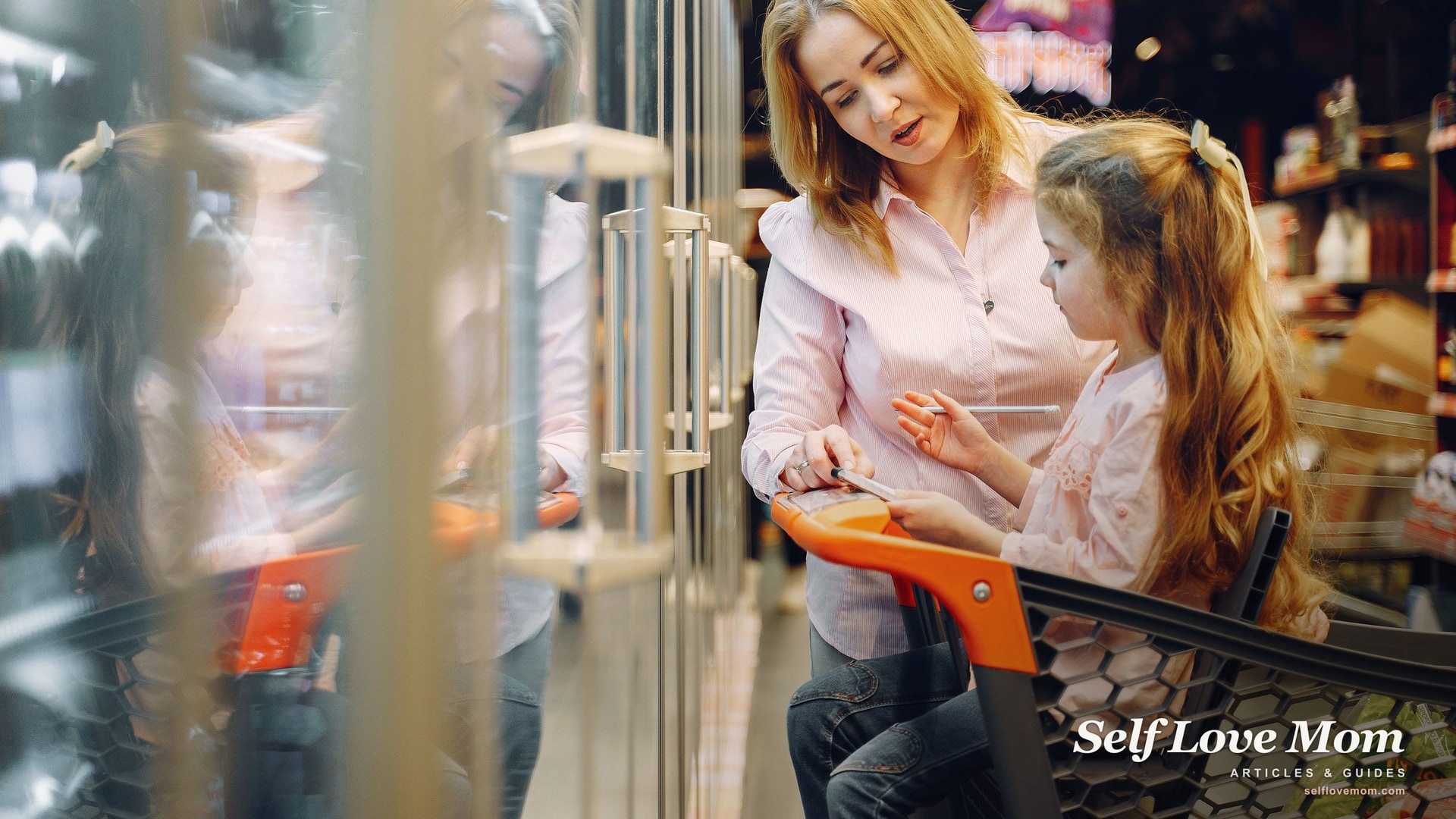
A mother and daughter check a grocery list at the supermarket, the food budgeting SNAP benefits help single moms manage.
When you are a mom without stable housing, the question is rarely "can I get food stamps," it's "how much, and will it actually feed my kids?" That number matters, because it is what stands between you and a bare cupboard at the end of the month.
Here's the direct answer: a homeless single mom can get up to $298 a month alone, or up to $1,183 for a family of five in FY2026. Most moms with little or no income land at the full maximum. This guide covers the exact amounts, the deduction that maxes you out, and the benefit formula. All figures verified June 2026.
| Headline figure | What it covers | Source |
|---|---|---|
| $298/mo | FY2026 maximum SNAP benefit for a single adult with no income | USDA FNS, 2026 |
| $1,183/mo | FY2026 maximum for a family of five (mom plus four children) | USDA FNS, 2026 |
| $198.99/mo | homeless shelter deduction that lowers your countable income | USDA FNS, 2026 |
| $24/mo | minimum benefit for an eligible 1 or 2-person household | CBPP, 2026 |
What you need to know first
- A single homeless mom with no income usually gets the full $298 a month, and a family of five up to $1,183
- The amount depends on two things only: your household size and your net income, not your housing
- The $198.99 homeless shelter deduction lowers your countable income, which is why most homeless moms hit the maximum
- The benefit formula is simple: maximum allotment minus 30% of your net income
- Maximum amounts are the same in all 48 states, so being in California, Texas, or Florida does not change your benefit
How much food stamps can a homeless mom get in 2026?
A homeless single mom with little or no income usually qualifies for the full maximum: $298 for herself alone, up to $1,183 for a family of five in FY2026 (USDA FNS, 2026). Your amount depends on household size and net income, and homelessness tends to push you toward the top of the range, not the bottom.
Why? Because most unhoused moms report little or no income, and SNAP pays the maximum when your net income is zero. The average benefit nationwide is about $188 per person per month, or roughly $6.17 a day, but a mom with no income receives the full allotment for her household size.
So the realistic range for a single mom alone is $24 to $298 a month, and almost everyone with no income lands at $298. Add children and the ceiling climbs fast.
What are the FY2026 maximum benefit amounts?
The FY2026 maximum allotments, effective October 1, 2025, are the same across the 48 contiguous states and D.C. (USDA FNS, 2026). These are the most a household of each size can receive in a month, and a no-income household gets exactly this amount.
| Household size | Max monthly benefit (FY2026) | Who this looks like |
|---|---|---|
| 1 | $298 | single mom, no kids with her yet |
| 2 | $546 | mom plus one child |
| 3 | $785 | mom plus two children |
| 4 | $994 | mom plus three children |
| 5 | $1,183 | mom plus four children |
| 6 | $1,421 | larger household |
The minimum benefit for an eligible 1 or 2-person household is $24 a month, so even a small award is worth claiming. Each person above six adds $218 to the maximum.
How does the homeless shelter deduction max out your benefit?
The homeless shelter deduction is a flat $198.99 a month in FY2026, up from $190.30, and it is the single biggest reason homeless moms reach the maximum (USDA FNS, 2026). It is subtracted from your income before your benefit is calculated, with no receipts required.
SNAP assumes housing costs are higher and harder to document when you have no fixed home, so it lets you claim this deduction automatically. The lower your countable income, the higher your benefit, which is exactly how a deduction turns into more grocery money.
Why this one line matters so much
Many moms never hear about the homeless shelter deduction before they apply, and a caseworker who forgets to add it can leave you with a smaller benefit than you are owed. Ask for it by name. For someone with little income, this $198.99 is often what locks in the full maximum.
How is your benefit actually calculated?
SNAP uses one formula in every state: your maximum allotment minus 30% of your net monthly income (CBPP, 2026). Net income is what is left after deductions like the 20% earned-income deduction, the standard deduction, and the homeless shelter deduction.
Here is how it plays out for a single mom (1-person household):
Worked examples, single mom alone
- $0 income: full maximum, $298 a month
- $500 income: roughly $142 a month after standard deductions
- $900 income: at or near the $24 minimum
Add children and both the maximum and the income limit rise, so a working mom with two kids can still qualify for a meaningful benefit. If you are between jobs, note that unemployment benefits count as income but rarely push you over the limit. Zero income means the full maximum, and every deduction moves you closer to it.
Does the amount change by state?
No. The maximum benefit is identical across the 48 contiguous states, so a single mom with no income qualifies for $298 whether she is in California, Texas, or Florida (USDA FNS, 2026). What changes is the name of the program and where you apply, not the dollar amount.
Where to apply in the three biggest states
- California (CalFresh): apply at BenefitsCal.com or your county office. County outreach workers are assigned to help unhoused applicants
- Texas: apply at YourTexasBenefits.com or by phone through the HHSC helpline
- Florida (ACCESS Florida): apply online or walk into any DCF service center
Alaska, Hawaii, Guam, and the U.S. Virgin Islands use higher allotment tables because of cost of living. Everywhere else, the numbers above apply exactly.
Do the 2026 work rules change what you get?
The 2025 federal law (the One Big Beautiful Bill Act) removed homelessness as an automatic exemption from SNAP work requirements (USDA FNS, 2026). Adults aged 18 to 64 without dependents must now work or train 80 hours a month to keep benefits past three months.
But this rule does not cut your benefit amount, and it does not apply to most single moms. The work requirement only targets adults without dependents, so a child under 14 in your home exempts you completely, housed or not.
Exemptions that still apply
You are exempt from the work rule if you have a child under 14 in your home, are pregnant, or have a physical or mental health condition that limits work. A note from a doctor, shelter caseworker, or social worker is enough to document it. If you are pregnant, see our guide on food stamps while pregnant.
2026 quick reference, and how to claim it
Here are the FY2026 numbers a homeless mom needs at a glance, plus the fast path to getting them (USDA FNS, 2026). Benefits are backdated to your application date, so apply the day you can.
| Figure | FY2026 amount |
|---|---|
| Maximum, single mom (1 person) | $298 |
| Maximum, family of five | $1,183 |
| Minimum benefit | $24 |
| Homeless shelter deduction | $198.99 |
| Gross income limit, 1 person | $1,696 |
| Expedited timeline | 7 days |
To claim it: apply online, by phone, or through a shelter caseworker, and ask for expedited service if your income and savings are very low. For the full step-by-step with no fixed address, our guide on food stamps for homeless moms walks through every document and address option.
FAQs: how much food stamps a homeless mom gets
How much will I get if I have zero income?
With zero income, you qualify for the full federal maximum for your household size: $298 for a single mom, $785 for a mom with two kids, in FY2026. The $198.99 homeless shelter deduction brings your countable income to zero, locking in that maximum with no extra paperwork.
Do homeless moms get more food stamps than housed applicants?
Often, yes, in practice. There is no special higher tier, but the homeless shelter deduction lowers countable income without documentation, and most unhoused moms have little or no income. Together that pushes the benefit to the maximum more often than for housed applicants with rent and wage records.
How fast can I get my benefits?
Standard applications process within 30 days, but expedited service can issue benefits in 7 days if your income and savings are very low. Either way, benefits are backdated to your application date, so no time is lost. Ask for expedited service when you apply.
Does my state change how much I get?
No. The maximum is identical across the 48 contiguous states, so a single mom with no income gets $298 in California, Texas, or Florida alike. Only Alaska, Hawaii, and the U.S. territories use higher tables. What changes elsewhere is where you apply, not the amount.
Do the 2026 work rules lower my benefit?
No, the work rule never reduces the dollar amount. It only affects adults without dependents who must work 80 hours a month. A child under 14 in your home exempts you, so most single moms keep their full benefit regardless of the 2026 changes.
- USDA Food and Nutrition Service. "SNAP Cost-of-Living Adjustment (COLA) Information," FY2026 maximum allotments and homeless shelter deduction. fns.usda.gov/snap/allotment/cola (retrieved 2026-06-04)
- Center on Budget and Policy Priorities. "A Quick Guide to SNAP Eligibility and Benefits," benefit formula and deductions. cbpp.org (retrieved 2026-06-04)
- USDA Food and Nutrition Service. "SNAP Work Requirements," 2025 law changes. fns.usda.gov/snap/work-requirements (retrieved 2026-06-04)
✻ Share this article
✻ About the contributor · Folio N°.177

Written by Subha
Psychologist and writer covering the topics that matter most to single moms, money, mental health, and the small daily rituals that keep a family running. Every article is research-backed and edited four times before publish.
- Articles
- 177
- Desks
- 05
- Edited
- 4×
More from this writer
✻ Edited four times before publish