Lonely Mom: Why a Full House Still Feels Empty
Around 1 in 3 parents carry chronic loneliness, and it can happen in a room full of people. What the research says about being a lonely mom, and what helps.

 Click to zoom
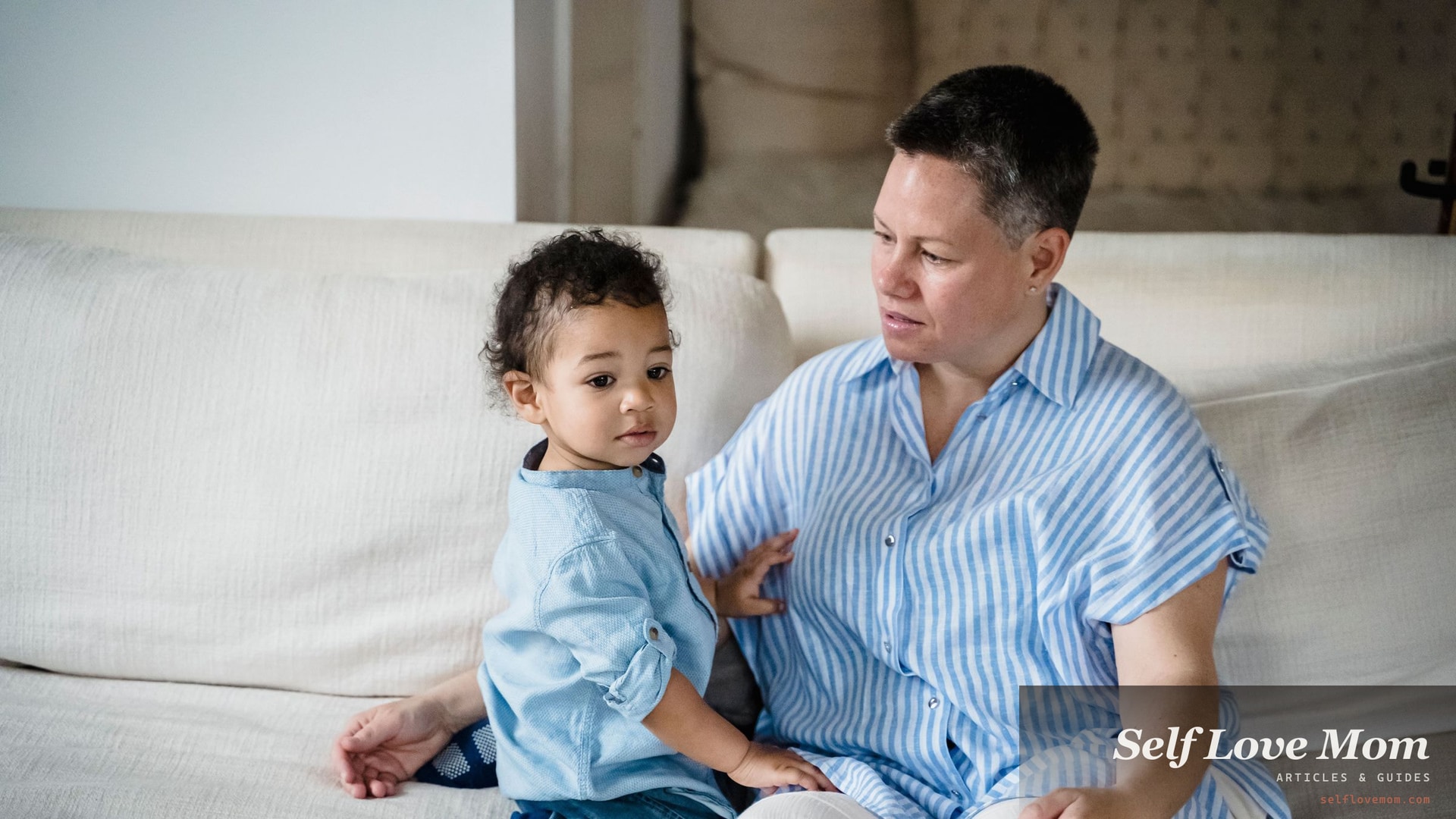
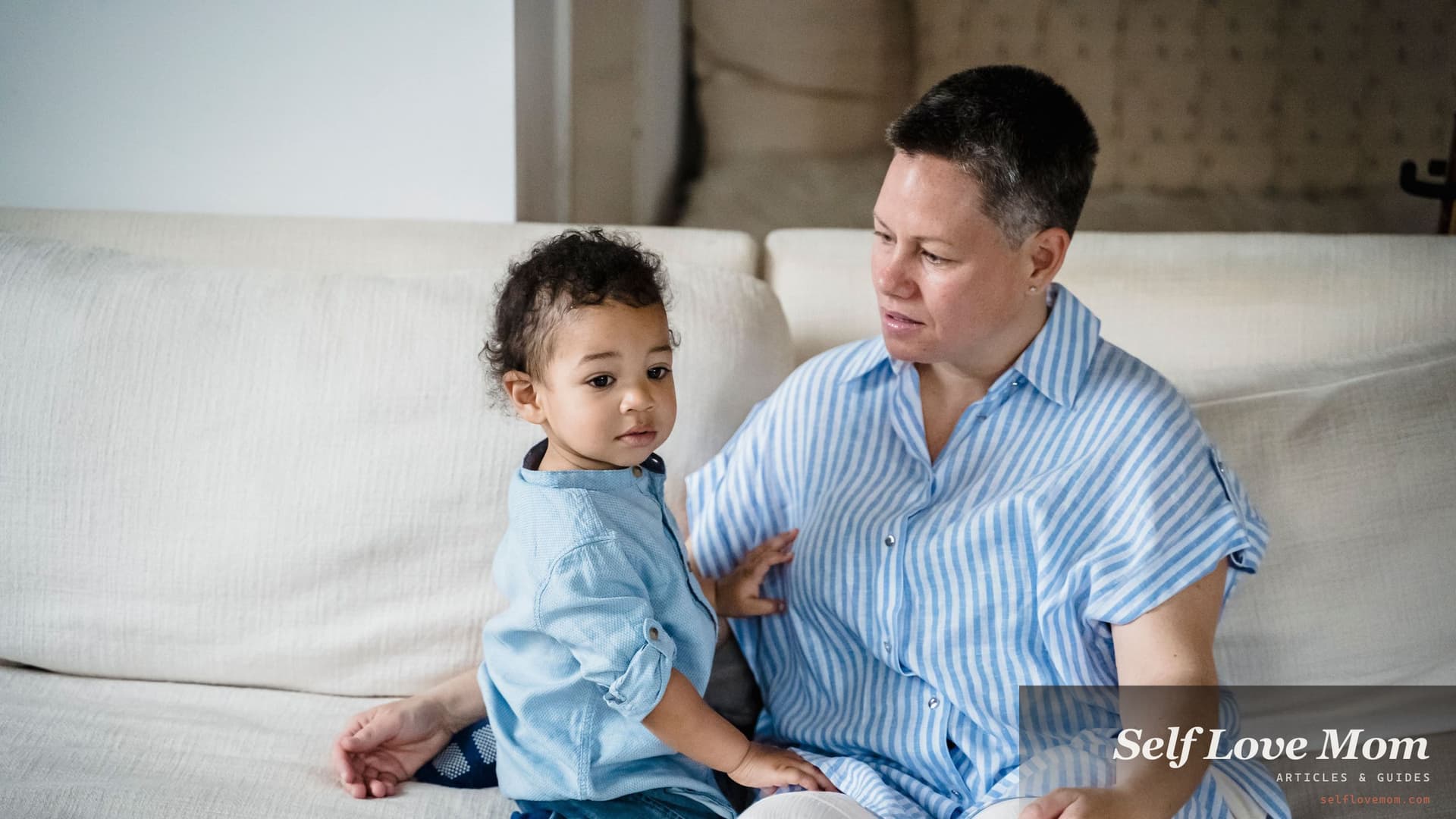
A mother sits on a sofa with her young son beside her, her attention somewhere else while he looks up at her
You have not been alone all day. Someone has needed you since six in the morning. And still, by the time the house goes quiet, there is a particular hollow feeling that has nothing to do with how many people are in the room.
That is the part almost nobody names. Being a lonely mom is not a shortage of company. It is a shortage of the kind of contact that actually fills you, and the research on it is clearer than the silence around it suggests. A 2021 review of the evidence puts it at around a third of parents, long term.
| What the research found | The figure | Where it comes from |
|---|---|---|
| Parents living with chronic loneliness | around a third | Nowland et al., scoping review, 2021 |
| Single parents in those studies reporting loneliness | 8% to 21% | Same review, across 8 separate studies |
| Increase in risk of early death from social isolation | 29% | US Surgeon General advisory |
| Reviewed programs designed specifically to treat it | none | Nowland et al. Nothing was built for this |
The short version
Loneliness is a gap between the connection you need and the connection you have, measured in quality and not just quantity. That is why a lonely mom can feel it in a crowded kitchen. Around a third of parents carry it long term, the US Surgeon General names single parents as a higher risk group, and almost nothing in the health system is built to treat it directly.
What is loneliness in motherhood?
Loneliness is a painful subjective experience when social connections do not meet a person's needs in the quality or the quantity of contact, according to the 2021 scoping review by Nowland and colleagues. That definition matters, because it explains the thing that confuses so many mothers.
Read it again. Quality or quantity. You can have a house full of people and a phone full of messages and still fail the quality half of that test entirely.
The same review states plainly that loneliness can be experienced in the presence of others. So a lonely mom is not failing at gratitude, and she is not imagining it. She is describing a measurable mismatch that the research already has a name for.
This is different from wanting a night off. A night off fixes tiredness. It does not touch the feeling of being needed constantly by people you cannot have an adult conversation with.
Why a lonely mom can feel it in a full house
Because the definition has 2 halves and a full house only satisfies 1 of them. Children take. That is their job and it is not a criticism of them. But a day made entirely of giving does not contain a single moment where somebody asks how you are and waits for the real answer.
Adult conversation gets replaced by logistics. Even the exchanges you do have with other grown ups turn into handovers, reminders and scheduling. Information moves. Nothing else does.
Then there is the specific isolation of being the only adult in the house. There is nobody to raise an eyebrow at across the room when a toddler says something absurd. The moment happens and it evaporates, because sharing it is what would have made it real.
| What you have plenty of | What is actually missing |
|---|---|
| Company all day | Contact where you are not the one giving |
| Messages and notifications | Someone who asks a second question |
| People who rely on you | People who know your week without a summary |
| Conversations about logistics | A conversation with no purpose at all |
How common is being a lonely mom?
Common enough that the review opens with it. Chronic loneliness is experienced by around a third of parents, and separate research it cites found 30% of parents carrying high and persistent levels over time. This is not a rare malfunction in a few unlucky people.
The number that should stop you is a different one. The review found that of all the studies it gathered, none of the interventions had been designed specifically to reduce parental loneliness. Programs existed for postnatal depression and for isolation in other groups. For this, nothing purpose built.
So if you have felt that there is no obvious place to take this, you are not missing something. There genuinely is not a standard answer waiting, which is part of why it stays quiet.
Are single moms the loneliest parents?
Not in the way you would expect, and the honest answer here is more interesting than the assumption. In the studies the review gathered, between 8% and 21% of single parents reported feeling lonely, which sits below the figure reported for parents generally.
Read that carefully before taking comfort in it. Those are different studies using different measures, so it is not a clean comparison and the review does not present it as one. What it does show is that single parenthood is not automatically the loneliest arrangement.
The review is blunt about why. For some, the move to single parenthood brought loneliness. For others it brought a sense of selfhood, freedom and liberation. Being lonely inside a relationship is its own category, and plenty of mothers have left one for the other.
That said, the US Surgeon General's advisory does list single parents among the groups at higher risk of loneliness and isolation, alongside people with financial insecurity and those living alone. Both things are true at once. If you want the wider picture, our piece on the real struggles of single moms covers the rest.
What quietly makes it worse
The phone, first, and 2 of the advisory's findings say why. The 2023 Surgeon General's advisory reports that frequent phone use during face to face time between parents and children, and between friends, increased distraction and reduced conversation quality and enjoyment of the time spent together.
Which means the scroll is not neutral. It does not simply fail to fix loneliness. It degrades the in person contact you were already getting, which is the exact thing the definition says you are short of.
Shame does the rest of the work. A mother who says she is lonely braces for someone to hear it as ingratitude, so she says she is tired instead. Tired is socially acceptable. Lonely sounds like a complaint about your own children, which it is not.
A 2019 interview study of 7 first time mothers found the same shape. Loneliness there traced to 3 places: comparing yourself against what a mother is supposed to be, less social contact than before, and relationships lacking in empathy. Seven women is a small sample, so read that as a description of how it happens, not as a proportion.
And the practical trap. The hours when other adults are free are exactly the hours you cannot move, because bedtime does not reschedule. If money is the barrier rather than time, our guide to self care that costs nothing works around it.
What does the research say actually helps?
Peer contact, though the evidence is thinner than most advice admits. Only 6 of the 14 intervention studies in the review reduced loneliness at all. Those 6 used home visiting peer support, a tele health forum with peers and health staff, a parenting program, interpersonal skills training and short term cognitive therapy.
The mechanism is the quality half of the definition. A peer does not need the backstory. They already know what a Tuesday looks like, so the conversation starts at the part that matters instead of the summary.
Read that list carefully, because it cuts both ways. Peers appear in 2 of the 5 approaches, which is why peer contact is the closest thing to a pattern. The other 3 were delivered by professionals, so nothing here rules out therapy. A 2025 consensus statement co-authored by the same researcher asked for exactly that: rigorous evaluation of what already exists.
Rebuilding a village when you have no time
Start from what the definition demands rather than from advice. A lonely mom needs contact that meets 3 conditions: repeated, with people at her stage, and where she is not the one giving. Anything failing all 3 will not touch it, however pleasant it is.
- Pick one thing that already repeats weekly. A class, a park, a school gate. Repetition is what turns a stranger into a person.
- Go to the same one for six weeks before judging it. Familiarity is doing the work, not the activity.
- Say one true thing that is slightly harder than the weather. It gives the other person permission to do the same.
- Ask a second question. Most conversations die because nobody asks it.
- Take the phone out of the room when another adult is in it, given what the advisory found about distraction.
- Move one text friendship to voice. Voice carries the tone that a message flattens out.
- Accept help once without offering anything back. Refusing repeatedly is how people stop asking.
If starting from zero feels impossible, a structured group removes the hardest part, which is having to build the repetition yourself. Our list of support groups for single moms is a reasonable place to begin.
When is it more than loneliness?
When it stops lifting. There is 1 test that separates a lonely mom from something heavier, and it is simple: loneliness usually eases in good company, even briefly. If real connection happens and you feel nothing, that flatness is worth taking seriously rather than waiting out.
Watch for the practical signs too. Sleep that does not restore, no interest in things you used to want, or the thought that your children would manage fine without you. That last one is a reason to call a professional today, not a thought to sit with alone.
There is real overlap between loneliness and depression and they are not the same thing. A professional can tell them apart faster than you can from inside it. Our guide to finding a therapist as a mom covers the practical side of getting started.
Frequently asked questions
Is it normal to feel lonely as a mom?
Yes. The 2021 scoping review found chronic loneliness in around a third of parents, and separate research it cites put 30% at high and persistent levels over time. Being a lonely mom is a common experience, not an unusual one.
Why do I feel lonely when I am never alone?
Because loneliness measures the quality of contact, not the amount. The review defines it as a gap between the connection you need and the connection you have, and states that it can be experienced in the presence of others.
Are single mothers lonelier than other parents?
The research is mixed. Studies in the review found 8% to 21% of single parents reporting loneliness, below the figure for parents generally, though the measures differ. The Surgeon General's advisory does list single parents as a higher risk group.
Can loneliness affect my physical health?
Yes. The 2023 Surgeon General's advisory reports that social isolation raises the risk of premature death by 29% and loneliness by 26%, an impact it compares to smoking up to 15 cigarettes a day and rates as greater than obesity.
What actually helps, according to research?
Only 6 of the 14 intervention studies in the 2021 review reduced loneliness at all. Those used home visiting peer support, a tele health peer forum, a parenting program, interpersonal skills training and short term cognitive therapy. Peer contact recurs most, but the evidence base is small.
Does loneliness mean I am ungrateful for my children?
No, and the definition rules it out. Loneliness describes missing adult connection, which is a separate need from loving your children. The two are unrelated, and treating one as evidence against the other is what keeps most mothers silent.
Where to go next
If the wider load is the problem and not just the quiet, start with our guide to surviving as a single mom and work from there.
Sources
- Nowland R, Thomson G, McNally L, Smith T, Whittaker K. Experiencing loneliness in parenthood: a scoping review. Perspectives in Public Health, 2021, retrieved 2026-08-17, pmc.ncbi.nlm.nih.gov
- Lee K, Vasileiou K, Barnett J. Lonely within the mother: an exploratory study of first-time mothers' experiences of loneliness. Journal of Health Psychology, 2019, retrieved 2026-08-17, pubmed.ncbi.nlm.nih.gov
- Office of the US Surgeon General. Our Epidemic of Loneliness and Isolation, 2023, retrieved 2026-08-17, hhs.gov
- Naughton-Doe R, Nowland R, Kent-Marvick J, et al. Exploring perinatal loneliness as a key social determinant of perinatal mental ill health in the UK: a multidisciplinary consensus statement. BMJ Open, 2025, retrieved 2026-08-18, pmc.ncbi.nlm.nih.gov
✻ Share this article
✻ About the contributor · Folio N°.185

Written by Subha
Psychologist and writer covering the topics that matter most to single moms, money, mental health, and the small daily rituals that keep a family running. Every article is research-backed and edited four times before publish.
- Articles
- 185
- Desks
- 05
- Edited
- 4×
More from this writer
✻ Edited four times before publish