Shelters for Single Moms: How to Get a Bed Tonight
How shelters for single moms work: call 211 or the DV Hotline, what coordinated entry asks, what to bring, shelter rules, and the next step to a home.

 Click to zoom
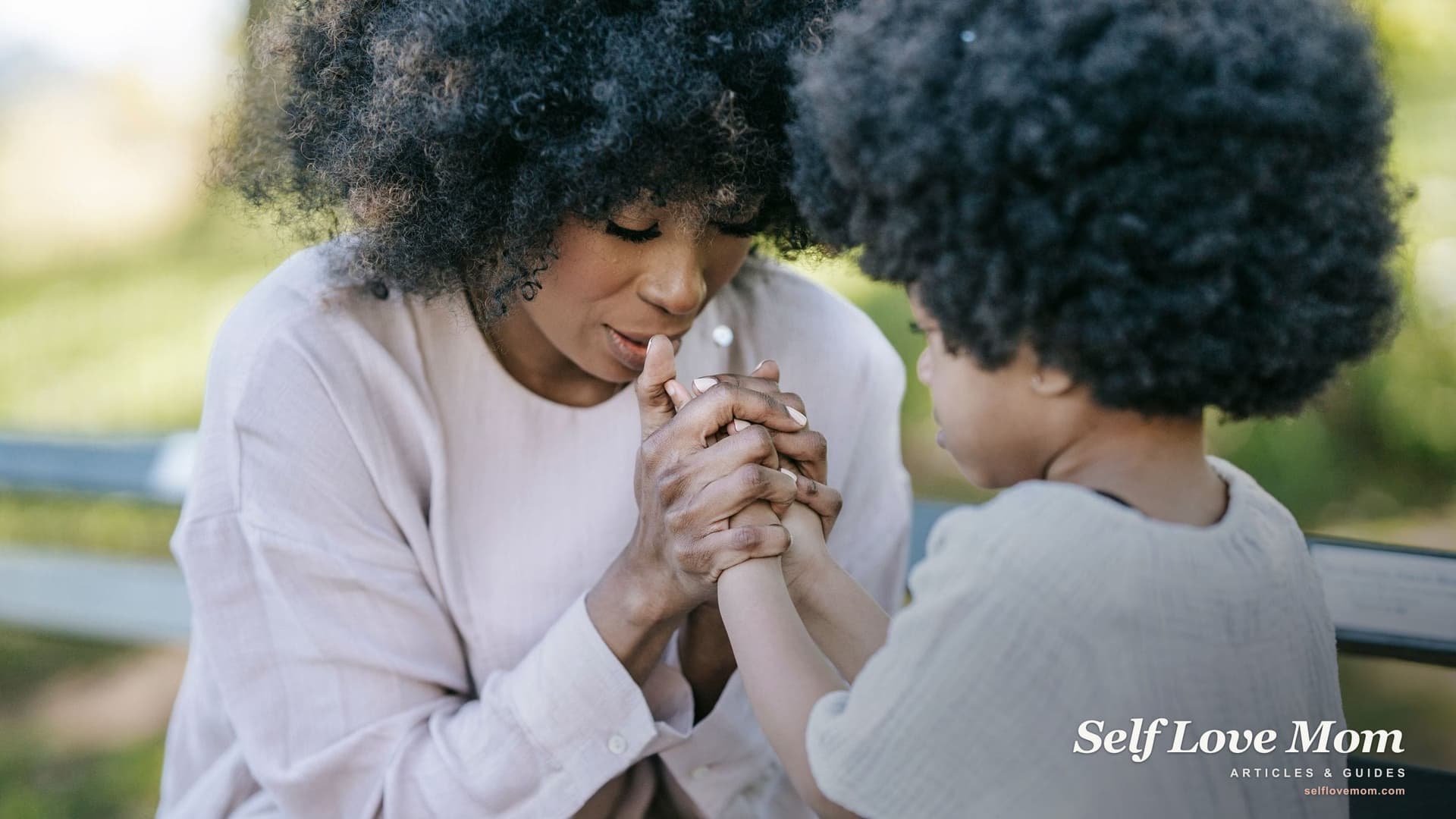
A mother sits close to her young child outdoors, holding the child's hands and speaking softly to comfort her.
If you and your children have nowhere safe to sleep tonight, call 211 now. If someone is hurting you, call the National Domestic Violence Hotline at 800-799-7233 instead, and call 911 if you are in danger right now. Both lines can find a shelter bed near you, and both are free and confidential.
This guide explains how shelters for single moms work: who to call, what happens at intake, what to bring, the rules you will live with, and how to move from a shelter bed to a home. How this guide was checked. Every rule and figure below was read on the program's own page or in the federal rule on October 5, 2026.
| The figure | What it is | Source |
|---|---|---|
| 230,366 | people in homeless families with children on one night in January 2025 | HUD |
| 93% | of those parents and children were in a shelter or transitional housing, not outside | HUD |
| 9.1 million | referrals the 211 network made for housing, homelessness and utility bills in 2025 | 211 |
The short version
- Call 211 for a family shelter bed, or the Hotline at 800-799-7233 (text START to 88788) if you are leaving abuse
- Most areas send families through one front door, called coordinated entry, so the first call matters more than which shelter you pick
- Shelters for families keep you and your kids together, and HUD-funded housing programs cannot turn a family away over a child's age or gender
- Bring ID, birth certificates and Social Security cards if you can, but leave without them if you are in danger
- Your children can stay in their school, and you can ask for SNAP within 7 days
Who do you call for a shelter bed tonight?
The fastest way to get emergency housing is one phone call. Start with 211, the free United Way helpline. It connects you to local help, and every call is confidential (United Way 211). Say it plainly, with your own numbers: "I am a mother with two children, ages 4 and 9, and we have nowhere safe to sleep tonight." In 2025 the 211 network made 9.1 million referrals for housing, homelessness and utility bills.
If you are leaving an abusive partner, call the National Domestic Violence Hotline at 800-799-7233, chat on its site, or text START to 88788 (The Hotline). Advocates answer 24/7, and the service is confidential. The Hotline does not hand out cash or hotel vouchers itself, but it connects you with local programs that may (The Hotline, What to Expect).
Call from a safe place. The Hotline asks callers to reach out when the abuser is not around and to hang up at once if that person walks in. If you are in danger right now, call 911 first. The emergency assistance guide for single mothers gives the same advice for rent and bills: dial 211 first.
How does coordinated entry work?
In most areas you do not apply to shelters one by one. Communities that take HUD homelessness money run a coordinated entry process, a shared system that assesses families and refers them to the housing and services they need (HUD Exchange, Coordinated Entry). Its four parts are access, assessment, referral and prioritization.
In practice, 211 or a local access point asks about your situation, scores how urgent it is, and refers you to an open bed or puts you on a list. Expect questions about where you slept last night and whether anyone could take you in for a few days. That second question is called diversion, and it is a normal step, not a refusal.
New York City shows what a front door looks like. Every family with children applies at the PATH intake center at 151 East 151st Street in the Bronx, open 24 hours, with applications processed 9 a.m. to 5 p.m. (NYC Department of Homeless Services). A family can get a temporary placement for up to 10 days while the city checks its housing history.
If NYC finds you ineligible, you can ask for a legal conference at PATH and have 60 days to request a state Fair Hearing. Other places have their own appeal steps, so ask for any denial in writing.
If every bed is full, ask to stay on the coordinated entry list and call back every day. Ask too about a motel voucher. Federal Emergency Solutions Grants money can pay for a hotel or motel voucher when no suitable emergency shelter is available for a family (24 CFR 576.102). Whether your area offers one depends on local funding.
Are there shelters just for moms and kids?
Yes. Family shelters take a parent with children, and many serve mostly single mothers. Family Promise is one national network built only for families with children, with 173 local affiliates you contact directly (Family Promise, Get Help). It served 31,000 families and 48,000 children in 2025, through prevention, shelter and housing help (Family Promise).
A common worry is a teenage son. An emergency shelter funded by Emergency Solutions Grants that takes families cannot use the age of a child under 18 to deny your family (24 CFR 576.102(b)). Projects funded by HUD's Continuum of Care program cannot use a child's age or gender either (24 CFR 578.93(e)).
That Continuum of Care rule covers much of the transitional housing and rapid rehousing you may be referred to next, which the housing assistance guide for single mothers explains.
Family shelters without that HUD money can set their own rules. DomesticShelters.org notes that some shelters for abuse survivors set an age limit for sons over a certain age, for the safety of other residents, so ask before you go (DomesticShelters.org). If one shelter says no, ask the advocate to find one that will keep your family together.
Family homelessness is concentrated. In January 2025, New York counted 84,923 people in homeless families and California 26,142, the two highest totals, according to HUD's annual report to Congress (HUD, 2025 AHAR Part 1).
What if you are leaving abuse?
A domestic violence shelter is built for safety first. Locations are often kept private, the stay is free, and most shelters give you and your children food, clothing, toiletries and linens if you left with nothing (DomesticShelters.org). Staff can also help you replace medications and documents you had to leave behind.
Federal law backs this up for programs funded by the Family Violence Prevention and Services Act. They cannot charge fees or apply an income test, and they cannot share information that identifies you without your written, time-limited consent (42 U.S.C. 10406(c)). The same law protects the confidential address of a shelter it funds.
The same guide says stays range from three or four days at an emergency shelter to a month or more at a longer-term program. Most do not allow visitors, and they will not share your information with outside agencies without your permission. You will usually share a room with your own children.
Finding an open bed used to take hours of calls. Advocates now use DVBeds, a free tool from the Hotline that shows open domestic violence shelter beds in real time and collects no personal survivor information (The Hotline, DVBeds). You do not use it yourself; ask the advocate on the phone to check it for you.
What should you bring to a shelter?
Bring identification for everyone in your family if you can. New York City's list for family shelter applicants is a good model: a photo ID, birth certificates, Social Security cards, Medicaid cards, and your most recent pay stub if you work (NYC DHS). Its staff will help you get missing documents, and most programs do the same.
- Medicines for you and the kids, with the prescription labels
- Your phone, charger and a written list of key phone numbers
- School records, shot records and any custody or protection orders
- A change of clothes for each child and one comfort item, like a blanket or toy
- Any benefit cards, such as an EBT or WIC card
If you are fleeing abuse, do not wait to gather papers. Leave, and let the shelter help you replace what is missing.
What are the rules in a family shelter?
Most shelters explain their house rules at intake, often covering curfew, chores, childcare and shared spaces. Shelters that use federal Emergency Solutions Grants money must follow local written standards for admission, referral and discharge, including a length of stay if the community sets one (24 CFR 576.400(e)). Ask on day one how long you can stay.
Time limits are real. Massachusetts communities told HUD that new family shelter length-of-stay limits in late 2024 required families past the limit to leave, which helped cut the state's count by 1,644 people (HUD, 2025 AHAR Part 1). Start the housing plan in your first week, not your last.
Domestic violence shelters add safety rules: keep the address private, send no mail to the building, and report strange cars or people. DomesticShelters.org adds that childcare is usually your job, though some programs offer care during counseling or let residents trade turns watching kids.
Can your kids stay in their school?
Yes. Under the federal McKinney-Vento Act, children living in a shelter, a motel or someone else's home because you lost your housing can stay in their school of origin or enroll in the school near the shelter (National Center for Homeless Education). They can enroll at once, even without the usual documents, and get transportation to the school of origin if you ask.
Every district has a McKinney-Vento liaison. Call the school office, ask for that person, and say you are staying in a shelter. If the district disagrees with your choice of school, it must explain why in writing and tell you how to appeal.
Younger children get help too. Head Start and Early Head Start must prioritize families experiencing homelessness, and a child can attend for up to 90 days, or as long as state licensing allows, while you gather shot records and other papers (Head Start, Serving Families Experiencing Homelessness). Enrollment is not guaranteed, so apply early.
How do you get food and cash help in a shelter?
Apply for SNAP from the shelter. You may get benefits within 7 days if your household has less than $100 in cash and savings and under $150 in monthly gross income (USDA, SNAP Eligibility). The guide to food stamps when you are homeless walks through the application.
If you are pregnant or have a child under 5, add WIC for formula, food and checkups, as the WIC guide for single mothers explains. For cash to cover a deposit or first month's rent later, the emergency loans guide for single moms compares the fast options, including 211 rent help.
What comes after the shelter?
A shelter bed is a bridge, and the goal is a home. HUD's Emergency Solutions Grants program pays for shelter, but its stated aim is helping people quickly regain stability in permanent housing (HUD Exchange, ESG). Ask your case manager on day one which of these you can be referred to.
- Rapid rehousing: short-term rent help and a case manager to get you into your own apartment fast
- Transitional housing: a program apartment for months, often with job or school goals
- Housing vouchers and public housing: long waiting lists, so sign up now even if you move first
Sign up for every waiting list your case manager names. If you are in Florida, the Florida housing assistance guide lists the state's emergency and transitional programs.
Shelter checklist for tonight
- If you are in danger, call 911. If you are leaving abuse, call 800-799-7233 or text START to 88788.
- Otherwise call 211 and say you need a family shelter bed tonight, with your children's ages.
- Answer the intake questions honestly, including where you slept last night and who might take you in.
- Pack ID, birth certificates, Social Security cards, medicines and benefit cards if it is safe to.
- Ask the shelter how long you can stay and who your case manager is.
- Call your children's school and ask for the McKinney-Vento liaison.
- Apply for SNAP from the shelter and ask for expedited benefits.
- Ask for a referral to rapid rehousing or transitional housing in your first week.
Frequently asked questions
How do I get emergency housing as a single mom?
Call 211 and ask for a family shelter bed tonight, giving your children's ages. Most communities route families through one coordinated entry system, so that call starts your assessment. If you are leaving abuse, call the National Domestic Violence Hotline at 800-799-7233 instead, and call 911 if you are in danger.
Where do I go if I have nowhere to stay with my kids?
Call 211 for the nearest family shelter or coordinated entry access point. Some cities have one intake center, such as New York City's PATH center in the Bronx, open 24 hours. You can also contact your local Family Promise affiliate, which serves only families with children, or ask a hospital or school social worker.
Can a shelter separate me from my teenage son?
HUD-funded emergency shelters cannot turn you away over the age of a child under 18, and Continuum of Care projects cannot use age or gender. Shelters without that money, including some for abuse survivors, may set age limits for older sons. Ask before you arrive, and ask the advocate to find a program that keeps your family together.
How long can you stay in a family shelter?
It depends on the program. Domestic violence shelters range from three or four days to a month or more, and many family shelters set limits in written standards. Massachusetts added family shelter time limits in late 2024. Ask at intake how long you can stay and start your housing plan in week one.
Do shelters for single moms cost money?
Family shelters generally do not charge, and federal law bars fees at domestic violence programs funded by the Family Violence Prevention and Services Act. Ask at intake whether a program expects you to save part of any income. The National Domestic Violence Hotline does not give cash or hotel vouchers itself, but it can connect you with programs that may.
A bed tonight is step one. For the help that comes next, the grants for single moms guide lists cash programs. The single mom resources page sorts help by need.
Sources
- United Way 211, Call 211 for Essential Community Services (retrieved October 5, 2026)
- National Domestic Violence Hotline (retrieved October 5, 2026)
- National Domestic Violence Hotline, What to Expect When You Contact Us (retrieved October 5, 2026)
- National Domestic Violence Hotline, DVBeds (retrieved October 5, 2026)
- HUD Exchange, Coordinated Entry (retrieved October 5, 2026)
- HUD Exchange, ESG: Emergency Solutions Grants Program (retrieved October 5, 2026)
- Cornell LII, 42 U.S.C. 10406, Formula grants to States (FVPSA) (retrieved October 5, 2026)
- eCFR, 24 CFR 576.102, Emergency shelter component (retrieved October 5, 2026)
- eCFR, 24 CFR 576.400, Area-wide systems coordination requirements (retrieved October 5, 2026)
- eCFR, 24 CFR 578.93, Fair Housing and Equal Opportunity (retrieved October 5, 2026)
- HUD, 2025 Annual Homelessness Assessment Report, Part 1 (May 2026) (retrieved October 5, 2026)
- NYC Department of Homeless Services, Families with Children: Applying for Temporary Housing Assistance (retrieved October 5, 2026)
- Family Promise, Get Help (affiliate locations) (retrieved October 5, 2026)
- Family Promise, home page (2025 families served) (retrieved October 5, 2026)
- DomesticShelters.org, The Support You Can Expect at a Shelter for Women and Children (retrieved October 5, 2026)
- National Center for Homeless Education, Information for Parents (retrieved October 5, 2026)
- Head Start, FAQs About Serving Families Experiencing Homelessness (retrieved October 5, 2026)
- USDA Food and Nutrition Administration, SNAP Eligibility (retrieved October 5, 2026)
✻ Share this article
✻ About the contributor · Folio N°.187

Written by Subha
Psychologist and writer covering the topics that matter most to single moms, money, mental health, and the small daily rituals that keep a family running. Every article is research-backed and edited four times before publish.
- Articles
- 187
- Desks
- 05
- Edited
- 4×
More from this writer
✻ Edited four times before publish