WIC for Single Mothers: 2026 Benefits and Income Limits
WIC for single mothers in 2026: who qualifies, the 185% income limits by household size, and what you actually get. 7.3M single moms; here is how to apply.

 Click to zoom
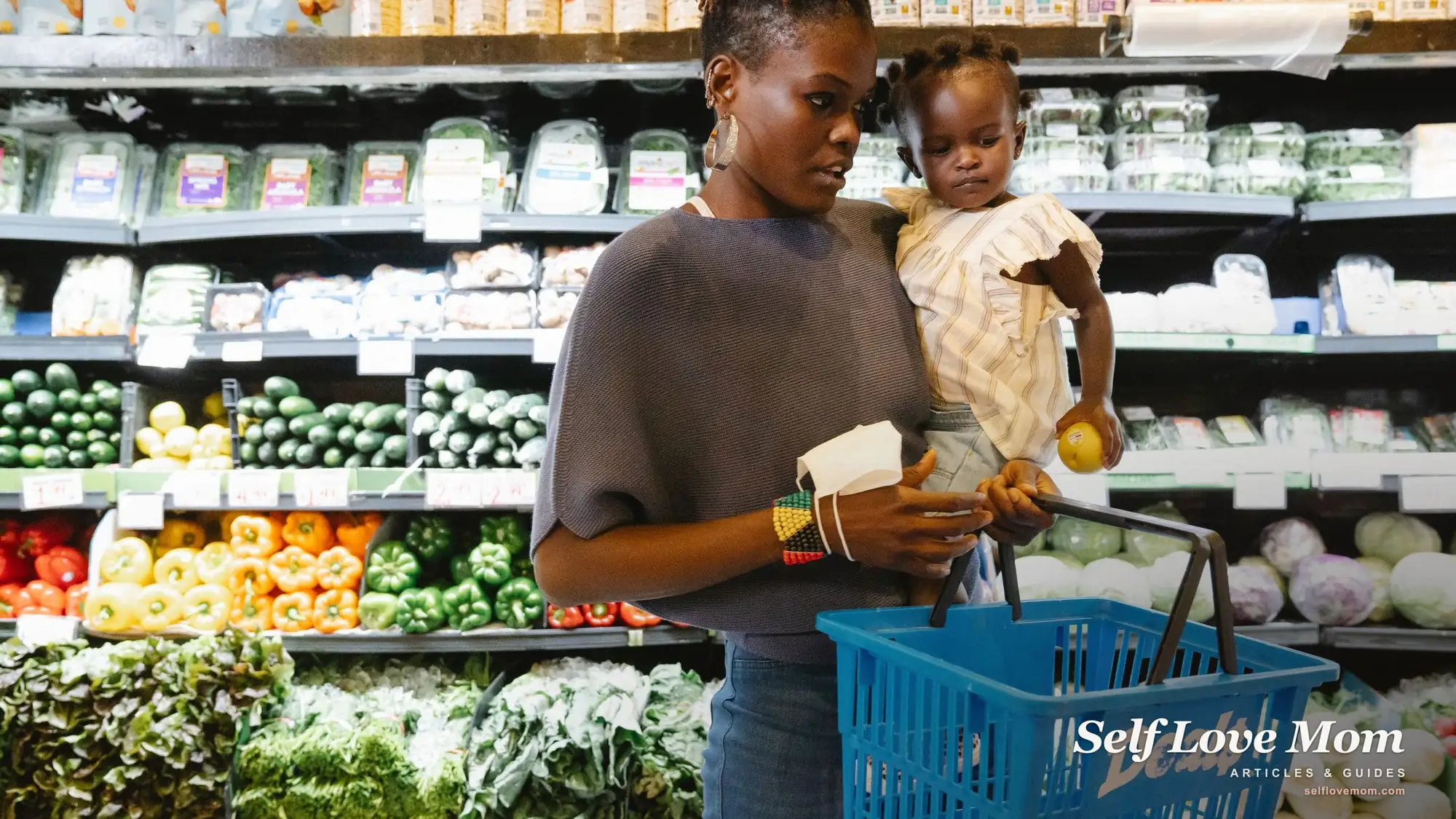
A single mom shops for fresh fruits and vegetables with her young daughter, the kind of healthy food WIC helps cover.
If you are raising kids on one income, WIC was built for households like yours. The name says it: Women, Infants, and Children. It is a federal nutrition program for pregnant moms, new moms, and young kids, and your marital status never matters.
The U.S. has 7.3 million mother-only households (U.S. Census Bureau, 2024), and a single mom is exactly who WIC is designed to reach. This guide covers who qualifies in 2026, the income limits by household size, what you actually receive, and how to apply without the guesswork.
| Who you are | Fruit and veg benefit | How long you qualify |
|---|---|---|
| Pregnant | $48/month | Through pregnancy |
| Postpartum (not nursing) | $48/month | Up to 6 months after birth |
| Breastfeeding | $52/month | Until baby turns 1 |
| Each child age 1 to 4 | $26/month | Until the 5th birthday |
The short version
WIC is open to single moms who are pregnant, postpartum, or breastfeeding, plus any child under 5. You qualify if household income is at or below 185% of the poverty line, which is $39,128 a year for a mom and one child in 2026 (USDA). If you already get Medicaid, SNAP, or TANF, you are income-eligible automatically. Benefits include monthly food, infant formula, nutrition help, and breastfeeding support.
Can a single mom get WIC?
Yes. WIC is open to all qualifying families, and being a single parent is no barrier at all. State agencies say it plainly: you can be married or single, and you can apply as a mother, father, guardian, or grandparent caring for a child under 5.
You qualify on two simple tests. First, a category: you are pregnant, recently had a baby, are breastfeeding, or you care for a child under 5. Second, income at or below the WIC limit, which we break down next. A quick, free health screening at enrollment is the only other step.
What are the WIC income limits for 2026?
WIC income limits sit at 185% of the federal poverty guidelines (USDA, 2025 to 2026). These took effect July 1, 2025 and run through June 30, 2026. Income counts before taxes, and a pregnant woman counts as two people, which raises your limit.
- Household of 1: $28,953 a year (about $2,413 a month)
- Household of 2, like a mom and one child: $39,128 a year ($3,261 a month)
- Household of 3, a mom and two kids: $49,303 a year ($4,109 a month)
- Household of 4: $59,478 a year ($4,957 a month)
- Add about $10,175 a year for each additional person
Count everyone you live with and share money with, then add one for each baby on the way. If you are pregnant with your first child, your household size is two, so the $39,128 limit applies to you even before the baby arrives.
What does WIC actually give a single mom?
More than the produce dollars in the table above. WIC provides a full monthly food package tailored to you and each child, plus services that are easy to overlook. For pregnant and postpartum moms, the food package runs roughly $60 to $100 a month (No Kid Hungry, 2025), and the support is worth as much as the food.
Your package typically includes milk, eggs, whole-grain bread or cereal, beans or peanut butter, and the fruit and vegetable benefit. Infants get iron-fortified formula or baby food. You also receive personalized nutrition advice, breastfeeding counseling and pumps if you nurse, and referrals to healthcare and other aid programs.
How do you qualify with low or no income?
Low income helps you, it does not stop you. WIC has no minimum income, so a mom with zero earnings qualifies on the income test. The program is aimed squarely at families who are stretched, and a tight budget is the norm among applicants, not the exception.
There is an even faster path called adjunctive eligibility. If you or your kids already receive Medicaid, SNAP, or TANF, you are automatically income-eligible for WIC and skip the income math entirely. If you are pregnant and short on food now, our guide on food stamps while pregnant pairs well with a WIC application.
How do you apply for WIC as a single mom?
You apply through a WIC agency in your area, and many states now let you start online. Call or book an appointment, bring your documents, and complete the short nutrition screening for yourself and each child. Approval often happens the same day, and benefits load onto a WIC card. Many EBT discounts, including Amazon Prime Access and Walmart+ Assist, accept a WIC letter as proof.
- Photo ID for yourself, such as a driver's license
- Proof of address, like a utility bill or lease
- Proof of income, or your Medicaid, SNAP, or TANF letter
- Each child who is applying, present at the visit
- Immunization and any medical records you have for the kids
If you cannot find documents, call the agency anyway. Staff routinely help applicants work around missing paperwork, and they would rather enroll you than turn you away. For other programs to line up at the same time, see our guide to childcare assistance for single mothers.
WIC vs SNAP: what is the difference?
They are separate programs, and you can receive both at once. WIC targets pregnant women, new moms, and young kids with specific healthy foods and nutrition support. SNAP, formerly food stamps, serves the whole household and lets you buy almost any groceries with far fewer restrictions.
Think of WIC as focused and SNAP as broad. WIC fills the nutrition gaps that matter most in pregnancy and early childhood, while SNAP stretches the family grocery budget. Getting one does not reduce the other. To see how the related cash program compares, read whether TANF is the same as food stamps.
What if your income is a little too high?
Do not assume you are over the limit until you do the math. Many single moms underestimate their household size or forget that a pregnancy adds a person, which lifts the income ceiling. Recheck the table in section two with your real numbers before you rule yourself out.
Your situation can also change fast. A job loss, a new baby, or starting Medicaid can make you eligible overnight, so reapply whenever life shifts. If money is tight right now and WIC will not stretch far enough, our roundup of emergency assistance for single mothers covers faster help.
Frequently asked questions
How much does a pregnant mom get on WIC?
A pregnant participant receives $48 a month for fruits and vegetables in 2026 (USDA), plus a full food package of milk, eggs, whole grains, and beans or peanut butter. Counting everything, the monthly benefit is often $60 to $100 in food, along with free nutrition counseling and healthcare referrals.
Can you get WIC with no income?
Yes. WIC sets no minimum income, so a single mom with no earnings still qualifies on the income test. You must meet one category, such as being pregnant or caring for a child under 5, and complete the short nutrition screening. Zero income does not disqualify you in any way.
Does WIC count child support as income?
Generally yes. WIC counts gross income from most sources, including wages, child support, alimony, unemployment, and disability. It does not count loans or certain military allowances. If you receive Medicaid, SNAP, or TANF, you are income-eligible automatically and do not need to add it up.
Can a single dad or guardian get WIC?
Yes. WIC benefits follow the child, not the mother specifically, so a single father, foster parent, grandparent, or legal guardian can apply for a child under 5. The same income limits and categories apply. The caregiver brings the child to the appointment and completes the screening.
How long can a single mom stay on WIC?
As long as you keep qualifying. Pregnant moms are covered through pregnancy, postpartum moms up to 6 months, and breastfeeding moms until the baby turns 1. Each child is eligible until their fifth birthday. You recertify periodically, and you can move between categories as your family grows.
The bottom line
WIC is one of the most useful programs a single mom can tap, and the bar is lower than most people assume. If you are pregnant or have a child under 5 and your income is near or below the limits above, you very likely qualify. Find your local agency, gather your documents, and book the appointment this week. For more ways to stretch one income, see our financial tips for single moms.
Sources
- U.S. Department of Agriculture, Food and Nutrition Service, "WIC Eligibility," retrieved 2026-06-17, fns.usda.gov
- U.S. Department of Agriculture, "WIC 2025/2026 Income Eligibility Guidelines," effective July 1, 2025, retrieved 2026-06-17, fns.usda.gov
- U.S. Department of Agriculture, "WIC Policy Memorandum #2026-2: FY 2026 Cash-Value Voucher/Benefit Amounts," December 10, 2025, retrieved 2026-06-17, fns.usda.gov
- U.S. Census Bureau, "National Single Parent Day: March 21, 2024," retrieved 2026-06-17, census.gov
- No Kid Hungry, "What is the WIC program and what does WIC provide?," June 24, 2025, retrieved 2026-06-17, nokidhungry.org
✻ Share this article
✻ About the contributor · Folio N°.177

Written by Subha
Psychologist and writer covering the topics that matter most to single moms, money, mental health, and the small daily rituals that keep a family running. Every article is research-backed and edited four times before publish.
- Articles
- 177
- Desks
- 05
- Edited
- 4×
More from this writer
✻ Edited four times before publish