Co-Parenting Therapy After Divorce: What to Expect & How It Helps
Co-parenting therapy has a small proven benefit for parents and no proven effect on children. What 27 randomized trials actually found, and what to expect.

 Click to zoom
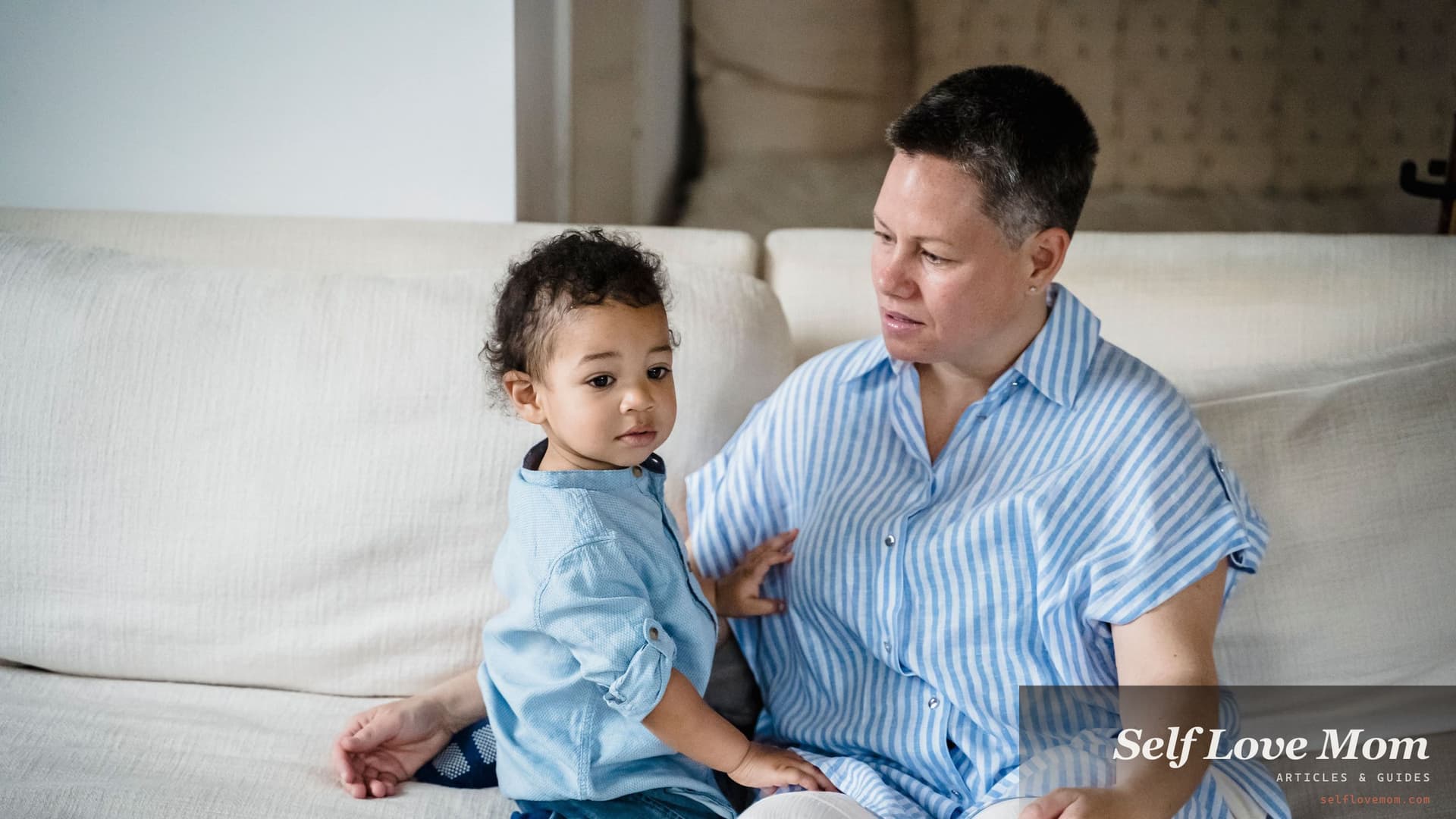
A divorced mother and father in a co-parenting therapy session with a counselor in a bright living room.
Co-parenting therapy is counseling aimed at one thing only: how the two of you raise a child now that you are no longer together. It is not couples therapy, it does not relitigate the marriage, and it does not require either of you to be friends by the end.
This guide covers what it involves, what the research actually shows, and where the evidence is weaker than the people selling it will tell you. That last part matters, because the honest picture changes what you should expect from it. And if you are still in the thick of the separation itself, our guide to surviving a divorce covers the recovery arc this sits inside.
| US divorce rate, 2023 | Children's increased risk of adjustment problems | Typical skill-building program length |
|---|---|---|
| 2.4 per 1,000 | 1.5 to 2x | 8 to 12 sessions |
The short version
Co-parenting therapy keeps the focus on the child rather than the marriage, and a neutral third person keeps both of you on track. The research is real but narrower than advertised: a 2021 review of 27 randomized trials (16 pooled) found a small but significant benefit for co-parenting quality and parents' well-being, and no statistically significant effect on children's adjustment. It helps you. Expecting it to fix your child directly is expecting more than the evidence supports.
What is co-parenting therapy?
It is structured counseling for two people who share a child and no longer share a life. A neutral therapist sits with both parents and works on the mechanics: handovers, schedules, decisions, and how you speak to each other in front of the child.
The defining feature is the boundary. This is not the place to establish who was right. Sessions that drift into the marriage are considered off-track, and a competent therapist will say so. That constraint is the entire value: it is the one room where the only agenda item is your child.
It also works when only one of you attends. That surprises people, but a large share of what makes handovers awful is patterned reaction, and you can only change your half regardless. A refusing ex is a reason to go alone, not a reason to skip it.
Does co-parenting therapy actually work?
Yes, modestly, and for a narrower set of outcomes than most articles claim. This is worth reading carefully, because the gap between what the research found and what gets advertised is wide.
A 2021 systematic review and meta-analysis in Family Relations examined 27 randomized controlled trials of co-parenting programs. Pooling the subset with usable data, it found a small but statistically significant benefit, g = 0.21, for co-parenting quality and for parents' own well-being.
The part nobody quotes: effects on children's adjustment were not significant, and neither were effects on the parent-child relationship. That is not evidence these programs fail children. It means the benefit has not been demonstrated, which is a different and more honest claim than the one usually made.
So go in with the right expectation. It is likely to improve how the two of you operate and how you personally are coping. Treat any promise about fixing your child as marketing.
Why does conflict matter so much?
Because conflict is what this kind of counseling is built to reduce, and it stands between your child and an ordinary childhood. It is not the biggest such factor, though. Children of divorced or separated parents face roughly 1.5 to 2 times the risk of adjustment problems: academic difficulty, disruptive behavior, and depressed mood.
The same commentary is careful about what drives that, and the order is instructive. The factors mediating it are less effective parenting, conflict between parents, economic hardship, and limited contact with one parent, listed in decreasing order of how strongly they relate to children's mental health. Parenting outranks conflict.
It also says the thing that gets left out of articles like this one: most children whose parents divorce are resilient and show no obvious psychological problems. Both facts are true at once. The elevated risk is real, and your child is more likely than not to be fine.

What happens in a session?
Less drama than people brace for. Early co-parenting therapy sessions are largely diagnostic: the therapist works out where things actually break down, which is usually a specific recurring moment rather than a general incompatibility.
After that it becomes practical. You work on the handover, the message that always escalates, the decision you cannot agree on. Sessions are structured, and the therapist interrupts, because two people with a decade of grievance will otherwise use the hour to rehearse it.

Children are sometimes brought in, but later and rarely. If a therapist proposes it in week one, ask why. The default assumption should be that the adults do the work.
How long does it take?
The honest answer is that nobody can promise you a number, and any practice that does is selling. What the research describes is program length rather than time to results.
Structured skill-building programs for separated parents typically run 8 to 12 sessions, compared with one or two for basic educational classes. Those skill-building programs have been evaluated in randomized trials and show positive, lasting effects on positive parenting behaviors, reductions in conflict between parents, and children's mental health.
Notice the distinction. That is a description of how long a program lasts, not a guarantee that you will feel better by session twelve. It is also the strongest evidence in this article for conflict actually going down, which is worth knowing when you choose a format.
What if your ex will not go?
Go anyway. A refusing ex is the most common blocker to co-parenting therapy and the least good reason to do nothing, because the majority of what makes co-parenting unbearable is a pattern, and a pattern needs two people to keep running.
Working alone, you can change what you reply to, how fast you respond, and what you refuse to argue about at the door. None of that requires cooperation. It also removes the thing your ex may be relying on, which is your reaction.

If the relationship is genuinely high-conflict or involves a personality disorder, the aim shifts from cooperation to insulation. Our guide to co-parenting with a narcissist covers that specifically, and co-parenting after separation covers the structure underneath it.
How do you find a co-parenting therapist?
Look for someone who does this specifically rather than a couples therapist willing to try. The skill you are buying is refereeing, not insight, and they are different jobs.
- Ask directly whether they take sides. The correct answer is that they work for the child. Anyone who suggests they will help you win is the wrong person.
- Ask what happens when a session goes off-topic. You want a therapist who interrupts. A passive one lets you pay by the hour to argue.
- Ask about format and length. Structured programs have the better evidence. Open-ended sessions with no plan are harder to justify.
- Ask about cost before the first session. Sliding scales are common and rarely advertised. Directory listings are paid placements, not endorsements.
Online sessions work for this and remove the logistics of getting two people who avoid each other into one room. If cost is the barrier, our guide to therapy for moms covers the tiers and what free options actually exist.
Frequently Asked Questions
What is co-parenting counseling?
Counseling focused only on how two separated parents raise their child together. It covers schedules, handovers, decisions, and communication. It deliberately excludes the marriage, which is what makes it different from couples therapy and what makes it possible when you cannot stand each other.
Does co-parenting therapy help children?
Not provably, which is worth knowing before you start. A 2021 systematic review of 27 randomized trials, 16 of them pooled, found a small significant benefit for co-parenting quality and parents' well-being, but effects on children's adjustment were not statistically significant. It is likely to help you and how the two of you operate, and that is a reasonable thing to buy.
Can I go if my ex refuses?
Yes, and it is still worth it. Most of what makes co-parenting exhausting is a two-person pattern, and half of that pattern is yours to change. Going alone also stops the arrangement depending on the cooperation of someone who is not cooperating.
How many sessions will it take?
Nobody can tell you honestly, and treat a specific promise as a sales pitch. What the research describes is program length: structured skill-building programs for separated parents typically run 8 to 12 sessions, against one or two for basic classes. That is a dose, not a timeline for how you will feel.
Is it worth it if we barely speak?
Often that is the ideal case. Low communication is easier to work with than high conflict, because there is less to unlearn. The goal is not friendship. It is a working arrangement your child does not have to manage.
Sources
- Eira Nunes, C., de Roten, Y., El Ghaziri, N., Favez, N., and Darwiche, J., "Co-Parenting Programs: A Systematic Review and Meta-Analysis," Family Relations 70(3):759-776 (2021), doi:10.1111/fare.12438 (retrieved 2026-07-17). Reviewed 27 randomized controlled trials across 23 programs; 16 studies pooled. Overall effect g=0.21, 95% CI [0.12, 0.30], p<0.001, described by the authors as modest support with a small effect. Child adjustment (k=9, g=0.21, p=0.100) and the parent-child relationship (k=8, g=0.15, p=0.070) were not statistically significant. Heterogeneity I-squared 63.12%.
- D'Onofrio, B., and Emery, R., "Parental divorce or separation and children's mental health," World Psychiatry 18(1):100-101 (2019), doi:10.1002/wps.20590 (retrieved 2026-07-17). Risk of adjustment problems, including academic difficulties, disruptive behaviors, and depressed mood, typically increases by a factor between 1.5 and 2. Mediators in decreasing order of magnitude: less effective parenting, interparental conflict, economic struggles, limited contact with one parent. Most children whose parents divorce are resilient.
- O'Hara, K.L., and Cohen, B., "A call for early, effective, and scalable parent education programs for high-conflict separated/divorcing parents," Family Court Review 62(1):160-175 (2024, published online December 2023), doi:10.1111/fcre.12771 (retrieved 2026-07-17). Skill-building programs typically run 8 to 12 sessions against 1 to 2 for didactic programs, with randomized trials showing positive, lasting effects on parenting behaviors, interparental conflict, and child mental health.
- Centers for Disease Control and Prevention, National Center for Health Statistics, "Marriage and Divorce" FastStats (provisional 2023 data, retrieved 2026-07-17). 672,502 divorces at a rate of 2.4 per 1,000 population across the 45 states and DC that report divorce counts to NCHS. Marriage rate 6.1 per 1,000 total population.
✻ Share this article

✻ About the contributor · Folio N°.207

Written by Subha
Psychologist and writer covering the topics that matter most to single moms, money, mental health, and the small daily rituals that keep a family running. Every article is research-backed and edited four times before publish.
- Articles
- 207
- Desks
- 05
- Edited
- 4×
More from this writer
✻ Edited four times before publish