Fun Things to Do at Home With Kids: Indoor Boredom Busters
Kids ages 0 to 8 average 2.5 hours of screen time daily (Common Sense Media). Here are fun things to do at home with kids: no-prep indoor boredom busters.

 Click to zoom
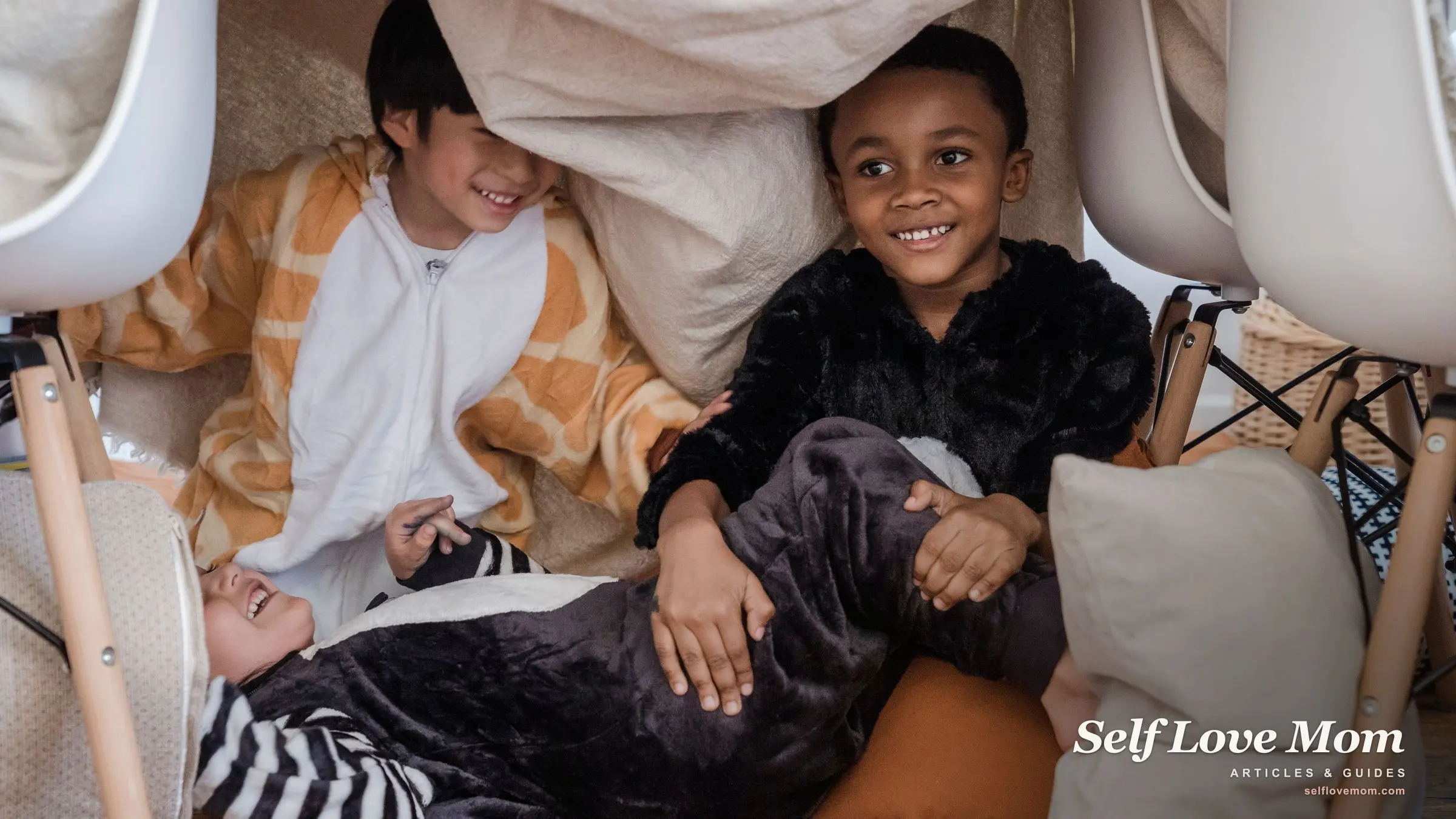
Three kids in animal onesies laughing inside a homemade blanket fort, a classic indoor activity when they are bored at home.
Rainy day, school holiday, or a long afternoon stuck inside: the boredom hits and the screens come out. But you do not need a plan or a craft store run. The best fun things to do at home use what you already own and buy you a real stretch of quiet. This guide sorts indoor ideas by the moment you are in.
Whether your kids are toddlers or tweens, the goal is the same: keep them busy, off the screen, and happy enough that you get a breather. Pick one by energy level or prep time, set it up, and let it run. No mess-master required.
| Screen pull | What kids need | Prep required |
|---|---|---|
| 2.5 hrs daily screen time for kids ages 0 to 8 (Common Sense Media) |
60 min of active play a day for ages 6 to 17 (CDC) |
$0 most ideas here use what you already have |
The short version
Kids default to screens when they are bored, but play is what they actually need. Match the activity to the moment: zero-prep for instant meltdowns, active games to burn energy, calm crafts for wind-down. The American Academy of Pediatrics says play is essential, not a time-filler. Keep a short list on the fridge so you never scramble.
Why do kids get so bored at home?
Because screens set a fast pace that ordinary afternoons cannot match. Children ages 0 to 8 average 2.5 hours of screen time a day, per the Common Sense Media 2025 Census. When the tablet goes away, the quiet can feel like boredom, even though it is really just space to play.
That space matters more than it looks. In its 2018 report The Power of Play, the American Academy of Pediatrics calls play essential to healthy development, noting it helps regulate the body's stress response. Boredom is often just the doorway to it.
So the aim is not to fill every minute. It is to offer a starting point and step back. A little boredom sparks imagination, and the ideas below give kids the nudge without costing you a thing.
What can kids do at home with zero prep?
Plenty, when the meltdown is now and you have no time to set up. Zero-prep activities work because they use only what is in the room. Reach for these first, before anyone reaches for a screen. For ages 1 to 3 specifically, these indoor activities for toddlers are tuned to little hands.
- Build a blanket fort. Couch cushions and a sheet turn the living room into a hideout for an hour.
- Play the floor-is-lava. Pillows become islands and the whole room becomes a game in seconds.
- Start an indoor treasure hunt. Hide a few small objects and send them searching room to room.
- Have a freeze-dance party. Any playlist plus stop-and-go rules burns energy fast.
- Do a "how many" challenge. How many jumping jacks, hops, or spins before the timer beeps?
What are the best active indoor games?
The ones that let kids burn real energy without leaving the house. The CDC says children ages 6 to 17 need at least 60 minutes of activity a day, and younger kids should move throughout the day, per its child activity guidelines. Indoor games count toward that, rain or shine. For the youngest, these double as gross-motor activities for toddlers.
- Set up an obstacle course. Cushions to jump, a chair to crawl under, tape lines to balance on.
- Play balloon volleyball. One balloon, keep it off the floor. Hours of low-damage energy burn.
- Try animal-walk races. Bear crawls, crab walks, and bunny hops from wall to wall.
- Do a kids yoga video. Free online sessions channel the wiggles into calm; great for mixed ages.
- Run a dance-off. Take turns picking songs and copying each other's moves.
What calm activities work for quiet time?
Low-energy ideas for the wind-down hours, or when you just need the volume down. Calm activities give kids the same play benefit without the noise. The AAP notes that quiet, focused play builds attention and eases stress. These pair well with a late afternoon or the stretch before dinner.
- Build a reading nook. A pile of pillows and a stack of library books can hold them for a while.
- Color or draw. Free printable coloring pages or a blank pad and crayons work equally well.
- Make a sensory bin. Dry rice or pasta in a tub with cups and spoons is quiet, cheap, and mesmerizing.
- Try simple journaling. Prompts like "draw your best day" work for kids who are not writing yet.
- Do a puzzle together. A shared puzzle is calm connection and a screen-free win.
What can you do with stuff you already own?
Turn the recycling bin and the pantry into a craft cupboard. The best budget-friendly activities repurpose what would otherwise be trash or a snack. No craft-store trip, no cost, and cleanup is usually quick. For outdoor versions of these, see these fun things to do outside at home.
- Cardboard box everything. A big box becomes a car, a rocket, or a puppet theater.
- Bake or "cook" together. Measuring and mixing is a math lesson disguised as fun; let them crack the eggs.
- Make paper-plate crafts. Masks, clocks, and animals from plates you already have.
- Do a kitchen science trick. Baking soda and vinegar is a guaranteed gasp, with a wipeable mess.

How do you keep kids busy so you get a break?
Set them up for independent play, then protect your own minute. Solo parenting means the break is not optional, it is maintenance. Rotate a few activities so nothing gets stale, and let "boredom" do some of the work. You are allowed to rest while they play, especially as a single mom doing it all.
- Rotate a toy bin. Hide half the toys and swap them weekly so old ones feel new again.
- Set a "play alone" timer. Start small and build the stretch of independent play over time.
- Keep a boredom jar. Write ideas on slips; when they whine, they draw one instead of asking you.
- Claim your reset. While they play, take five for yourself; here are things to do for yourself.
Frequently Asked Questions
What are good fun things to do at home with kids on a rainy day?
Start with zero-prep energy burners: a blanket fort, floor-is-lava, or an indoor obstacle course. The CDC says kids ages 6 to 17 need 60 minutes of activity daily, and indoor games count. Then shift to calm crafts, like coloring or a sensory bin, as the day winds down.
How do I entertain kids at home without spending money?
Shop your own home. Cardboard boxes, recycling, pantry staples, and library books cover most crafts and games for free. Baking together, paper-plate art, and a rice sensory bin all use what you already have. The best fun things to do at home cost nothing but a little setup.
What can kids do at home instead of watching screens?
Offer an easy starting point and step back. Common Sense Media found kids ages 0 to 8 average 2.5 hours of screen time a day, so a ready alternative helps. A fort, a puzzle, a dance party, or a sensory bin gives them something hands-on to choose instead.
How long should kids play on their own?
Build it up gradually. Independent play is a skill, so start with short stretches and lengthen them over weeks. The AAP calls play essential to development, and solo play is part of that. A rotated toy bin and a "boredom jar" help kids fill the time without constant help.
What indoor activities burn the most energy?
Movement games win. An obstacle course, balloon volleyball, animal-walk races, and freeze dance all get hearts pumping indoors. These help meet the CDC's 60-minute daily activity target for older kids and use up the wiggles in younger ones, no yard required.
Sources
- Common Sense Media, "The 2025 Common Sense Census: Media Use by Kids Zero to Eight" (2025, retrieved 2026-07-24). Children up to age 8 average about 2.5 hours of screen time a day.
- Centers for Disease Control and Prevention, "Child Activity: An Overview" (2025, retrieved 2026-07-24). Ages 6 to 17 need at least 60 minutes of daily activity; ages 3 to 5 should be active throughout the day.
- American Academy of Pediatrics, "The Power of Play: A Pediatric Role in Enhancing Development in Young Children," Pediatrics (2018, reaffirmed 2025, retrieved 2026-07-24). Play enhances brain structure and function and promotes executive function, and buffers stress.
✻ Share this article
✻ About the contributor · Folio N°.180

Written by Subha
Psychologist and writer covering the topics that matter most to single moms, money, mental health, and the small daily rituals that keep a family running. Every article is research-backed and edited four times before publish.
- Articles
- 180
- Desks
- 05
- Edited
- 4×
More from this writer
✻ Edited four times before publish