46 Gross Motor Activities for Toddlers (Indoor & Out)
Toddlers need about 180 minutes of active play a day. Here are 46 easy gross motor activities for toddlers, ages 1 to 3, to build strength indoors and out.

 Click to zoom
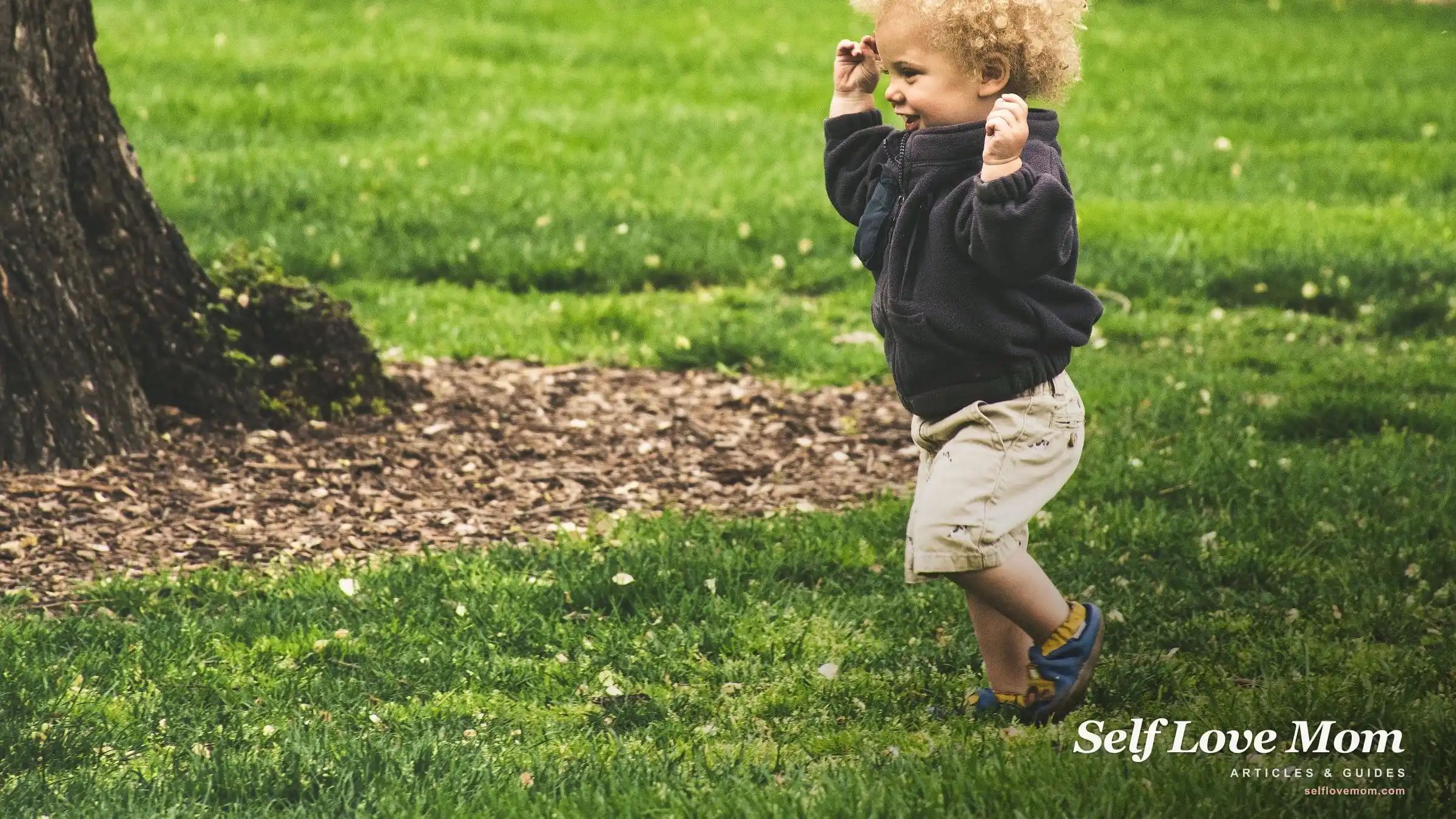
A curly-haired toddler runs across the grass in a park, mid-stride and grinning.
Toddlers are built to move. Climbing, running, and crashing into cushions is not just burning energy, it is how their big muscles, balance, and coordination actually develop. When you are parenting solo, that constant motion can feel like a lot to manage, but it is also the easiest kind of play to set up. Most of it needs nothing but floor space and a few things you already own.
This guide gives you 46 gross motor activities for toddlers, sorted by where and when you will use them: indoors, outdoors, by season, and squeezed into a busy day. On rainy days, our indoor activities for toddlers add quieter options too.
| Active play needed daily | Activities in this guide | Setup cost |
|---|---|---|
| 180 min recommended for ages 1 to 2 (WHO) |
46 indoor, outdoor, seasonal |
$0 most use what you own |
The short version
Toddlers aged one to two need about 180 minutes of physical activity a day, and big-muscle play is the heart of it. The 46 ideas below build balance, strength, and coordination through climbing, jumping, throwing, and running. Nearly all are free, take seconds to set up, and work indoors or out. Short bursts count, so ten minutes here and there adds up fast.
Why do gross motor skills matter for toddlers?
Gross motor skills are the large-muscle movements behind walking, running, jumping, and climbing, and toddlers build them through daily practice. The World Health Organization recommends children aged one to two get at least 180 minutes of physical activity a day, spread throughout the day (World Health Organization, 2019). Active play is how they hit it.
The payoff reaches past strong legs. The American Academy of Pediatrics says play builds motor skills, attention, and confidence, and helps children cope with stress (HealthyChildren.org, AAP). Every wobbly climb and clumsy throw is real developmental work.
For a solo parent, that is freeing. You do not need equipment or a plan. You need a bit of space and permission to let your toddler move.
What are the best indoor gross motor activities for toddlers?
Indoor gross motor play is how you reach that 180 minutes of daily movement when you are stuck inside. A living room can absolutely deliver climbing, jumping, and throwing. These fifteen turn pent-up energy into giggles instead of meltdowns, and cleanup is quick.

- Balloon volleyball. Bat a balloon back and forth and keep it off the floor. Slow and floaty, so it is perfect for new movers.
- Animal walk parade. Hop like a frog, stomp like a bear, waddle like a duck. Big movement plus big giggles.
- Pillow obstacle course. Line up cushions to climb over, crawl under, and balance across. Great for coordination.
- Dance party freeze. Put on music, dance, then freeze when it stops. A guaranteed energy burner for both of you.
- Sock bean bag toss. Toss rolled socks into a laundry basket. Step back as their aim improves.
- Tunnel crawl. A play tunnel or a row of chairs draped with a sheet builds crawling strength.
- Toddler yoga. Simple poses like tree, cat, and cow build balance and body awareness.
- Marching band. March around the room banging pots. Rhythm plus stomping is movement in disguise.
- Simon says. Jump, spin, touch your toes. Following movement cues builds listening and control.
- Indoor hopscotch. Tape a grid on the floor and hop the squares. Balance one wobbly jump at a time.
- Ball roll relay. Roll a soft ball back and forth. Catching comes later; right now it is all big movement.
- Laundry basket push. Let them push a loaded basket across the floor. Pushing builds leg strength.
- Puppet show jumps. Have a puppet call out jumps, spins, and stomps for them to copy.
- Shadow dancing. Turn on a lamp and let them chase and copy their own shadow.
- Balloon keep-up. One balloon, one rule: do not let it touch the ground. Endlessly repeatable.
What outdoor gross motor activities help toddlers?
Outdoor play gives toddlers room to run flat out, and the uneven ground itself builds balance. Fresh air and big open space also mean deeper naps later. These fifteen need nothing more than a backyard, a sidewalk, or a nearby patch of grass.

- Bubble chase. Blow bubbles and let them run, reach, and stomp. Simple, joyful cardio.
- Nature scavenger hunt. Hunt for a leaf, a rock, a stick. Walking and crouching build stamina.
- Sidewalk chalk obstacles. Draw lines to jump, circles to hop, a path to follow.
- Ball kicking. Kick a soft ball around the yard. Kicking builds balance on one foot.
- Tag with a twist. Run slow, let them catch you, swap roles. Pure cardio and laughs.
- Water splash play. A basin and cups on a warm day. Pouring and splashing keeps them busy.
- Hill rolling. A gentle grassy slope to roll down builds body awareness and core control.
- Trike or ride-on. Pushing and pedaling a ride-on toy builds leg strength and coordination.
- Sandbox dig. Digging and scooping strengthens arms and holds attention for ages.
- Frisbee toss. Roll or toss a soft frisbee. Throwing and chasing in one.
- Bunny hops. Hop across the yard like a bunny. Two-footed jumping builds power and balance.
- Picnic blanket crawl. Spread a blanket and play crawling games on the grass.
- Bubble wand chase. Hand over a wand and let them make and chase their own bubbles.
- Swing time. Pushing and holding on at the playground builds grip and core strength.
- Follow the leader. March, jump, and tiptoe around the yard in a line.
What seasonal gross motor activities work for toddlers?
Toddlers can move outside all year with the right layers, and each season brings its own free playground. The trick is dressing for the weather and keeping outings short when it is very hot or cold. Here are movement ideas across all four seasons.

- Summer sprinkler run. Dash through a low sprinkler in the cool morning hours. Movement plus squeals.
- Summer water table. Pouring and splashing at a basin builds arm strength on hot days.
- Fall leaf pile jumping. Rake a soft pile and let them jump in. Two-footed jumping at its best.
- Fall acorn hunt. Crouch, collect, and carry. A walking workout dressed up as a treasure hunt.
- Winter snow stomping. Bundle up and stomp, kick, and march through fresh snow.
- Winter bucket scoop. Scooping snow into a bucket builds arm and core strength.
- Spring puddle stomping. Boots on, splash away. Jumping in puddles is peak toddler joy.
- Spring garden helper. Carrying a small watering can and squatting to dig builds strength.
What gross motor play suits different ages and spaces?
A new walker and an almost-three-year-old need very different challenges, and the right activity meets your child where they are. Match the movement to their stage, and keep it safe with close supervision on anything involving height or water.
- Parachute or bedsheet play. Wave a sheet up and down together for whole-body movement. Great for groups or one-on-one.
- Hula hoop hops. Lay hoops on the floor to jump in and out of, or step through.
- Balance beam walk. A plank laid flat or a taped line teaches balance one step at a time.
- Stair climbing with help. Supervised stair practice builds leg strength for older toddlers.
- Wheelbarrow walks. Hold their legs while they walk on their hands for a few steps. Big core work for near-threes.
- Ring toss. Toss rings onto bottles. Aiming and throwing build hand-eye coordination.
- Cushion crash pad. Pile soft cushions for safe jumping and crashing. Perfect for new movers who need a soft landing.
How do single moms fit gross motor play into a busy day?
You do not need to find 180 minutes in one block. The guideline is spread across the whole day, so short bursts count fully. Ten minutes of animal walks after breakfast, a dance break before lunch, and bubbles before dinner covers a lot of ground without a scrap of free time.
Keep a go-to movement bin by the door with a ball, bubbles, and a balloon so play takes seconds to start. Follow your toddler's lead instead of running an agenda. When the weather turns, our outdoor activities for toddlers and fun things to do at home keep the energy moving, and the single mom resources hub gathers more support in one place.
- Pick one activity from each group to vary the day.
- Keep a movement bin handy: ball, bubbles, a balloon, chalk.
- Aim for short bursts, ten to fifteen minutes, on rotation.
- Supervise closely with any climbing, height, or water.
- Match the challenge to your toddler's stage, not their age.
The bottom line
Gross motor play is the rare thing that helps your toddler and helps you at the same time. It costs nothing, needs no skill, and turns restless energy into real development. You are not doing it wrong by keeping it simple.
Pick one idea from this list and start today, even for ten minutes. Your toddler will not notice if the plan is loose. They will only notice that you got down on the floor and moved with them.
Frequently Asked Questions
What are gross motor skills in toddlers?
Gross motor skills are the large-muscle movements behind walking, running, jumping, climbing, and throwing. Toddlers build them through daily active play. The World Health Organization recommends about 180 minutes of movement a day for ages one to two, which is why simple big-muscle play matters so much at this stage.
What are good gross motor activities for a 1 year old?
One year olds do best with simple movement: crawling through a cushion tunnel, pushing a laundry basket, walking on grass, and gentle balloon batting. Keep activities short and stay close, since new walkers tire fast and are still finding their balance. Big, slow, repeatable motion is the goal, not skill.
How much active play does a toddler need each day?
The World Health Organization recommends children aged one to two get at least 180 minutes of physical activity daily, spread throughout the day. The time does not need to be continuous, so several short bursts of gross motor play across the day add up to the full amount without exhausting you.
What indoor gross motor activities for toddlers need no equipment?
Plenty. Animal walks, a pillow obstacle course, a dance freeze party, Simon says, and marching around the room need nothing you do not already own. Cushions, socks, a balloon, and floor space turn a living room into a movement zone on the rainiest day.
How do I burn off toddler energy indoors?
Use active games that involve climbing, jumping, and crashing. A pillow obstacle course, balloon volleyball, a cushion crash pad, and a dance party all work in a small space. Several short bursts of this kind of movement help a toddler sleep better and melt down less on days stuck inside.
Sources
- World Health Organization, "To grow up healthy, children need to sit less and play more" (2019, retrieved 2026-07-24). Ages 1 to 2 need at least 180 minutes of physical activity a day, spread throughout the day.
- American Academy of Pediatrics, "The Power of Play: How Fun and Games Help Children Thrive" (retrieved 2026-07-24). Play develops motor skills, attention, and confidence, and helps children cope with stress.
✻ Share this article
✻ About the contributor · Folio N°.195

Written by Subha
Psychologist and writer covering the topics that matter most to single moms, money, mental health, and the small daily rituals that keep a family running. Every article is research-backed and edited four times before publish.
- Articles
- 195
- Desks
- 05
- Edited
- 4×
More from this writer
✻ Edited four times before publish