Self Care for Stay at Home Moms: 25 Quick Ideas
Stay-at-home moms report depression at far higher rates than working moms. Here are 25 quick, free self-care ideas that fit a real day at home with kids.

 Click to zoom
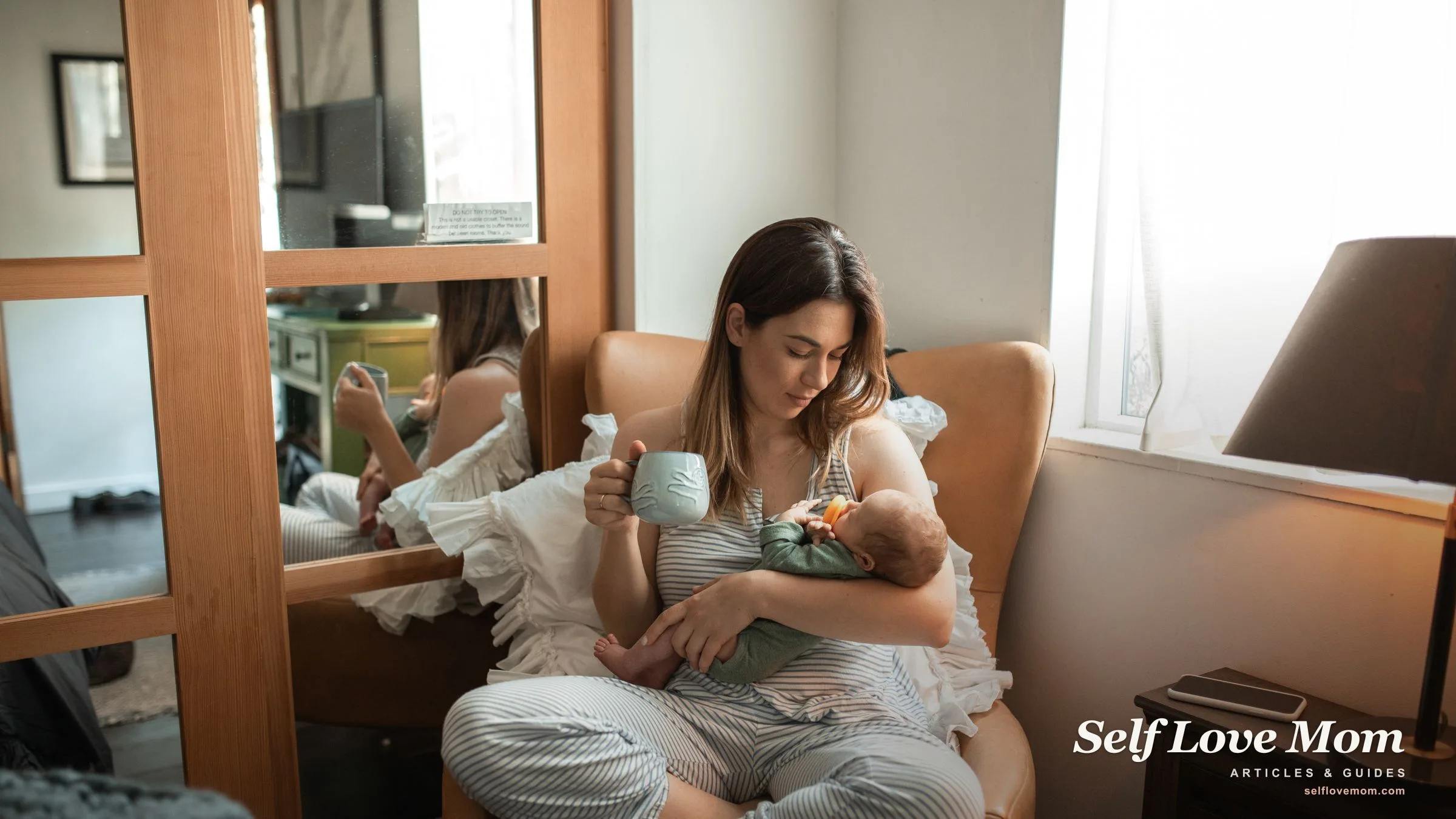
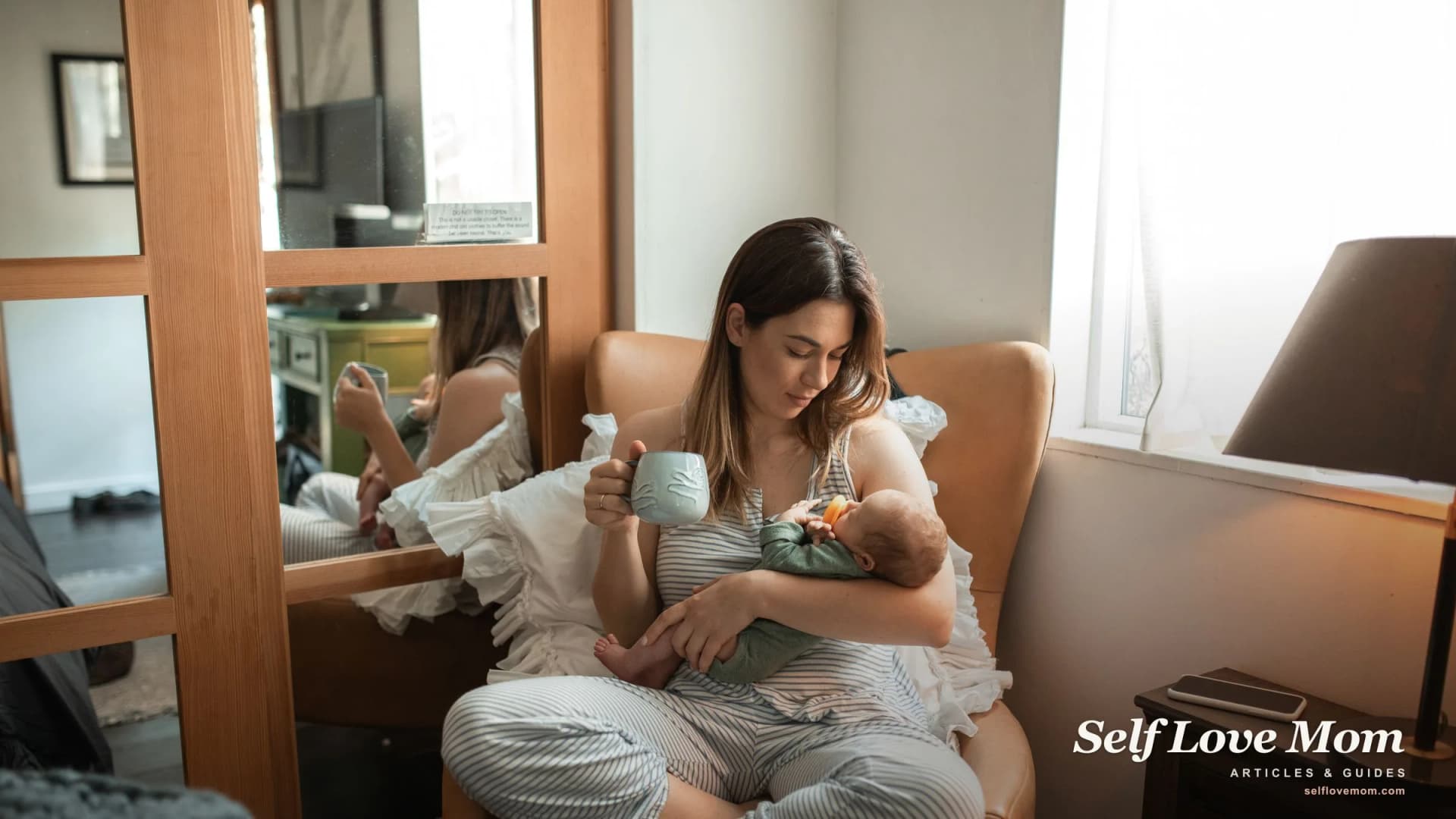
A mother sits in an armchair by a window holding a warm mug while cradling her baby.
Being a stay-at-home mom is the job with no clock-out. There is no lunch break, no commute to decompress in, and no coworker to tap out to. The days blur together, the work is invisible, and somewhere in the middle of meeting everyone else's needs, your own quietly disappear. That slow erasure is exactly why self-care is not a luxury here. It is maintenance.
This guide covers self care for stay at home moms that fits a real day at home: short, cheap, and doable with kids underfoot. Twenty-five ideas, grouped by the problem they solve. If the exhaustion runs deeper than a tired week, our guide to stay-at-home mom burnout digs into recovery.
| SAHM ever diagnosed with depression | Ideas in this guide | Time & cost |
|---|---|---|
| 28% vs 17% of employed moms (Gallup) |
25 grouped by what they fix |
$0 most take 5 to 10 minutes |
The short version
Stay-at-home moms report depression at far higher rates than moms who work outside the home, so protecting your own well-being matters. The 25 ideas below are built for a day at home: quick resets, movement, connection, and low-cost pampering. Almost all take ten minutes or less and cost nothing. You do not need childcare or a spare hour, just permission to pause.
Why does self care for stay at home moms matter?
The mental load of running a home full time is real and measurable. A 2012 Gallup analysis of more than 60,000 U.S. women found 28% of stay-at-home moms had at some point been diagnosed with depression, compared to 17% of employed moms (Gallup, 2012). Isolation and the never-ending day drive much of that gap.
The concern is current, not historical. In 2024, the U.S. Surgeon General issued a national advisory warning that the mental health and stress load carried by parents is a serious public health issue (U.S. Surgeon General, 2024).
Self-care is how you push back. Regular breaks and relaxation lower stress hormones and improve mood, which is why clinicians treat them as part of mental health, not a reward for finishing your to-do list (Mayo Clinic).
Here is the reframe that helps: taking care of yourself is part of taking care of them. A rested, steadier you is the version your kids need most.
How can a stay-at-home mom find time for self-care?
You are not going to find a free hour. The trick is to stop waiting for one and use the ten-minute gaps you already have. Nap time, early morning, the quiet stretch after bedtime, or a set of small resets threaded through the day all count. Micro-moments add up.
- Meditate for five minutes. Sit, breathe, and let the mental noise settle. A free app or a quiet corner is all you need.
- Practice 4-7-8 breathing. Inhale for four counts, hold for seven, exhale for eight. It calms your nervous system in under a minute.
- Stretch your body. Two minutes of neck rolls and shoulder stretches releases the tension of carrying kids and laundry all day.
- Use a mindfulness app. A guided two-minute reset during nap time is easier to stick to than an open-ended "relax."
- Say a positive affirmation. One steady sentence in the mirror reframes a rough morning. Small, but it lands.
What are quick self-care ideas for busy moms at home?
Quick self-care is the kind you can start in the time it takes a toddler to lose interest in a snack. These ideas ask for almost nothing and give back a real mood lift. Keep them within reach so you reach for them.
- Take a short walk. Ten minutes outside, stroller optional, resets your head and gives the kids fresh air too.
- Play your favorite music. One loud, joyful song while you make lunch changes the whole tone of the afternoon.
- Take a quick nap. Twenty minutes when they nap is not lazy. It is recovery, and you will parent better for it.
- Stay hydrated. A full glass of water and a real snack for you, not just leftovers off their plate.
- Listen to nature sounds. Rain or ocean audio in the background lowers the volume on a chaotic room.
- Step into the sun. Two minutes on the porch with your face to the light is a genuine reset.
What self-care helps with isolation and burnout?
Isolation is the part of stay-at-home life nobody warns you about, and it feeds the depression gap in the Gallup data. Connection and boundaries are the antidote. These ideas fight the loneliness and the slow slide toward burnout before it takes hold.

- Connect with a friend. A five-minute voice note to another adult breaks the day-long silence of solo parenting.
- Set clear boundaries. "I need twenty minutes" is a full sentence. Protecting small pockets of time is self-care.
- Share the household load. Hand off tasks where you can. Doing it all alone is not a badge, it is a fast track to burnout.
- Keep up a hobby. Ten minutes of a thing that is just yours reminds you that you are a person, not only a parent.
- Write in a journal. Dumping the mental load onto a page quiets the loop of everything you are holding.
What low-cost self-care can moms do at home?
At-home self-care means you never need a sitter or a spa budget. Your own bathroom, kitchen, and couch can do the job. These low-cost rituals turn the house you are stuck in all day into a place that gives something back.

- Enjoy a bubble bath. Lock the door, warm water, ten minutes. A classic for a reason.
- Have a home spa night. A face mask and a foot soak after bedtime costs almost nothing and feels like a lot.
- Use aromatherapy. A few drops of lavender or a scented candle shifts the mood of a whole room fast.
- Read a fun book. Ten pages of something purely for pleasure, not a parenting manual.
- Watch a favorite show. One guilt-free episode after the kids are down is a real wind-down.
- Nurture a mini garden. A windowsill herb pot to water and tend gives a small daily win.
- Try a new recipe. Cooking one thing that is just interesting, not just feeding everyone, is creative time.
How do stay-at-home moms make self-care a habit?
The moms who keep self-care going do not rely on motivation. They attach it to things that already happen. Coffee becomes five quiet minutes. Nap time becomes a stretch. Bedtime becomes a bath. Anchor the habit to a routine and it stops depending on a good day.
Plan a few small moments into the week so they are not left to chance, and let go of the guilt. To go deeper on recovering from exhaustion, see our guide to stay-at-home mom burnout, our budget-friendly self-care on a budget ideas, and the single mom resources hub for more support.
- Pick one idea from each group so your week has variety.
- Attach each one to something you already do daily.
- Aim for short, five to ten minutes, not a spare hour.
- Protect the time out loud. Boundaries are self-care.
- Drop the guilt. Your steadiness is what your kids feel most.
The bottom line
Self care for stay at home moms is not about escaping your life. It is about having enough left in the tank to keep showing up for it. The bar is low on purpose: ten minutes, no money, no sitter.
Pick one idea from this list and do it today, before the day gets away from you. You are not being selfish by refilling your own cup. You are making sure there is something in it to give.
Frequently Asked Questions
What is the best self-care for a stay-at-home mom with no time?
Start with five-minute resets you attach to things you already do: a breathing exercise during nap time, a stretch with your coffee, a walk after lunch. Stay-at-home moms rarely find a free hour, so the ideas that stick are the short ones threaded through the day rather than one big block.
Why are stay-at-home moms more prone to depression?
A Gallup study of over 60,000 women found 28% of stay-at-home moms had been diagnosed with depression at some point, versus 17% of employed moms. Isolation, invisible labor, and a day that never really ends drive much of the gap. Regular self-care and adult connection are protective, which is why they matter so much at home.
How can a stay-at-home mom practice self-care with no money?
Most effective self-care is free. A walk, a bath, journaling, deep breathing, a favorite song, ten pages of a book, or a face mask after bedtime all cost nothing. The house you are in all day already has everything you need for a real reset.
Is it selfish for a stay-at-home mom to take time for herself?
No. Taking care of yourself is part of taking care of your kids. A rested, less-stressed parent is more patient and present. Think of it as maintenance, not a reward, since running on empty helps no one in the house, least of all your children.
How do I stop feeling guilty about self-care?
Reframe it as a need, not a treat. You would not skip feeding your child, and your own well-being is on the same list. Start small so it feels reasonable, attach it to a daily routine, and remind yourself that your steadiness is what your kids feel most.
Sources
- Gallup, "Stay-at-Home Moms Report More Depression, Sadness, Anger" (2012, retrieved 2026-07-24). Sample of 60,799 US women; 28% of stay-at-home moms had ever been diagnosed with depression vs 17% of employed moms.
- U.S. Surgeon General, "Parents Under Pressure: The U.S. Surgeon General's Advisory on the Mental Health and Well-Being of Parents" (2024, retrieved 2026-07-24). Frames parental stress and mental health as a public health priority.
- Mayo Clinic, "Relaxation techniques: Try these steps to lower stress" (retrieved 2026-07-24). Relaxation practice lessens stress-hormone activity and improves focus and mood.
✻ Share this article
✻ About the contributor · Folio N°.180

Written by Subha
Psychologist and writer covering the topics that matter most to single moms, money, mental health, and the small daily rituals that keep a family running. Every article is research-backed and edited four times before publish.
- Articles
- 180
- Desks
- 05
- Edited
- 4×
More from this writer
✻ Edited four times before publish