Self Care on a Budget: How to Recharge When Money Is Tight
About 66% of parents feel consumed by money worries (Surgeon General). Here is self care on a budget that costs $0, with free swaps for paid self-care.

 Click to zoom
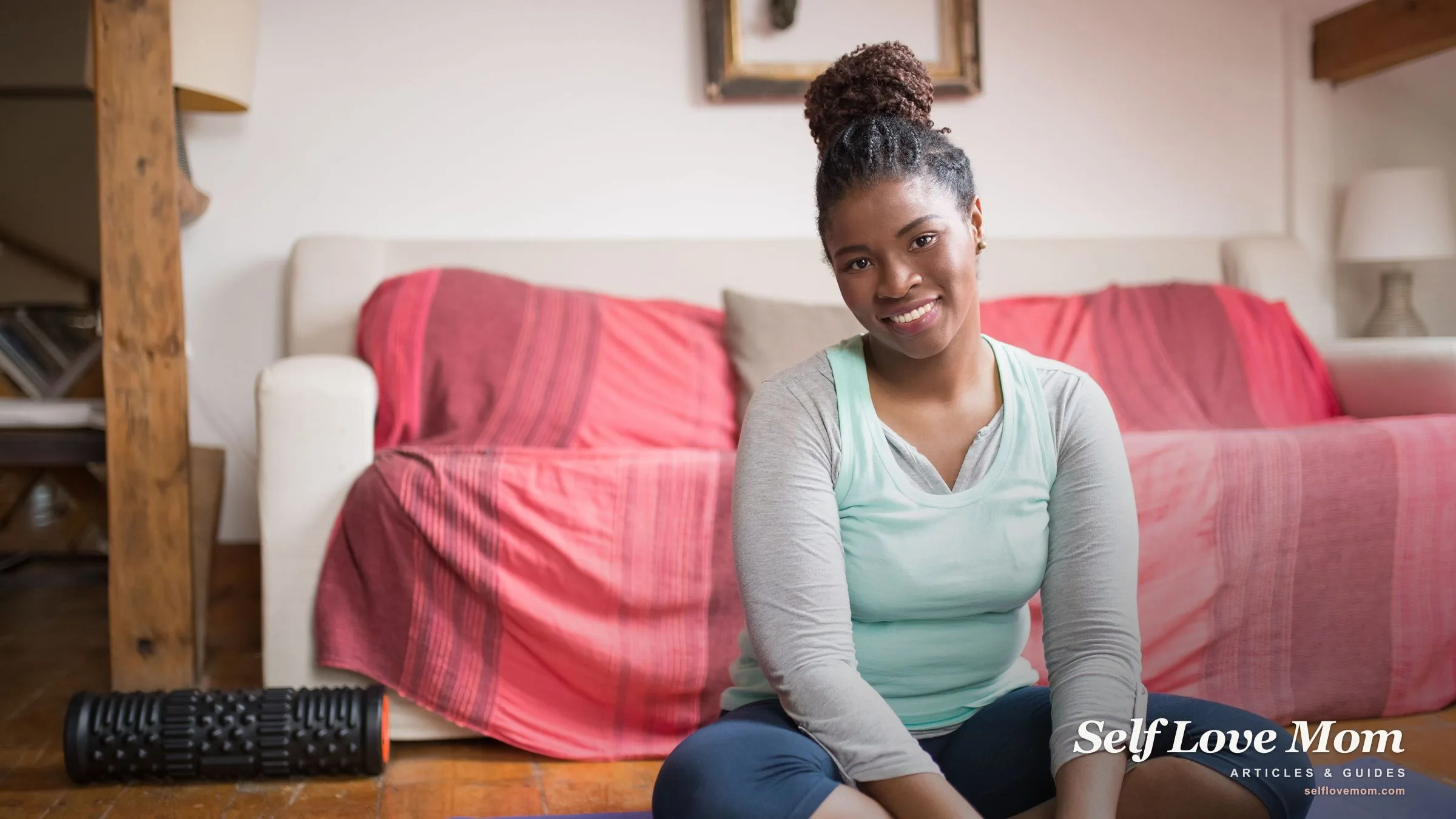
A smiling mom sitting on a yoga mat in her living room after a free at-home workout, one way to do self care on a budget.
When money is tight, your own needs are the first thing to get cut. But self-care on a budget is not a contradiction, and it does not mean a cheaper version of a spa day. The most effective resets cost nothing at all. This guide is about caring for yourself when the budget genuinely will not stretch.
We will start with why money stress makes self-care feel impossible, then move to the free swaps that replace the things you would normally pay for. No product to buy, no membership required. Just realistic ways to refill your own cup on a hard month.
| Money strain | The best resets | Going without |
|---|---|---|
| 66% of parents feel consumed by worries about money (Surgeon General) |
$0 cost of a walk, deep breathing, or a call to a friend |
1 in 4 parents lacked money for basics at some point last year |
The short version
Money is one of the biggest stressors parents carry, so self-care that costs money often gets skipped first. The fix is to stop copying the paid version and use the free swap instead: a home spa for a salon, a walk for a gym, a helpline for a paid session. The best-researched resets are already free. You do not have to spend to take care of yourself.
Why does self-care feel impossible when money is tight?
Because money worry crowds out everything else. In its 2024 advisory Parents Under Pressure, the U.S. Surgeon General reported that 66% of parents feel consumed by worries about money, compared with 39% of other adults. When your mind is doing that math all day, a break for yourself feels like one more thing you cannot afford.
The strain is real, not imagined. The same advisory found that one in four U.S. parents did not have enough money for basic needs, like food or rent, at some point in the past year. Rest can feel selfish against that backdrop.
But here is the reframe. Rest is what keeps you able to handle the hard month, not a reward for surviving it. Skipping it does not save money; it just empties you faster. A budget-friendly reset is maintenance, and maintenance is cheaper than a breakdown.
Can self-care really cost nothing?
Yes, and the free options are the ones with the most evidence behind them. The National Institute of Mental Health lists a 30-minute walk, breathing exercises, regular sleep, and staying connected to people as the essentials. Every one of those costs nothing. The paid versions are extras, not the foundation.
- Move for free. A brisk walk outside lifts your mood as much as many paid classes.
- Breathe on purpose. Four counts in, four counts out, repeated, calms your body in minutes.
- Reach out. A quick call or text to a friend is connection, and connection is care.
- Sleep on a schedule. Guarding your bedtime is the highest-value free reset there is.
- Step into daylight. A few minutes of morning sun helps your mood and your sleep, at no cost.
What free swaps replace the self-care you would pay for?
Almost every paid self-care habit has a no-cost twin. Money is a significant source of stress for 66% of adults, and hits hardest below the $50,000 income line, per the American Psychological Association Stress in America 2022 report. So the trick is not to buy less, but to swap the price tag out entirely.
- Salon to home spa. A warm bath, a homemade scrub of sugar and oil, and a candle you already own.
- Gym to free movement. A free online workout or a daily walk replaces a membership entirely.
- Paid session to free support. A free app or the 988 helpline covers a lot between paydays; see these free self-care apps.
- Bookstore to library. A library card gives you free books, ebooks, and audiobooks through apps like Libby.

How do you do self-care on a no-spend week?
Plan it the way you plan a no-spend grocery week: use what you already have. NIMH points to simple, repeatable habits, not purchases, as the thing that moves the needle. The goal for a tight week is not a treat, it is a handful of free resets you actually do. For more no-cost ideas, browse these inexpensive self-care activities or plan a free self-care night at home.
- Shop your own home. The candle, the nice tea, the face mask in the drawer. Use them, do not save them.
- Trade, do not buy. Swap an hour of childcare with a friend so you each get free time off.
- Make it, do not order it. A homemade scrub or a DIY self-care project costs pennies from the pantry.
- Use free public space. A park, a library, or a free museum day is a change of scene for nothing.
How do you stop feeling guilty about spending on yourself?
Separate the guilt from the money. Because most real self-care is free, the guilt is rarely about the cost, it is about feeling you do not deserve the time. The APA found money causes family tension for 55% of adults who call money a significant stressor, so protecting a free reset actually lowers the pressure at home, not adds to it.
- Pick the $0 option first. If it costs nothing, the "we cannot afford it" voice has no argument.
- Name the payoff. A calmer you has more patience for your kids; that is a family benefit, not a splurge.
- Set a tiny paid ceiling. If you do spend, a $5 cap keeps it guilt-free and off the budget's radar.
- Ask for the handoff. Time, not money, is what you are short on; trade for it without paying, as a single mom carrying it alone.
How do you make self-care on a budget stick?
Attach it to something free you already do every day. NIMH suggests scheduling regular times for activities you enjoy, which turns a good intention into a habit. Tie your reset to school drop-off or the first coffee of the day, and it happens without willpower or a wallet.
- Anchor it. One free reset tied to a daily habit beats a big plan you cannot fund.
- Start with five minutes. A short daily act builds the habit faster than a rare expensive one.
- Keep a free list. Post your no-cost options on the fridge so you never have to think or shop.
- Forgive a miss. Skipped a day? Begin again tomorrow. Consistency is free too.
Frequently Asked Questions
What is the cheapest form of self-care?
The cheapest is free. A walk, deep breathing, daylight, enough sleep, and a call to someone you trust all cost nothing and are backed by NIMH as real self-care. Start there before you consider spending anything, because these free habits do the heaviest lifting for your mood and stress.
How can I practice self-care with no money at all?
Use what you already own and swap paid habits for free ones. Turn a bath into a home spa, a membership into a daily walk, and a bookstore into a library card. Trade childcare with a friend for free time off. Self-care on a budget of zero is mostly about time and permission, not spending.
Why do I feel guilty doing self-care when money is tight?
Because money worry makes any focus on yourself feel indulgent, even when it is free. The Surgeon General found 66% of parents feel consumed by money worries, which fuels that guilt. Choosing a no-cost reset removes the money objection entirely, so you can rest without adding a line to the budget.
Is a free walk really as good as a paid class?
For mood and stress, often yes. NIMH points to a 30-minute walk as a simple, effective mood booster, no studio required. Paid classes can add structure or fun, but they are an extra on top of the free foundation, not a replacement for it. Your body does not know if the workout was paid for.
What free resources help moms on a tight budget?
Your library gives free books, ebooks, and audiobooks. Free apps and the 988 helpline offer mental-health support between paydays. Parks and free museum days give you a change of scene. Dialing 211 connects you to local aid for bigger needs like food, housing, and childcare.
Sources
- U.S. Surgeon General, "Parents Under Pressure: The U.S. Surgeon General's Advisory on the Mental Health and Well-Being of Parents" (2024, retrieved 2026-07-24). 66% of parents felt consumed by money worries vs 39% of other adults; 1 in 4 parents lacked money for basic needs at some point in the past year.
- American Psychological Association, "Stress in America 2022: Concerned for the Future, Beset by Inflation" (2022, retrieved 2026-07-24). Money was a significant stressor for 66% of adults; 55% of money-stressed adults said it causes family tension.
- National Institute of Mental Health, "Caring for Your Mental Health" (reviewed 2026, retrieved 2026-07-24). A 30-minute daily walk can boost mood; prioritize sleep, connection, and scheduled healthy activities.
✻ Share this article
✻ About the contributor · Folio N°.180

Written by Subha
Psychologist and writer covering the topics that matter most to single moms, money, mental health, and the small daily rituals that keep a family running. Every article is research-backed and edited four times before publish.
- Articles
- 180
- Desks
- 05
- Edited
- 4×
More from this writer
✻ Edited four times before publish