Self Care Kits for Moms: Buy, DIY, or Get Free
Moms get about 3 fewer leisure hours a week than dads. Here are the self-care kits for moms worth buying, what they cost, and where to get them free.

 Click to zoom
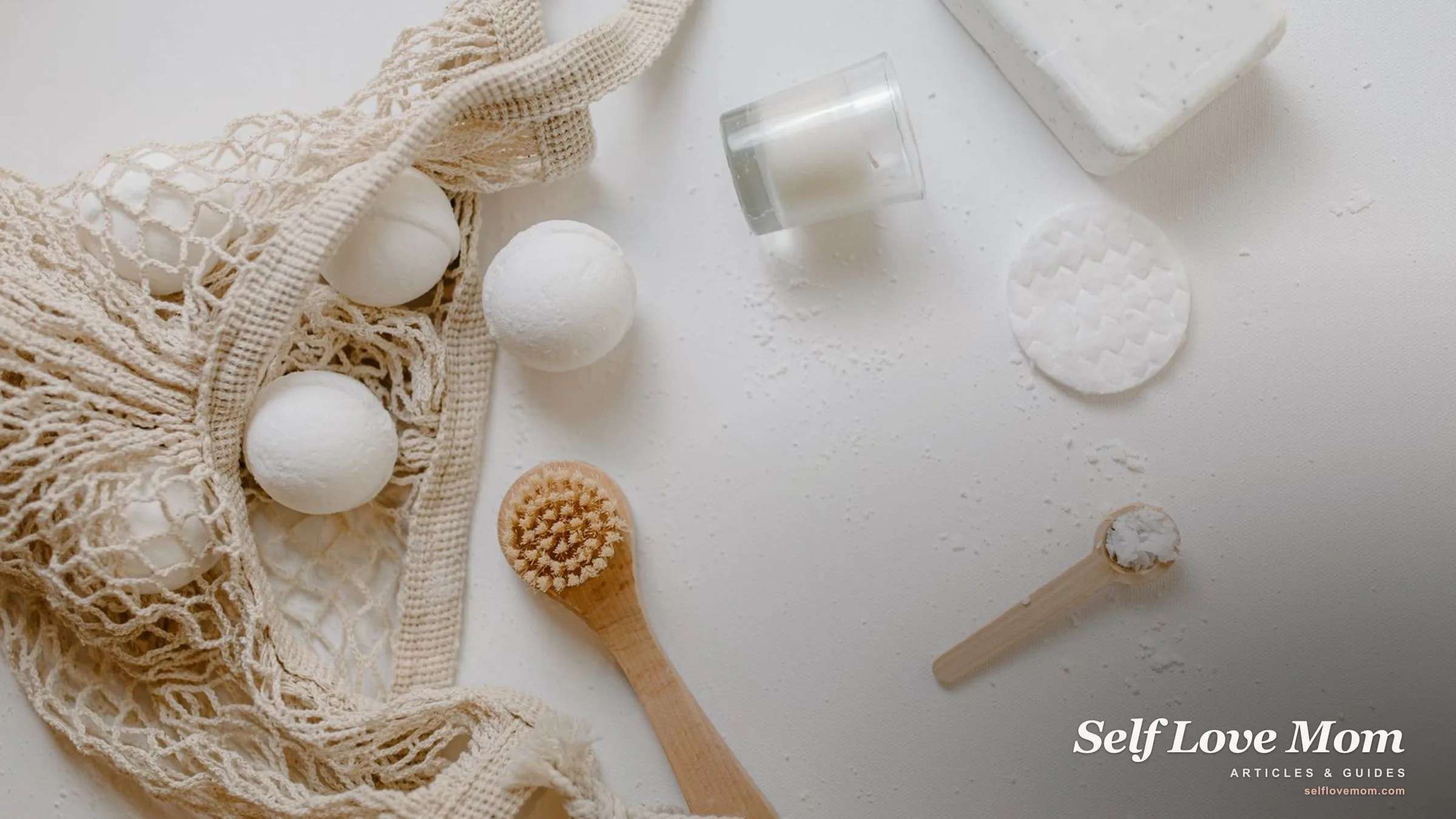
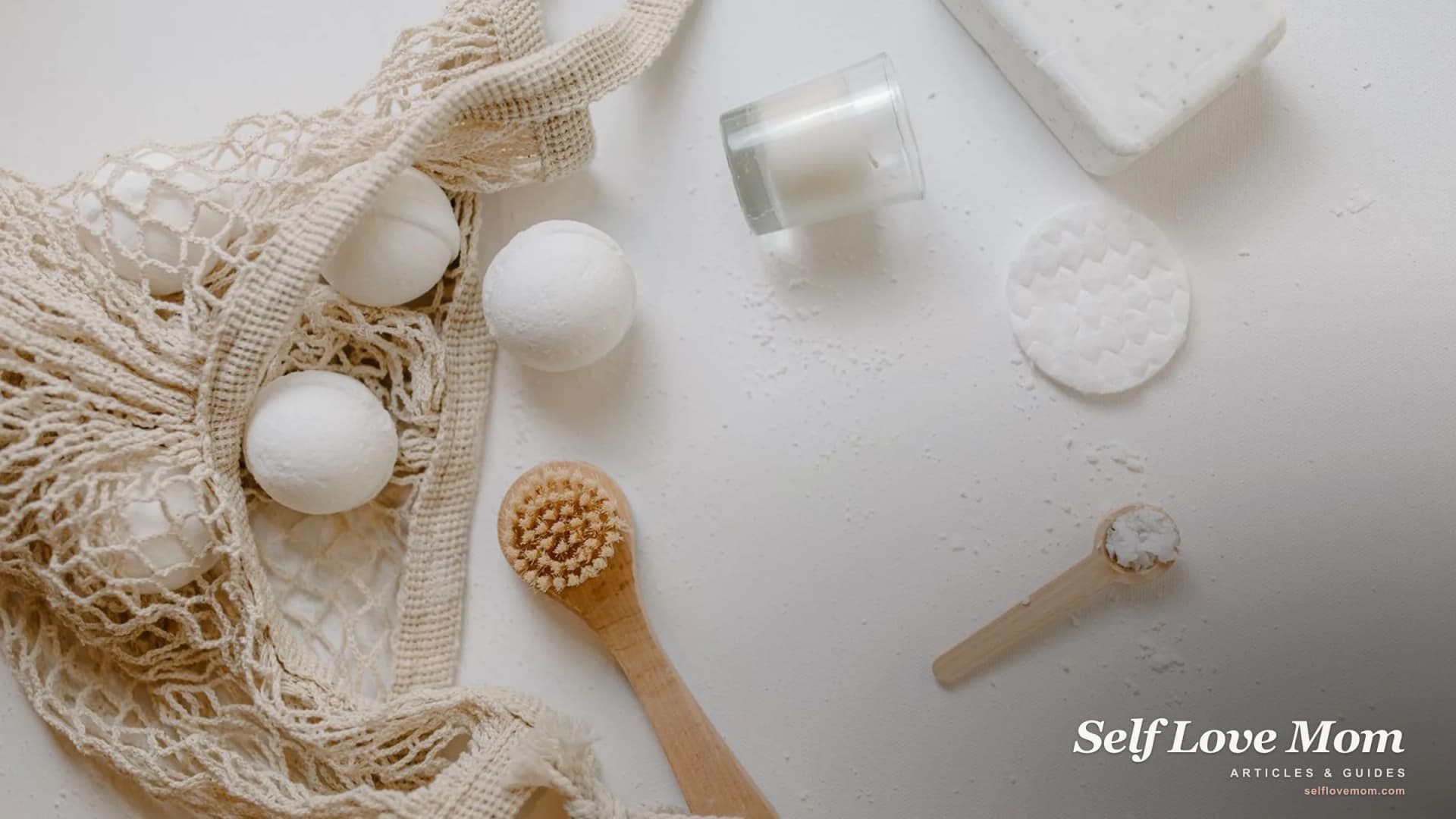
A self-care kit of bath bombs, a dry brush, candle, and soap laid out, the kind of bundle a busy mom can grab.
A self-care kit is self-care with the planning already done. Instead of hunting for the right products when you finally get ten minutes, you open a box and everything is there. For a mom with almost no spare time, that shortcut is the whole point.
This guide covers ready-made self care kits for moms: the types you can buy, how much they cost, and, best of all, where to get them free. If you would rather assemble your own from scratch, that is a different job, and we link to it below.
| Mom's leisure gap | Ready-made kit cost | Free kits |
|---|---|---|
| 3 hrs less leisure a week than dads (Pew) |
$25 to $75 for most retail kits |
$0 via 211 and diaper or hygiene banks |
The short version
A self-care kit is a ready-to-use bundle of recharge items, no assembly needed. Mothers get about three fewer hours of leisure a week than fathers, so the time a pre-made kit saves is the real value. Retail kits run $25 to $75, subscription boxes about $30 to $55 a month, and you can get hygiene and baby-care kits free through 211 and local banks.
What is a self-care kit, and how is it different from a basket?
A self-care kit is a compact, ready-to-use set of items that help you recharge fast: think a candle, a face mask, tea, and a good lip balm in one box. The difference from a basket is mostly intent. A kit is grab-and-go and often bought pre-assembled; a basket is usually larger, prettier, and built by hand as a gift.
If your goal is a heartfelt handmade present, our guide to a self-care basket for a new mom walks through building one. If you want recharge with zero effort, a kit is the better fit.
Why are self care kits for moms worth it?
Because time, not money, is a mom's scarcest resource. A 2013 Pew Research analysis found fathers get about three more hours of leisure each week than mothers (Pew Research). A pre-made kit removes the planning and shopping, so the little time you do get goes straight to the reset, not the setup.
There is a mental-load angle too. Deciding what to buy is itself tiring. A kit makes the decision once, then keeps working every time you reach for it. That is why it fits a busy mom better than a vague plan to "do self-care soon."

What types of self-care kits can moms buy?
Ready-made options fall into three buckets: one-time retail kits, monthly subscription boxes, and themed kits built around a single need like sleep or bath. Price tracks the type more than the quality. Here is roughly what each costs.
Subscription boxes cost more over a year, but they keep the surprise coming without any effort. A one-time retail kit is the simplest gift. And if budget is the concern, a homemade version covers the same needs for less. Our self-care on a budget guide has low-cost swaps.
Where can moms get free self-care kits?
Free kits are real and widely available, especially for hygiene and baby care. The fastest route is to dial 211, the free national helpline, which connects you to local diaper banks, hygiene banks, and family-support programs (211). No proof of hardship is needed to ask what is available near you.
- Call or search 211. It routes you to nearby diaper banks, pantries, and hygiene programs in minutes.
- National Diaper Bank Network. Its member directory lists diaper and basic-need banks across the US.
- Hygiene banks. Groups like Simply the Basics hand out daily-essentials kits (shampoo, soap, deodorant, socks).
- Maternal-supply nonprofits. Organizations such as Helping Mamas provide wipes, toiletries, and baby basics to moms.
- Local churches and family centers. Many keep small care kits on hand; a quick call is worth it.
These programs exist so that a tight month never means going without basics. Asking is normal, and the people who run them want the supplies used.
How do you choose the right self-care kit?
Match the kit to the need, not the packaging. A pretty box full of things she will not use is money wasted, while a plain kit of the right items gets reached for daily. Run through a few quick checks before you buy.
- Pick a theme that fits her real life: sleep, bath, stress relief, or postpartum recovery.
- Favor practical items she will actually use over decorative filler.
- Check the size, a small kit that fits a nightstand beats a big one that gets shelved.
- Match the budget honestly, a $30 kit of the right things beats a $70 box of extras.
- For a new mom, lean toward recovery and rest items over fragrance-heavy products.
Can you turn a kit into a gift?
Yes, and it is one of the easiest thoughtful gifts going. A ready-made kit plus a short handwritten note reads as personal, even though the assembly was done for you. For a bigger gesture, upgrade the kit into a full basket.
Our guide to self-care basket ideas covers the DIY and gifting side in depth, so you can scale a simple kit up into something that feels custom.
The bottom line
Self care kits for moms work because they remove the one thing moms are shortest on: time. Buy one ready-made, subscribe for a monthly lift, or get a hygiene kit free through 211. The point is not the box; it is having the reset within reach.
Pick the route that fits your budget and your week, then actually use it. A kit that sits unopened helps no one. The best one is the one you reach for.
Frequently Asked Questions
What should be in a self-care kit for a mom?
A good kit covers a single mood or need: something soothing (candle, lotion), something comforting (tea, chocolate, cozy socks), and something restful (eye mask, bath soak). For a new mom, swap in recovery items. Keep it small and practical so it actually gets used, not shelved.
How much do self care kits for moms cost?
Most ready-made retail kits run $25 to $75, and monthly subscription boxes are about $30 to $55. A homemade kit can cover the same needs for around $30. And hygiene or baby-care kits are available free through 211 and local diaper and hygiene banks.
Where can I get a free self-care kit?
Start by dialing 211, the national helpline, which connects you to nearby diaper banks, hygiene banks, and family programs. The National Diaper Bank Network directory and hygiene nonprofits like Simply the Basics also distribute free essentials kits. No proof of hardship is needed to ask what is available.
Is a self-care kit the same as a self-care basket?
Not quite. A kit is usually compact, ready-made, and built for quick daily use. A basket is typically larger, handmade, and given as a gift. Kits favor convenience; baskets favor presentation. Many people start with a kit and upgrade it into a basket when they want a bigger gesture.
Are subscription self-care boxes worth it for moms?
They can be, if the surprise and consistency help you actually pause each month. At about $30 to $55 a month they cost more than a one-time kit over a year. They suit moms who like a recurring treat with zero planning, and are easy to cancel if the novelty fades.
Sources
- Pew Research Center, "Modern Parenthood," Chapter 6: Time in Work and Leisure (2013, retrieved 2026-07-24). Fathers enjoy close to three more hours of leisure per week than mothers.
- 211 (United Way), official site (retrieved 2026-07-24). Free, confidential helpline connecting callers to local food, housing, hygiene, and family programs.
- National Diaper Bank Network, "Member Diaper Banks" directory (retrieved 2026-07-24). State-by-state directory of 240+ community diaper and basic-needs banks.
✻ Share this article
✻ About the contributor · Folio N°.180

Written by Subha
Psychologist and writer covering the topics that matter most to single moms, money, mental health, and the small daily rituals that keep a family running. Every article is research-backed and edited four times before publish.
- Articles
- 180
- Desks
- 05
- Edited
- 4×
More from this writer
✻ Edited four times before publish