SNAP Benefit Updates for Washington State in 2026
SNAP benefit updates for Washington State in 2026: a $994 family-of-4 max, 200% FPL income limit, the new 80-hour work rule, and how to apply for Basic Food.

 Click to zoom
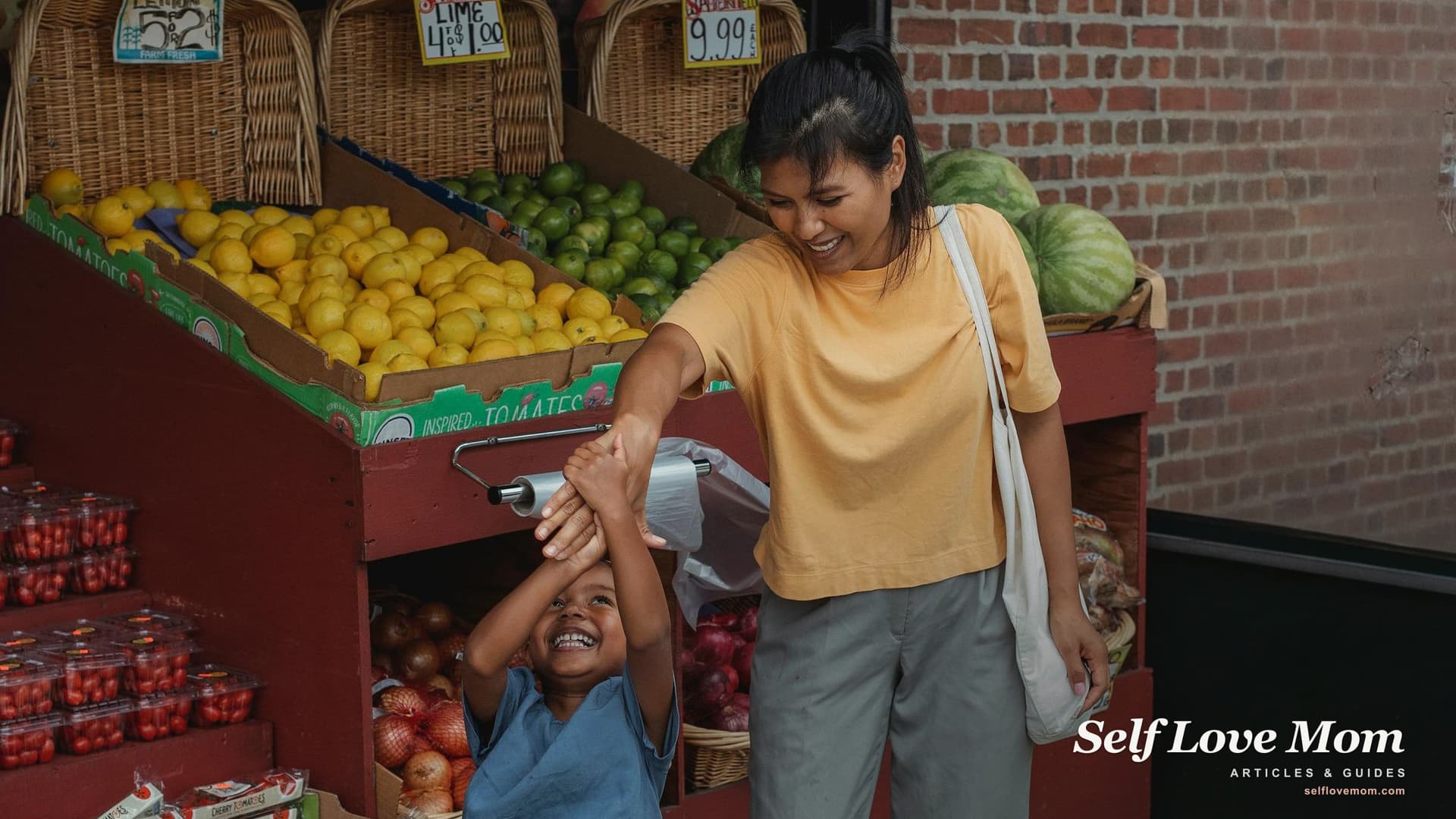
A single mom and her child shop for fresh fruit at an outdoor market, where Washington SNAP Market Match stretches produce dollars
If you are a single mom in Washington trying to keep food on the table, the state's SNAP program, called Basic Food, is one of the most generous in the country. About 945,000 Washingtonians use it (Washington DSHS, 2026). Several things changed in 2026, and one hits parents directly, so it is worth knowing where you stand before your next renewal.
This guide covers what changed, the 2026 income limits, how much you can get, and how to apply. For the full income table by household size, see our Washington SNAP income limits guide. To understand how Basic Food differs from cash aid, see is TANF the same as food stamps. All figures verified June 2026.
| Headline figure | What it covers | Source |
|---|---|---|
| 945,000 | Washingtonians on Basic Food (SNAP), averaging about $192 per person monthly | WA DSHS, 2026 |
| $994 | maximum monthly SNAP benefit for a family of four in FY2026 (Oct 2025 to Sep 2026) | USDA FNS, 2026 |
| 200% | of the poverty line is Washington's gross income limit, one of the most generous | CBPP, 2026 |
| 80 hrs | per month new statewide work rule for adults 18 to 64 without a child under 14 | Northwest Harvest, 2026 |
What you need to know first
- Washington's SNAP program is called Basic Food, and it serves about 945,000 people, most of them in working households
- The state uses a 200% of poverty income limit and waives asset limits for most families, so more single moms qualify than in most states
- The FY2026 maximum benefit is $994 a month for a family of four; most households get less, based on income after deductions
- A new statewide work rule started December 1, 2025: adults 18 to 64 must log 80 hours a month of work or training, but parents with a child under 14 are exempt
- Apply any time at washingtonconnection.org; nearly half of applications are processed in under a week
What changed for SNAP in Washington in 2026?
Several updates took effect between October 2025 and 2026, driven partly by the annual federal cost-of-living adjustment and partly by the 2025 budget law. The change that matters most for single moms is the new work requirement, because its parent exemption now ends earlier than it used to.
FY2026 cost-of-living adjustment
Effective October 1, 2025, the annual COLA raised maximum benefits, deductions, and income standards to match inflation. The family-of-four maximum rose to $994 a month (USDA FNS, 2026).
Effective: Oct 1, 2025 · Impact: higher max benefits and deduction limits
New statewide work requirement
Starting December 1, 2025, able-bodied adults 18 to 64 without a dependent under 14 must work, train, or volunteer at least 80 hours a month, or benefits stop after 3 months in any 36-month window. Northwest Harvest warns this will affect many thousands of Washingtonians who were previously exempt.
Effective: Dec 1, 2025 · Single-mom note: exempt if your youngest child is under 14
Immigrant eligibility shift to state Food Assistance
The 2025 federal law narrowed who can get federally funded SNAP. Washington moved many lawfully present immigrants, including refugees and asylees, to its state-funded Food Assistance Program (FAP) so coverage continues without a new application.
Effective: late 2025 into 2026 · Result: continued food help via state FAP
SNAP-Ed nutrition education ended
The federally funded SNAP-Ed program, which paid for nutrition education across Washington, lost its required funding under the 2025 federal law and is winding down through 2026. Your food benefits are not affected, only the education classes.
Status: defunded by the 2025 law, winding down through 2026 · Your EBT benefit: unchanged
Market Match expanded
From January 2026, Washington's SNAP Market Match gives matching dollars at participating farmers markets and farm stands, so your EBT stretches further on fresh local produce. It is one of the few changes that adds value rather than trimming it.
Effective: Jan 1, 2026 · Benefit: matched dollars on fresh produce
What are the Washington SNAP income limits for 2026?
Washington sets its gross income limit at 200% of the federal poverty level through Broad-Based Categorical Eligibility, and it waives asset limits for most households (WA DSHS, 2026). That is far more generous than the federal 130% default, so many working single moms who would not qualify elsewhere do qualify here.
| Household size | Monthly gross limit (200% FPL) | FY2026 max monthly benefit |
|---|---|---|
| 1 | $2,608 | $298 |
| 2 | $3,525 | $546 |
| 3 | $4,442 | $785 |
| 4 | $5,358 | $994 |
| 5 | $6,275 | $1,183 |
| 6 | $7,192 | $1,421 |
| 7 | $8,108 | $1,571 |
| 8 | $9,025 | $1,789 |
How to read this: the middle column is the most you can earn (gross) and still qualify; the right column is the most you can receive. Max benefits go to households with near-zero net income. Full table and deductions in our WA income limits guide.
How much will a single mom actually get?
Your benefit is not a flat amount. It is the maximum allotment for your household size minus 30% of your net income, so a single mom of two with very low net income lands near the $785 family-of-three maximum, while one with more earnings gets less. Roughly, every $100 of net income trims about $30 off the benefit.
Net income is what is left after Washington's deductions, and maximizing those deductions is how you protect your benefit. The deductions that move the needle most for single moms are the earned-income deduction and dependent-care costs.
Deductions that lower your net income
- Earned-income deduction: 20% of job or self-employment income comes off automatically
- Standard deduction: $209 a month for households of 1 to 3 in FY2026, more for larger households
- Dependent-care costs: childcare you pay to work or attend school is deductible
- Shelter and utilities: rent, heating, and electricity above half your income, capped at $744 a month (no cap if a member is elderly or disabled)
- Child support paid: court-ordered payments are excluded from your gross income
Do you qualify for Basic Food in Washington?
Most low-income single moms in Washington qualify, because eligibility is income-based, not employment-based. In fact, most SNAP recipients in the state live in working households. If your gross monthly income is within the 200% poverty limit for your household size, you are likely eligible regardless of whether you rent, own, or are between homes.
You generally qualify if you live in Washington, are a citizen or a qualified immigrant, and meet the income limit. Homelessness does not disqualify you, since Basic Food is based on income, not housing. Undocumented parents cannot receive benefits themselves but can apply on behalf of their U.S.-citizen children.
One group should read the rules closely. College students 18 to 49 enrolled at least half-time qualify only under specific conditions, such as working 20 hours a week, receiving TANF, doing work-study, or caring for a young child. For cash-aid eligibility alongside food help, see our TANF in Washington State guide.
How do you apply for food stamps in Washington?
The fastest route is online at washingtonconnection.org, open 24/7, and nearly half of Washington applications are processed in under a week (WA DSHS, 2026). The process is the same whether you live in Seattle, Spokane, or a rural county.
- Gather documents: photo ID, proof of income (30 days of pay stubs), utility bills, Social Security numbers, and any childcare or medical bills
- Submit your application: online at washingtonconnection.org, by phone at 1-877-501-2233, or in person at a DSHS Community Services Office
- Complete the interview: a short eligibility interview, usually by phone, is required before approval
- Receive your EBT card: the Quest card arrives by mail, with benefits loaded monthly by 6 a.m. on your scheduled date
- Ask about expedited benefits: very low income and resources can qualify you for same-day emergency food help
What can you buy, and where?
SNAP covers groceries you prepare at home, and in Washington your EBT card works at supermarkets, many farmers markets, and online grocery platforms like Amazon, Walmart, and Safeway. It cannot buy hot prepared meals, alcohol, tobacco, vitamins, household supplies, or pet food.
The single best way for a budget-stretched mom to get more food is the farmers market Market Match. Participating Washington markets match your EBT dollars on fresh produce, effectively doubling that part of your budget. Find participating markets through your local market or the Washington farmers market association.
What other help do Washington SNAP families get?
Getting Basic Food often opens the door to other programs, and stacking them is where a single-mom budget gets real breathing room. Ask your caseworker to screen you for all of these when you apply.
Programs that stack with Basic Food
- BFET job training: free job search help, skills training, childcare, and transportation for SNAP recipients
- Free school meals: children in SNAP households are automatically enrolled, no separate application
- WIC: milk, eggs, cereal, and baby food for pregnant women, new moms, and young children
- Lifeline: discounted phone or internet service for households on SNAP or Medicaid
- Museums for All: free or discounted admission at participating Washington museums for EBT cardholders
For help beyond government programs, our guide to charities for single mothers covers nonprofits that fill the gaps.
Do I qualify for SNAP in Washington if I am working?
Yes. Most Washington SNAP recipients are employed, because eligibility is based on total household income, not whether you work. If your gross monthly income falls within the 200% poverty limit for your household size, you can qualify regardless of employment status.
What are the 2026 income limits for food stamps in Washington?
For FY2026, the gross income limit is 200% of the federal poverty level: about $2,608 a month for one person and $5,358 for a family of four. Washington also waives asset limits for most households, so savings rarely disqualify you.
How much SNAP will a single mom of two get in Washington?
The most a three-person household can receive in FY2026 is $785 a month, and a mom with very low net income lands near that. Earnings reduce it by about $30 for every $100 of net income, so the exact amount depends on your income after deductions.
How do I check my SNAP status in Washington?
Log in at washingtonconnection.org to see your application status, benefit amount, and renewal date. You can also call DSHS at 1-877-501-2233, or check your EBT balance at 1-888-328-9271, on ebtEDGE.com, or with the free Propel app.
Does the new work requirement apply to single moms?
Only if your youngest child is 14 or older. The statewide rule that began December 1, 2025 exempts parents with a dependent under 14. Single moms of teens 14 and up must log 80 hours a month of work, training, or volunteering, though other exemptions may still apply.
Sources
- USDA FNS, SNAP FY2026 Cost-of-Living Adjustments, fns.usda.gov FY26 COLA, retrieved 2026-06-02
- Washington DSHS, Categorical Eligibility for Basic Food, dshs.wa.gov Basic Food, retrieved 2026-06-02
- Northwest Harvest, New SNAP Work Requirements Start December 1, northwestharvest.org, retrieved 2026-06-02
- Center on Budget and Policy Priorities, A Quick Guide to SNAP Eligibility and Benefits, cbpp.org SNAP guide, retrieved 2026-06-02
- Washington Connection, Apply for Basic Food, washingtonconnection.org, retrieved 2026-06-02
✻ Share this article
✻ About the contributor · Folio N°.177

Written by Subha
Psychologist and writer covering the topics that matter most to single moms, money, mental health, and the small daily rituals that keep a family running. Every article is research-backed and edited four times before publish.
- Articles
- 177
- Desks
- 05
- Edited
- 4×
More from this writer
✻ Edited four times before publish