Therapy for New Moms: What Actually Helps
Up to half of postpartum depression goes undiagnosed. A psychologist's guide to therapy for new moms: warning signs, the EPDS screen, and what treatment works.

 Click to zoom
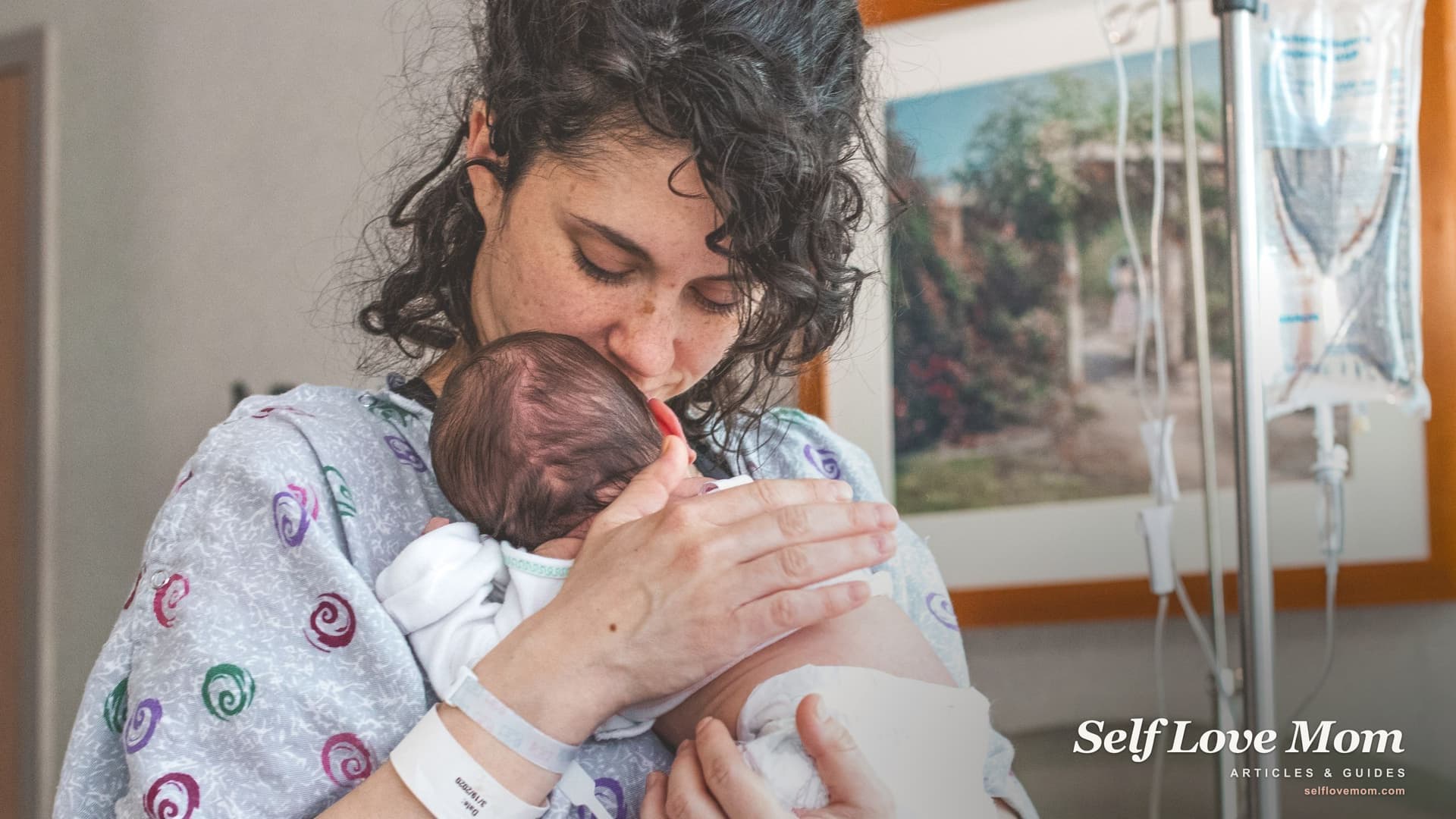
A new mother cradles and kisses her newborn in the hospital, the early postpartum days when therapy and support matter most.
Most new mothers are told the hard weeks will pass on their own. Often they do. But sometimes the low mood, the racing anxiety, or the sense of not feeling like yourself digs in and stays, and that is when therapy for new moms stops being optional and starts being treatment.
This is more common than it looks. About 1 in 8 women in the United States experience symptoms of postpartum depression, and up to half of those cases are never diagnosed (CDC). Struggling after birth is not a character flaw or a sign you love your baby less. It is a treatable medical condition.
This guide covers the clinical side: how to tell baby blues from a disorder that needs care, the warning signs to act on, which therapies actually work for postpartum depression, the free screen that flags it, and how to find a therapist even on no budget.
| It is common | It is under-caught | It is treatable |
|---|---|---|
| 1 in 8 U.S. women experience postpartum depression symptoms (CDC) |
up to 50% of postpartum depression cases go undiagnosed (review) |
2 frontline therapies, IPT and CBT, are proven to treat it |
The short version
Therapy for new moms is treatment for a real condition, not a luxury or an admission of failure. If low mood, anxiety, or intrusive thoughts last more than two weeks, that points past baby blues toward postpartum depression or anxiety. Two therapies, interpersonal therapy (IPT) and cognitive behavioral therapy (CBT), are proven first-line care. A free 10-question screen (the EPDS) helps you know where you stand, and free help exists by phone today: the National Maternal Mental Health Hotline is 1-833-852-6262.
Why do new moms need therapy, not just self-care?
Because self-care manages stress, but it does not treat a mood disorder. About 1 in 8 new mothers develop postpartum depression, and many more face postpartum anxiety (CDC). Rest, food, and support genuinely help, and our guide to self care for new moms covers those basics. When symptoms persist, though, therapy is the actual treatment.
The line is time and intensity. Baby blues (weepiness and mood swings) are common in the first two weeks and fade on their own. When sadness, dread, or intrusive thoughts stretch past two weeks or start to block daily life, that is a signal for professional care, not more willpower.
What are the warning signs of postpartum depression and anxiety?
The key signal is symptoms that last beyond two weeks or interfere with caring for yourself or your baby. Postpartum mood and anxiety disorders take a few distinct shapes, and knowing them helps you name what you are feeling. One, postpartum psychosis, is a medical emergency. Watch for these.
- Postpartum depression. Persistent sadness or emptiness, crying, loss of interest, guilt or worthlessness, trouble bonding, or thoughts of harming yourself. Lasts more than two weeks.
- Postpartum anxiety. Constant worry, racing thoughts, a pounding heart, trouble sleeping even when the baby sleeps, and a sense that something bad is about to happen.
- Postpartum OCD. Unwanted, intrusive thoughts or mental images (often about harm coming to the baby) plus rituals or checking to relieve the fear. The thoughts are distressing, not desires.
- Postpartum psychosis (emergency). Confusion, paranoia, hallucinations, or losing touch with reality. This is rare but urgent. Call 988 or go to the ER right away.
What type of therapy works best for postpartum depression?
Two therapies stand out as first-line, evidence-based care: interpersonal therapy (IPT) and cognitive behavioral therapy (CBT). The World Health Organization names IPT a first-line treatment for postpartum depression, and both have strong research behind them (WHO). The best fit depends on what you are working through.
Interpersonal therapy (IPT)
Focuses on the relationship and role changes that come with a new baby: shifting identity, partner strain, and thin support. Time-limited and practical. The WHO lists it as a first-line postpartum treatment, and it can be delivered by trained non-specialists, which widens access.
Best for: role shifts · relationships · identity · WHO first-line
Cognitive behavioral therapy (CBT)
Targets the spiraling thoughts behind depression and anxiety, and replaces them with workable coping skills. Structured, usually 8 to 20 sessions, and well-studied for both postpartum depression and postpartum anxiety.
Best for: anxious or negative thoughts · structured · skills-based
Trauma-focused therapy
For a difficult or frightening birth, approaches like trauma-focused CBT or EMDR help process birth trauma and post-traumatic stress. Worth asking about if flashbacks or avoidance of birth reminders are part of the picture.
Best for: birth trauma · PTSD symptoms · flashbacks
Group and online therapy
Group therapy adds other new moms who understand, and often costs less. Online and telehealth sessions fit around feeds and naps with no commute or sitter, and work about as well as in-person for depression and anxiety.
Best for: isolation · tight budgets · no childcare
How do you know if you need therapy? The EPDS screen
A free, quick screen can tell you where you stand. The Edinburgh Postnatal Depression Scale (EPDS) is a 10-question tool where a score of 10 or higher flags possible depression. It takes about five minutes, and providers use it as the standard postpartum screen. Screening matters because so much goes uncaught.
A high score is not a diagnosis, it is a prompt to talk to a provider. You can take the EPDS at a postpartum checkup, ask your OB or pediatrician for it, or find it free online. If your score is high or you have any thoughts of self-harm, reach out the same day rather than waiting for the next appointment.
How do you find a perinatal therapist, including free help?
Cost and time are the usual barriers, and both have workarounds. Even though effective treatment exists, up to half of postpartum depression goes unrecognized and untreated, often because moms do not know where to start (StatPearls). Start with the free lines below, which are staffed today.
- National Maternal Mental Health Hotline. Call or text 1-833-852-6262, free and confidential, 24/7, with counselors trained in pregnancy and postpartum mental health.
- Postpartum Support International (PSI). The PSI HelpLine (1-800-944-4773) plus free online support groups and a directory of perinatal-trained therapists at postpartum.net.
- 988 in a crisis. The 988 Suicide and Crisis Lifeline is free, 24/7, by call or text, for any moment that feels like too much.
Choosing between the directories, checking the PMH-C credential, knowing what to ask on the intro call, and what each route actually costs are covered step by step in our guide to finding a therapist for new moms.
What can new moms do between therapy sessions?
Therapy for new moms works better when small habits back it up the other six days a week. Postpartum recovery leans heavily on sleep, food, and real support, and protecting even a little of each keeps you steadier between appointments. The goal is a floor you can hold on a hard day, not a perfect routine.
Keep it simple. Bank sleep whenever someone can cover a feed, eat and hydrate on a schedule, get outside for ten minutes of daylight, and lean on your people on purpose. Our guides to self care for new moms and stress management for moms give you a practical starting point, and a new-mom support group adds people who get it.
Frequently Asked Questions
What type of therapy is best for postpartum depression?
Interpersonal therapy (IPT) and cognitive behavioral therapy (CBT) are the two frontline, evidence-based options, and the WHO names IPT a first-line treatment (WHO). IPT works on relationships and role changes, CBT on anxious or negative thoughts. Many moms combine therapy with medication when a provider recommends it.
What are the red flags for postpartum depression?
Sadness or emptiness lasting more than two weeks, loss of interest, trouble bonding, constant anxiety, intrusive thoughts, or feeling your family would be better off without you. Confusion or hallucinations signal postpartum psychosis, a medical emergency. Call 988 or go to the ER right away.
How do I know if it is postpartum depression or just baby blues?
Baby blues are common in the first two weeks and lift on their own. Postpartum depression lasts longer and interferes with daily life. A free 10-question screen, the EPDS, helps: a score of 10 or higher is a prompt to talk to a provider, though only they can diagnose.
Is there free therapy for new moms?
Yes. The National Maternal Mental Health Hotline (1-833-852-6262) and PSI HelpLine (1-800-944-4773) are free, and PSI runs free online support groups. Sliding-scale clinics, university training clinics, Open Path, and employer EAP sessions cover ongoing therapy at little or no cost.
How long does therapy for new moms take?
Many moms feel real improvement within 8 to 20 sessions, since IPT and CBT are both time-limited and goal-focused. Timelines vary with symptom severity and whether medication is part of the plan. Even a few early sessions can ease the worst of it, so starting sooner helps.
Sources
- Centers for Disease Control and Prevention, "Depression During and After Pregnancy," cdc.gov (retrieved 2026-07-10).
- World Health Organization, "Group Interpersonal Therapy (IPT) for Depression," who.int (IPT as a recommended first-line approach, retrieved 2026-07-10).
- NCBI Bookshelf (StatPearls), "Perinatal Depression," ncbi.nlm.nih.gov (undiagnosed and treatment-gap figures, retrieved 2026-07-10).
- Cox, J. L. et al., "Edinburgh Postnatal Depression Scale (EPDS) and Perinatal Screening," via ACOG (retrieved 2026-07-10).
- Postpartum Support International, "Get Help," postpartum.net (HelpLine and support groups, retrieved 2026-07-10).
- Health Resources and Services Administration, "National Maternal Mental Health Hotline," hrsa.gov (1-833-852-6262, retrieved 2026-07-10).
✻ Share this article
✻ About the contributor · Folio N°.180

Written by Subha
Psychologist and writer covering the topics that matter most to single moms, money, mental health, and the small daily rituals that keep a family running. Every article is research-backed and edited four times before publish.
- Articles
- 180
- Desks
- 05
- Edited
- 4×
More from this writer
✻ Edited four times before publish