Therapy for Single Mothers (2026): Free Options That Actually Work
Depression runs 3x higher for women in the poorest US homes (26% vs 8.8%, CDC). 8 free or near-free therapy paths for single moms in 2026, by speed and cost.

 Click to zoom
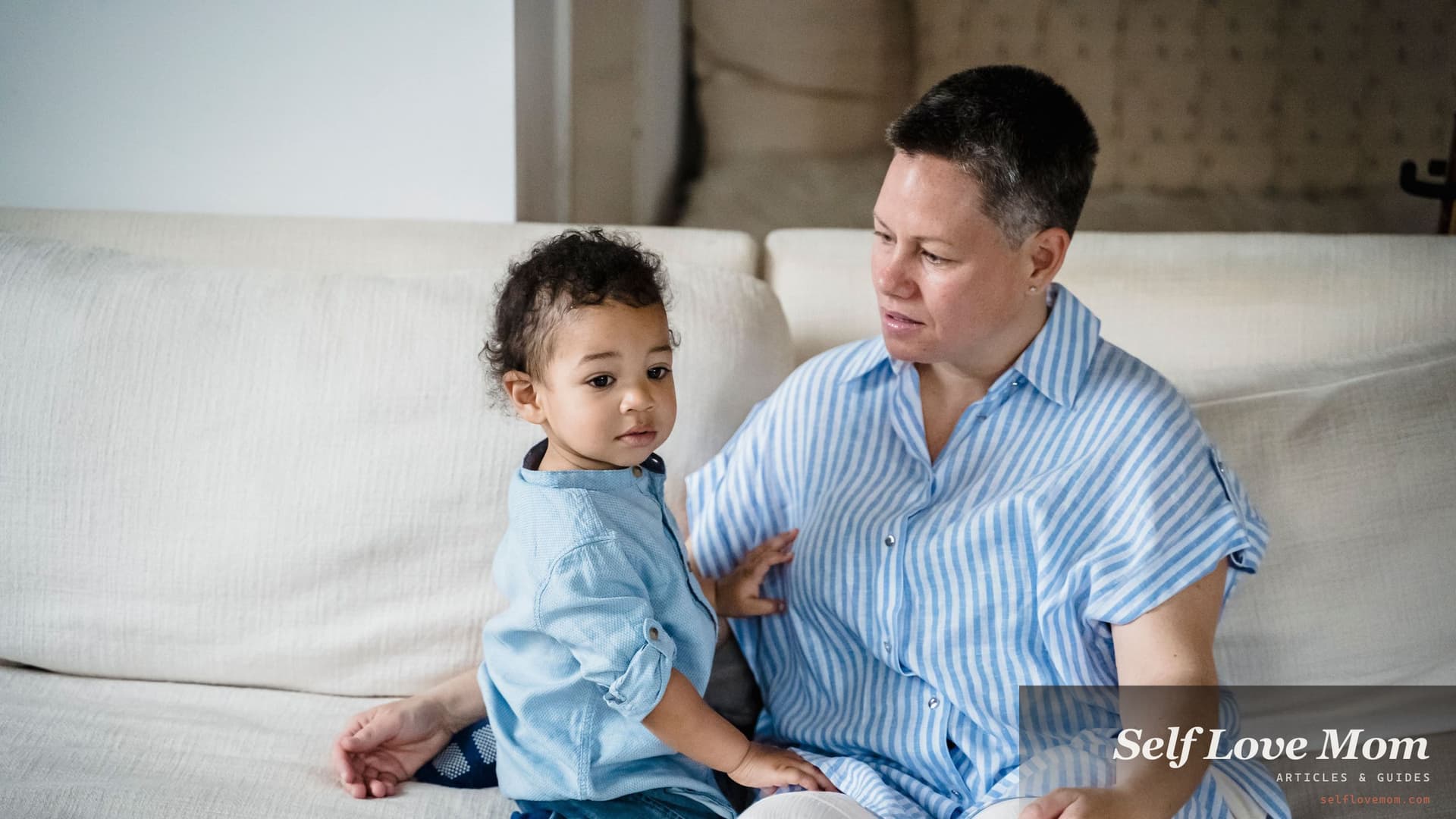
A woman in conversation with her therapist in a calm, light-filled session room. Therapy for single mothers in 2026.
If you're a single mom, one therapy session can cost your week's grocery budget. Open Path, the nonprofit low-fee network, warns that private-practice therapists can charge as much as $150 a session. Big-city specialists ask more.
The good news: that is the headline rate for new private clients without insurance. The actual price for a single mother in 2026 ranges from $0 (yes, free) to maybe $40-80 a session, depending on which path you take.
This guide covers eight legitimate paths to free or near-free therapy for single mothers in 2026. They are ranked by how fast you can reach them and what they really cost. Every option here was confirmed active this month, and the sources sit at the foot of the page.
| Headline figure | What it covers | Source |
|---|---|---|
| 28 sec | average speed to answer on the 988 Lifeline in August 2026, free, 24/7, and in 240+ languages | 988 Lifeline KPI report, Aug 2026 |
| $40-70 | Open Path Collective sliding-scale session (individual; couples $40-80) for ongoing weekly therapy | Open Path Collective, 2026 |
| $0 | Federally Qualified Health Center (FQHC) sliding-scale therapy if your income qualifies | HRSA, 2026 |
| 40% | share of workers in the smallest private workplaces who had an Employee Assistance Program in 2025, and the share climbs with employer size | BLS, 2025 |
What you need to know first
- Depression runs about 3× higher for women in the poorest US households than the richest: 26.0% against 8.8% (CDC NCHS, 2025). Single mothers are concentrated in that bottom band, so therapy is clinical prevention rather than a luxury.
- If you're in active crisis right now, call or text 988 (Suicide and Crisis Lifeline). Free, 24/7, confidential.
- The eight free or near-free therapy paths below cover every income level and most US zip codes.
- Every state Medicaid program covers outpatient mental health care, though a few charge small copays and provider networks vary. If you qualify, that is still your first call.
- Skip the trap of paying full price out of pocket. There is almost always a sliding-scale or insurance-covered option you don't know about yet.
I'm Subha, a psychologist and the writer behind the mental-health guides here. The version of "therapy for single mothers" the internet usually shows you is gated behind paywalls, paid promotion, and BetterHelp ads.
That's not this guide. Below is what is actually free, what it really costs when it isn't, and how to reach each one, ranked by speed for a single mom who needs help inside a week.
Why Does Therapy for Single Mothers Matter So Much?
Therapy for single mothers isn't a wellness trend. It's clinical prevention, and the US numbers say so plainly.
In the CDC's national health survey for August 2021 to August 2023, 26.0% of females in families below the federal poverty line screened positive for depression. In families at or above 400% of that line the figure was 8.8%, roughly a third of it (NCHS Data Brief 527, April 2025).
The direction holds outside the US too. A 2024 review in Health Science Reports gathered studies of single parents from several countries and found single mothers carrying higher rates of mood and anxiety disorders than partnered mothers everywhere it looked. In the South Korean sample it draws on, the split was 33% against 8%.
That is an international review, not a US prevalence estimate. Treat it as the pattern, not the number.
Now add the financial layer. In 2024, 30.6% of single-mother families with children under 18 lived below the official poverty line, against 4.7% of married-couple families with children (US Census, Table HSTPOV4). That is roughly six and a half times the rate, and it is the same squeeze that shows up across the wider single mother challenges most readers arrive with.
When money is tight, the cheap and repeatable forms of mental-health care aren't a "nice to have." They are the only ones that fit.
Parental burnout, the state guilt is supposed to "protect" against, damages family dynamics and children's emotional development. A 2025 review in Healthcare names single parenthood without social support as one of its clearest risk factors (Healthcare, 2025).
A rested, supported mom is the better parent, every time. Asking for help isn't weakness. It is the smartest move available to the whole household.

8 Ways to Access Free or Near-Free Therapy as a Single Mother
Ranked by access speed (how fast you can be talking to someone) and out-of-pocket cost, lowest first. The whole map of therapy for single mothers in one table, then the detail on each.
| Path | What it costs | How fast | Best for |
|---|---|---|---|
| 988 Lifeline | $0 | right now, 24/7 | active crisis, suicidal thoughts |
| Crisis Text Line | $0 | right now, 24/7 | when you cannot speak out loud at home |
| Postpartum Support International | $0 | reply within 24 hours | pregnancy and the first two years after birth |
| Medicaid | $0 if eligible | 2 to 6 weeks | ongoing weekly therapy on a low income |
| Federally Qualified Health Center | $0 to about $30 | 2 to 4 weeks | uninsured, or earning just over the Medicaid line |
| Employee Assistance Program | $0 for the covered sessions | 1 to 2 weeks | short-term support if you have employer benefits |
| Open Path Collective | $40-70 plus $65 once | book the same day | above Medicaid limits, under $100,000 household |
| University training clinic | $0 to $30 | 2 to 4 weeks in term time | living near a campus, fine with a supervised student |
1. 988 Suicide and Crisis Lifeline (free, 24/7, immediate)
Call or text 988 from any US phone. Trained crisis counselors answer around the clock, everywhere in the country, even where no local crisis center takes part. Press 2 for a Spanish-speaking counselor, dial 711 then 988 for relay, or use the 988 ASL videophone if you are deaf or hard of hearing.
If you speak another language, call and name it: 988 provides interpreters in more than 240 additional languages through Language Line Solutions, voice calls only, and the interpreter usually joins within about 20 seconds.
It is also genuinely fast. Across August 2026 the network answered 436,482 of 508,767 in-state calls, and the average speed to answer was 28 seconds. No state averaged more than 53 seconds. This is the quickest free mental-health support in America.
Cost: $0 · Wait: 28 seconds on average · Available: 24/7, nationwide, 240+ languages · Best for: active crisis, severe depression, suicidal thoughts · Apply: just call or text 988
2. Crisis Text Line (free, text-based, immediate)
Text HOME to 741741 from any US phone. A trained volunteer crisis counselor, backed by supervising staff, responds by text. Useful when calling feels too exposing or you can't talk privately at home.
Cost: $0 · Available: 24/7 · Best for: mid-crisis support, when you need to text not call · Apply: text HOME to 741741
3. Postpartum Support International HelpLine (free, postpartum-focused)
If your kid is under 2 or you're pregnant, PSI is the dedicated free national helpline for perinatal mood and anxiety disorders. Call 1-800-944-4773 or text "Help" to 800-944-4773.
Cost: $0 · Wait: message returned within 24 hours · Best for: postpartum depression, anxiety, mood changes after birth · Apply: postpartum.net
4. Medicaid Therapy Coverage (free, ongoing, requires income qualification)
Every state Medicaid program covers outpatient mental health care for enrollees, usually at no cost, though a handful of states charge small copays and the provider network differs by state.
The threshold you will see quoted for expansion states is 138% of the federal poverty level. The regulation itself says 133%; every state then subtracts 5 percentage points of the poverty level when it works out your income, which is where the extra five comes from. In states that never expanded, the line for parents sits far lower.
If you have ever applied for SNAP, TANF, or a state cash-assistance program, you are probably already in the system.
Cost: $0 if eligible · Wait: 2-6 weeks for first appointment · Best for: ongoing weekly therapy, low-income single moms · Apply: medicaid.gov or your state's Medicaid portal
5. Federally Qualified Health Centers (FQHCs, sliding-scale to $0)
FQHCs are HRSA-funded community health clinics that must serve any patient regardless of insurance status, with fees on a sliding scale based on income, down to $0 for the lowest tiers.
There are 1,356 health center organizations in the program, and between them they served 32.7 million people in 2025.
Mental health care is a core part of what they do. HRSA-funded health centers treated 3,079,683 people for mental health in 2025 and screened more than 75% of their teen and adult patients for depression. Roughly 90% of their patients live at or below 200% of the poverty line, so you will not be the odd one out.
Cost: sliding scale, $0 to ~$30 typical · Wait: 2-4 weeks · Best for: uninsured single moms, low-income working moms not on Medicaid · Apply: findahealthcenter.hrsa.gov

6. Employee Assistance Program (EAP, free if your employer offers it)
EAPs are common and getting more so. Even in private workplaces with fewer than 100 staff, 40% of workers had access to one in 2025, and the share rises with employer size. The number of free sessions is set by your employer's contract, commonly a handful a year, so ask for the exact figure.
Counselors work under the same confidentiality rules as any other clinician, and the provider does not tell your employer who called. Employers see aggregate numbers only. The usual limits apply: risk of harm to yourself or someone else, suspected child abuse, or a court order.
Cost: $0 for the sessions your employer covers · Wait: 1-2 weeks · Best for: short-term support, working moms with employer benefits · Apply: ask your HR department for the EAP phone number, or check your benefits portal
7. Open Path Psychotherapy Collective (sliding-scale $40-70)
Open Path is a national nonprofit network of more than 40,000 vetted therapists who agree to take low-income clients at sliding-scale rates between $40 and $70 per individual session (couples and family run $40 to $80). The catalog covers both in-person and telehealth.
Membership is a one-time $65 fee, never recurring, and it pays for itself within two sessions. You qualify if you are uninsured or underinsured and your household income is under $100,000. Open Path asks you not to use it when a Medicaid provider is available, because its rates sit well above Medicaid's.
Cost: $40-70/session individual ($40-80 couples) + $65 one-time membership · Wait: immediate (search and book) · Best for: ongoing therapy when you're above Medicaid limits but can't afford full-price · Apply: openpathcollective.org
8. University Training Clinics (free or very low-cost)
Universities with graduate programs in psychology, social work, or counseling typically run on-campus training clinics where supervised graduate students provide therapy at $0-30 per session. Quality is generally good (every session is reviewed by a licensed supervisor) and waitlists are short during the academic year.
Cost: $0-30/session · Wait: 2-4 weeks during academic year · Best for: moms near a university, comfortable with student providers · Apply: search "[your city] university psychology training clinic"
Types of Therapy and Which One Works Best for Single Moms
Individual Therapy
One-on-one weekly or bi-weekly sessions with a licensed therapist. The standard format, and the one covered in more depth in the counseling for single mothers guide. Cognitive Behavioral Therapy (CBT) has the most evidence behind it for the depression and anxiety symptoms single mothers report most. Most of the free options above deliver this format.
Group Therapy
Weekly meetings with 6-12 other parents (or other single moms specifically) led by a licensed therapist. Costs less than individual therapy ($0-30 typical), and the peer connection often helps as much as the clinical support. Many FQHCs and university clinics run group therapy specifically for parents.
Online Therapy
Video, phone, or text-based sessions you can do after the kids are asleep or during a lunch break. The American Psychological Association reports that teletherapy by phone or video has shown similar outcomes to in-person therapy, and has proved effective for anxiety, depression, PTSD and adjustment disorder. Most Medicaid and EAP options include telehealth.
Family Therapy
You and your kid(s) together with a therapist. Useful when single-parent transitions, divorce, custody issues, or grief are affecting the whole household. Most insurance and FQHCs cover family therapy with a billing code for "family services" if a member has a qualifying diagnosis.

How Do You Find a Therapist Who Actually Gets Single Moms?
The single biggest predictor of therapy outcomes isn't the modality, it's the therapist match, which is why a list of names is never enough on its own. Spend 15 minutes on this and save yourself months of mediocre sessions.
- Filter for "specializes in: single parents" or "perinatal mood disorders" on Psychology Today, Open Path, or the Inclusive Therapists directory.
- Schedule a 15-minute free consultation with 2-3 therapists before committing. Most offer this. Pay attention to whether they actually understand the single-mom load or treat you as just "a mom".
- Ask directly about sliding scale or insurance on the consult call. Many therapists have an unlisted sliding-scale tier, ask before assuming.
- Confirm scheduling flexibility. If they only do daytime sessions and you can't take time off work, find someone else.
- Trust the gut feeling after the first 2 sessions. If the fit isn't there, it's not going to magically appear. Switch.
If You're in Crisis Right Now
If reading this you're already at the edge, the eight options above are too slow. Use these instead. Free, 24/7, confidential.
988 Suicide and Crisis Lifeline: Call or text 988 · Languages: English, Spanish, ASL via video, plus interpreters in 240+ more
Crisis Text Line: Text HOME to 741741 · Best when: texting feels safer than calling
SAMHSA National Helpline: Call 1-800-662-HELP (4357), TTY 1-800-487-4889 · Best for: free treatment referrals for mental health and substance use · Free, 24/7, 365 days, English and Spanish
One more number is worth saving, though it is not a crisis line. The NAMI HelpLine (1-800-950-6264, or text NAMI to 62640) answers Monday to Friday, 10 AM to 10 PM ET, and closes on federal holidays.
NAMI states plainly that it is not a crisis line and does not refer you to individual providers. What it does well is explain how the system works and point you at its resource database.
Save these in your phone before you need them. The future you who is having a 2 AM panic attack will be very glad you did this when you were calm.
Frequently Asked Questions
What's the fastest free therapy option if I need help today?
Call or text 988. The Suicide and Crisis Lifeline is free, runs 24/7, and covers the whole country. If you are not in active crisis but want to talk today, your Employee Assistance Program usually connects you with a counselor fast. Beyond that, expect two to six weeks for ongoing weekly therapy through Medicaid or an FQHC.
Is online therapy really as good as in-person therapy?
Per the American Psychological Association, yes. Teletherapy by phone or video shows similar outcomes to in-person work and has proved effective for anxiety, depression, PTSD and adjustment disorder. It is also more accessible, because you need neither childcare nor a car. An active suicidal crisis is the situation clinicians usually want handled in person or through 988.
Will my employer find out if I use the EAP?
Almost never. Your employer pays for the program but receives aggregate numbers, not names, and the counselor is bound by the same confidentiality rules as any other clinician. The standard exceptions apply: imminent risk of harm, suspected child abuse, a court order. If a manager referred you formally, ask what gets reported back.
What if I'm above Medicaid income limits but can't afford private pay?
This is the gap most single moms fall into. Three options work here. Open Path Collective runs $40-70 a session plus a one-time $65 membership. A university training clinic runs $0-30. Your local FQHC sets its fee on your actual income, often landing at $0-30 for a working mom who is not on Medicaid.
Can therapy actually help with single-mom burnout?
Yes. CBT has the most research support for the cluster single moms report most: depression, anxiety, broken sleep, irritability, the pattern mapped in how long burnout lasts. Among US adults who had depression, 43% of women had received counseling or therapy in the past year (NCHS, 2025), so you would be in ordinary company.
Related guides: Pair therapy with the daily-habit framework in our self-care for single moms guide, or the no-cost mood-tracking tools listed in free self-care apps.
Before you start: if you are still working out where you are emotionally, take the single-mom burnout self-check first.
If money is the pressure underneath it: the emergency assistance guide covers rent, utilities and food, and a single mom support group costs nothing at all.
Sources
- <
- 988 Suicide and Crisis Lifeline. "Is the 988 Lifeline available in other languages?": interpreters in more than 240 additional languages through Language Line Solutions, voice calling only, connection in about 20 seconds. 988lifeline.org (retrieved 2026-09-11)
- 988 Suicide and Crisis Lifeline. In-State KPI Report, August 2026: 436,482 of 508,767 in-state calls answered, call-weighted average speed to answer 28 seconds, no state above 53 seconds. 988lifeline.org (retrieved 2026-09-11)
- HRSA Uniform Data System, national program data: 1,356 reporting program awardees, 32,746,392 patients and 3,079,683 mental health patients in 2025. data.hrsa.gov (retrieved 2026-09-11)
- 42 CFR 435.119(b)(5), Medicaid eligibility at or below 133 percent FPL. ecfr.gov (retrieved 2026-09-11)
- 42 CFR 435.603(d)(4), the mandatory 5 percentage point income disregard that turns 133 percent into the 138 percent commonly quoted. ecfr.gov (retrieved 2026-09-11)
- US Census Bureau. Historical poverty table HSTPOV4, families with children under 18: female householder, no spouse present, 30.6% below the poverty line in 2024; married-couple families, 4.7%. census.gov (retrieved 2026-09-11)
- Adigun et al. "Prevalence of depression in single parents," Health Science Reports 2024;7(7):e2235, an international narrative review. ncbi.nlm.nih.gov (retrieved 2026-09-11)
- "Parental Burnout: A Progressive Condition Potentially Compromising Family Well-Being, A Narrative Review," Healthcare 2025;13(13):1603. ncbi.nlm.nih.gov (retrieved 2026-09-11)
- Bureau of Labor Statistics. "Employee Benefits in the United States, 2025": employee assistance programs available to 40% of workers in establishments with fewer than 100 workers. bls.gov (retrieved 2026-09-11)
- HRSA Bureau of Primary Health Care. "Impact of the Health Center Program": 3.1 million patients received mental health services in 2025; about 90% of patients at or below 200% of the poverty level. hrsa.gov (retrieved 2026-09-11)
- American Psychological Association. "Telehealth and telepsychology": teletherapy has shown similar outcomes to in-person therapy for anxiety, depression, PTSD and adjustment disorder. apa.org (retrieved 2026-09-11)
- Open Path Psychotherapy Collective. Client FAQs: $40-70 individual sessions, $65 one-time membership, income under $100,000. openpathcollective.org (retrieved 2026-09-11)
- Open Path Psychotherapy Collective, therapist search. openpathcollective.org (retrieved 2026-09-11)
- 988 Suicide and Crisis Lifeline. 988lifeline.org (retrieved 2026-09-11)
- SAMHSA National Helpline, 1-800-662-HELP (4357), free and confidential 24/7 treatment referral. samhsa.gov (retrieved 2026-09-11)
- NAMI HelpLine, Monday to Friday 10 AM to 10 PM ET, not a crisis line. nami.org (retrieved 2026-09-11)
- Postpartum Support International. postpartum.net (retrieved 2026-09-11)
- HRSA Find a Health Center. findahealthcenter.hrsa.gov (retrieved 2026-09-11)
- Medicaid.gov, where to get help with Medicaid and CHIP. medicaid.gov (retrieved 2026-09-11)
- APA Psychologist Locator. locator.apa.org (retrieved 2026-09-11)
li>National Center for Health Statistics. "Depression Prevalence in Adolescents and Adults: United States, August 2021 to August 2023," Data Brief 527, April 2025: 26.0% of females in families below 100% of the federal poverty level, against 8.8% at or above 400%. cdc.gov (retrieved 2026-09-11)
Corrections, September 11, 2026. A full re-check against primary sources changed several figures here. The poverty comparison now reads 30.6% against 4.7% for 2024; it previously paired a 2021 rate with a 2023 one.
The depression evidence now leads with the CDC's US survey instead of an international review whose headline pair came from a South Korean study. A psychological-distress statistic that could not be found in its cited source was removed.
An overstated claim about the legal basis for EAP confidentiality was corrected, and the NAMI HelpLine was moved out of the crisis section because NAMI states it is not a crisis line.
A second review the same day restored three figures that had been cut for lack of a source and have now been read at the primary: 988's 240-plus interpreter languages, its 28-second average speed to answer, and the count of 1,356 health center organizations. The Medicaid threshold now shows both the 133% in the regulation and the 138% that the 5-point income disregard produces.
Last updated: September 11, 2026 · Every figure above was re-read at its primary source on that date: the CDC data brief, the Census poverty table, the BLS benefits release, HRSA's health center report, and each program's own site. All eight access paths were confirmed active. If a phone number or URL changes later, the program name itself stays the right search term. · Subha
✻ Share this article

✻ About the contributor · Folio N°.180

Written by Subha
Psychologist and writer covering the topics that matter most to single moms, money, mental health, and the small daily rituals that keep a family running. Every article is research-backed and edited four times before publish.
- Articles
- 180
- Desks
- 05
- Edited
- 4×
More from this writer
✻ Edited four times before publish