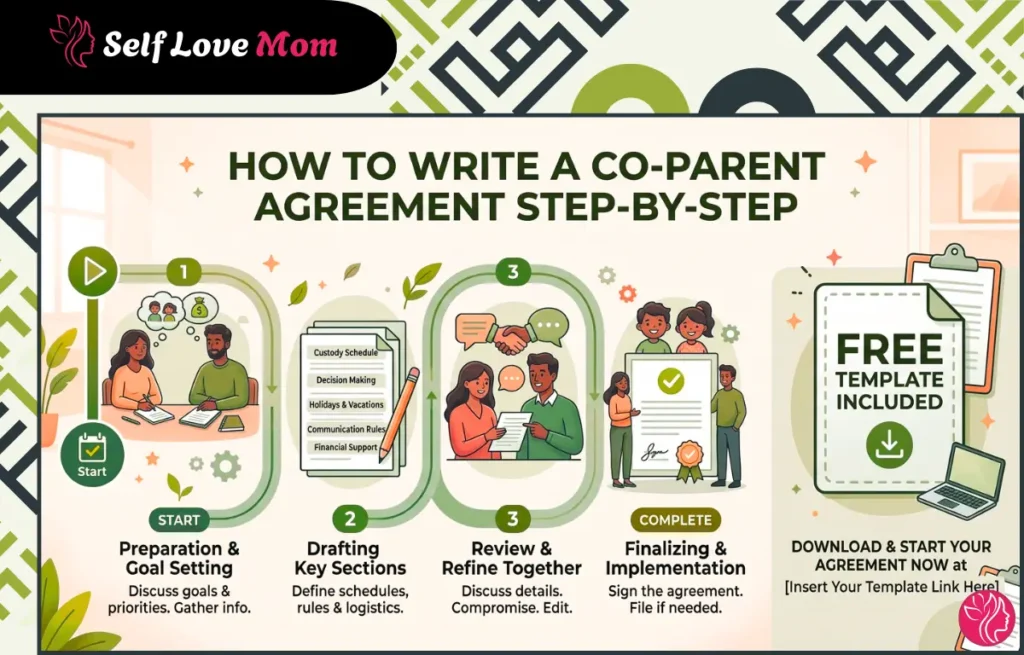

- A co-parent agreement is a written plan that covers custody, schedules, decision-making, and finances after a separation
- It doesn’t have to go through court to be useful, but court approval makes it legally enforceable
- Most states require a formal parenting plan as part of any divorce involving children
- Even informal agreements should cover at least 5 core areas to prevent conflict later
- You can write one without a lawyer, but having it reviewed or notarized adds real protection
Separating from a partner is hard enough. Figuring out how to raise kids together afterward is harder. A co-parenting agreement is what keeps that process from becoming a constant negotiation. It’s a written document that spells out how two parents will handle custody, schedules, decisions, and money, so there’s less room for conflict and more room for the kids to just be kids.
Whether you’re going through a formal divorce or separating without ever being married, this page covers exactly what a co-parent agreement should include, when it needs to be court-approved, and how to write one that actually works in practice.
What Is a Co-Parent Agreement?
A co-parent agreement is a written document that outlines how two parents will share the responsibilities of raising their child after a separation or divorce. It’s sometimes called a co-parenting plan, a parenting plan, or a custody agreement. The name varies by state, but the purpose is the same: put the plan in writing so both parents are working from the same page.
It’s not just about who the kids live with. A solid co-parent agreement covers schedules, holidays, how decisions get made, how parents communicate, and who pays for what. The more specific it is, the less room there is for arguments down the road.
Who Needs One?
- Parents going through a divorce or legal separation, most states require a formal parenting plan to be filed with the court
- Unmarried parents who are splitting up and need a structure for shared custody
- Parents who never lived together but want a clear arrangement from the start
- Parents whose existing arrangement isn’t working and needs to be updated in writing
What Should a Co-Parent Agreement Include?
A co-parenting agreement template or plan typically covers five core areas. Skip any of them, and you’re likely to end up arguing about it later. Here’s what to include and why each one matters.
Physical Custody and Living Arrangements
This section of your co-parent agreement spells out where the children live and how time is divided. It should be specific enough that neither parent can interpret it differently on a given week.
- Primary residence: whose parents’ home is the main base
- Time split: 50/50, 70/30, or another arrangement with exact days listed
- Pickup and drop-off logistics: who drives, where, and at what time
- What happens if a parent is late or needs to swap days
Co-Parenting Schedule for Holidays and School Breaks
A clear co-parenting schedule for holidays prevents the biggest source of co-parenting conflict. Regular-week arrangements often work fine until Thanksgiving or a birthday comes up.
- Major holidays: Christmas, Thanksgiving, Eid, Diwali, or whatever applies to your family
- School breaks: winter, spring, and summer schedules are listed separately
- Each parent’s birthday and the child’s birthday
- Mother’s Day and Father’s Day (yes, put it in writing)
Legal Custody and Decision-Making
Legal custody is separate from physical custody. It covers who gets a say in the big decisions. Most agreements use joint legal custody, meaning both parents decide together on:
- Education: school choice, tutoring, IEP decisions
- Healthcare: doctors, medications, therapy, dental care
- Extracurricular activities and sports
- Religious upbringing
- Travel outside the state or country
Co-Parenting Communication Rules
Good co-parenting communication doesn’t happen on its own. Build the rules into the agreement. This section protects both parents and keeps the focus on the kids.
- Preferred communication method: text, email, or a co-parenting app like OurFamilyWizard
- Response time expectations: how quickly each parent replies to non-urgent messages
- Agreement not to discuss legal matters in front of the children
- How to handle emergencies: who gets called first and when
Financial Responsibilities and Child Support
Money is the second biggest source of co-parenting conflict after scheduling. A strong co-parent agreement spells out financial responsibilities clearly so there’s no guessing.
- Child support amount and payment schedule, if applicable
- How uninsured medical expenses are split, a common arrangement is 50/50 after an agreed threshold
- Who covers school fees, uniforms, and supplies
- Who claims the child as a tax dependent, and in which years alternating years is common, but whatever you agree on must be in writing
- Extracurricular costs: who decides which activities and who pays
- A clause for larger future expenses like braces, college preparation, or a first car, so there is an agreed process before the cost arrives
| Expense Type | Suggested Approach |
|---|---|
| Monthly child support | State formula-based, paid on the 1st of each month |
| Uninsured medical | 50/50 split above the agreed threshold |
| School supplies and fees | Split equally or assigned to one parent |
| Extracurricular activities | Joint decision required, costs split equally |
| Tax dependency | Alternating years, documented in agreement |
| Large future expenses | Discussed jointly when they arise |
Does a Co-Parent Agreement Have to Be Filed in Court?
Not always, but it depends on your situation. If you’re going through a divorce, most states require you to submit a shared parenting agreement or parenting plan as part of the legal process. A judge reviews it and either approves it or asks for changes. Once approved, it becomes a court order, which means violating it has legal consequences.
If you were never married and aren’t filing any court paperwork, you can create an informal co-parent agreement without going to court. It’s still useful. It gives both parents a clear reference and shows good faith if the situation ever ends up in front of a judge later.
Practical tip: Even if you don’t file with a court, get the agreement notarized and each parent should keep a signed copy. It won’t carry the weight of a court order, but it’s far better than a verbal arrangement if things go sideways.
How to Write a Co-Parent Agreement Step by Step
You don’t need a lawyer to start writing your co-parent agreement, but you might want one to review it before you sign. Here’s the process that works for most families:
- List everything that needs a decision: custody, schedule, holidays, decisions and money. Don’t skip anything just because it feels obvious now.
- Start with the kids’ schedule, use a calendar to map out a full year, including school breaks and holidays, before you negotiate anything else.
- Use a co-parenting plan template as your base. Most state court websites publish free forms that meet local legal requirements. Adapt from there.
- Write in plain language, avoid vague phrases like “reasonable visitation.” Every term that can be interpreted two ways will be interpreted two ways at the worst possible time.
- Set a dispute resolution process, and agree upfront on how you’ll handle disagreements. Mediation is cheaper and faster than going back to court.
- Have it reviewed by a family law attorney, who can spot gaps you didn’t think of. Many offer flat-fee document reviews for under $200.
- Sign and notarize both parents sign in front of a notary, each keeps a copy, and files with the court if your state requires it.
A good parenting plan template covers all five areas above and includes a section for future modifications. Life changes: new jobs, new cities, kids getting older. Build in a review clause so you can update the agreement without going back to court every time.
You’re Protecting Your Kids’ Future. That Takes Courage.
Sitting down to write a co-parent agreement when everything feels raw is one of the hardest, most loving things a mom can do for her children. It’s not just paperwork. It’s choosing to put them first even when it’s painful.
At SelfLoveMom, we cover co-parenting boundaries, single mom finances, and taking care of yourself while you hold everything together. You don’t have to figure it all out alone.
Common Questions
FAQs on Co-parent Agreement
1
Can a co-parent agreement be changed after it’s signed?
Yes. Both parents can agree to modify a co-parent agreement at any time, but changes should always be made in writing and re-signed. If the agreement is a court order, formal modifications must be filed with the court, especially for custody and child support changes.
2
What happens if the other parent violates the co-parent agreement?
If it’s a court-approved order, violations can be reported to the family court. A judge can enforce compliance, modify the order, or hold the violating parent in contempt. For informal agreements, your options are more limited, which is exactly why getting court approval matters when possible.
3
Do co-parenting rules need to be the same in both households?
No, and trying to enforce identical rules across two homes is one of the most common co-parenting mistakes. Each parent sets their own house rules. The agreement only needs to align on major decisions like school, healthcare, and travel. Bedtimes and screen time are each parent’s call.