Dating as a Single Mom: 12 Rules for 2026
Dating as a single mom is a time problem, not a demand problem. 64% of single parents repartner, most within 13 months. Twelve rules that fit a real calendar.

 Click to zoom
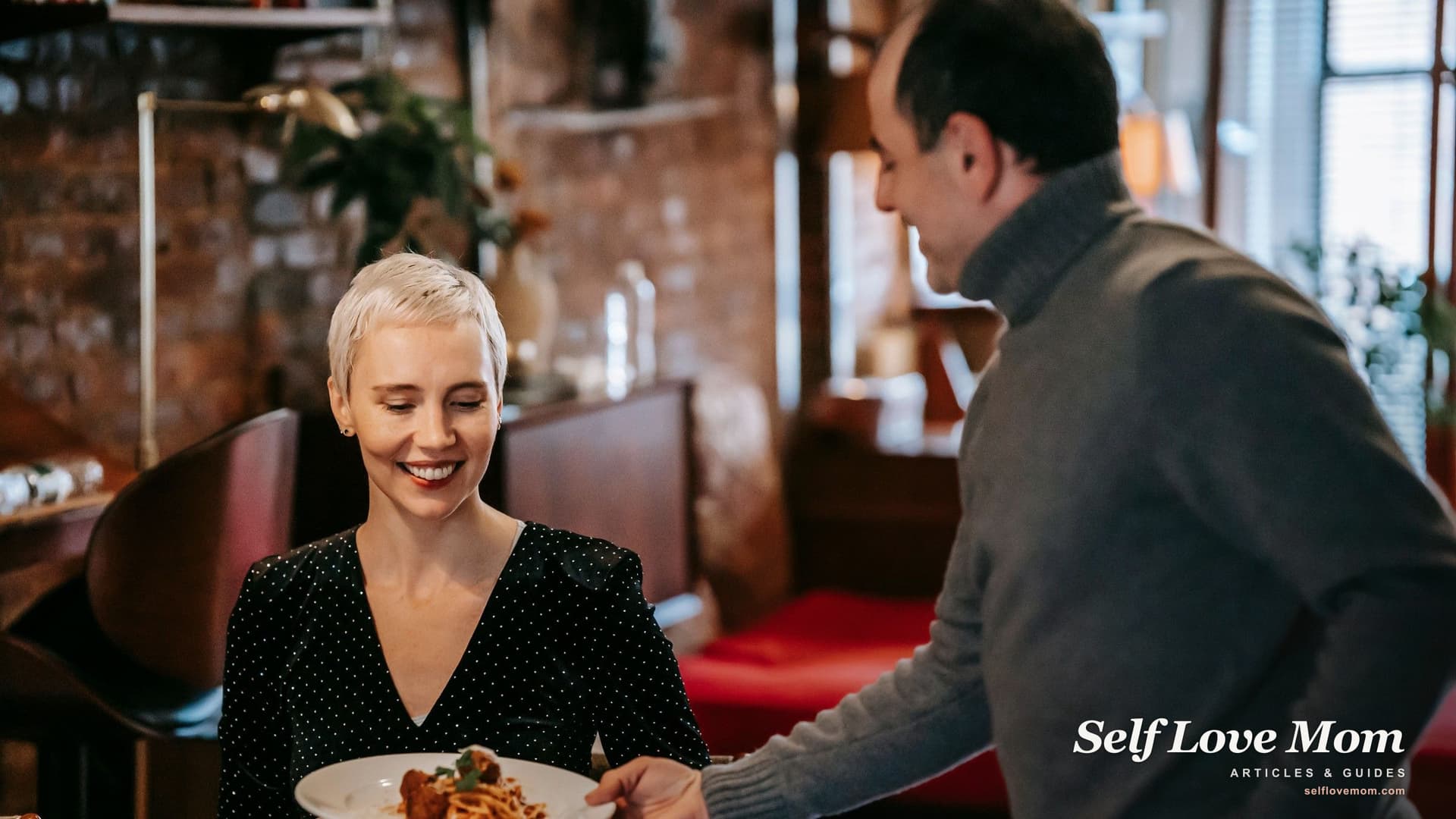
A single mom laughs over coffee on a cafe date, framed by the window at the counter.
Dating as a single mom is a time problem, not a demand problem. In a survey of 600 single parents, 63% believed they would never find love again. In the same survey, 64% had already found a new partner, most of them about 13 months after the breakup (GoodtoKnow, 2024). The fear and the outcome sat in the same group of people, and the outcome won.
You are also in bigger company than it feels like at 9 pm on a Tuesday. The Census Bureau counts 7.3 million one-parent families headed by a mother (Census Bureau, 2023). What follows is the research, the numbered rules the internet keeps selling, and what men are told about you, in the order the questions usually come up.
| What the numbers say | Figure | Source |
|---|---|---|
| Parents who found a new partner after a breakup | 64% | Even survey of 600, via GoodtoKnow, 2024 |
| Typical time from breakup to new relationship | ~13 months | Same survey |
| Divorced or separated adults who have used a dating app | 36% | Pew Research Center, 2023 |
| How long a parent takes to decide on a second date | 38 minutes | OnePoll for Stir, 2,000 US single parents, 2023 |
The short version
Close the last relationship before opening a new one, then date on purpose inside the hours you actually have. Say you have kids in the profile. Keep your children off the early track until someone has earned a place, which pediatricians put at serious and stable rather than a month count. Never send money to anyone you have not met. And treat the numbered rules as check-in reminders, not findings.
Is it actually hard to date as a single mom?
Harder on the calendar, not on the market. Pew Research Center found that 36% of divorced, separated or widowed adults have used a dating site or app, above the 30% figure for US adults overall (Pew Research Center, 2023). The people you would be meeting are already online at a higher rate than the country, not a lower one.
The demand side is not the problem. Time is. In a 2023 survey of 2,000 US single parents commissioned by the app Stir, 34% said the most common assumption made about them was that they had no time or energy to date. The same group reported the opposite of drift: 48% said they had a clearer picture of what they wanted from a partner than before they had kids (OnePoll for Stir, 2023).
That clarity has a speed. Those same parents said they knew whether they wanted a second date 38 minutes into the first one, and 51% described themselves as less tolerant of drama than before children. Read that as an asset. You are not a slower dater than you used to be. You are a faster one with a narrower window.
Will a new partner make you happier?
Somewhat, briefly, and mostly for reasons that are not romantic. A 2025 study in the Journal of Marriage and Family followed mothers through re-partnering using long-running panel data from Germany and the UK. In the German sample of 1,101 mothers, life satisfaction rose 0.51 at the point of re-partnering, held at 0.29 one to two years later, and was no longer statistically significant after three years (Dierker, Kuehn and Myrskylae, 2025).
Two details matter more than the headline. In the 2025 study, household income explained 22% of the German effect and satisfaction with income another 34%, so most of the lift was practical rather than emotional. And in the UK sample of 549 mothers, the initial gain was smaller and had faded to nothing after the first year. Mental health showed no significant change in either country.
Almost nobody in this genre quotes that study, probably because it is not what the genre is for. It does not say do not date. It says a partner is a reasonable thing to want and a poor thing to depend on for your wellbeing, which is a better frame to walk into a first coffee with than the one most advice hands you.
Three things to settle before you open an app
Three things, and the first one takes longest. In the 2023 Stir survey, 48% of single parents said they had a clearer picture of what they wanted from a partner than before they had kids, which is the payoff for settling these before the first swipe.
First, close the last chapter. If the previous relationship still runs your reactions, it is still in the room, and a date is a terrible therapist. If you are coming out of a marriage, the timing question has its own answer in the guide to dating after divorce, and it is not a number of months.
Second, decide what you want before you swipe. Companionship, a co-adventurer, an eventual partner in the house: these are different searches, and the profile, the apps and the pace all follow from which one it is. Writing it down in a calm week is easier than working it out mid-conversation with someone charming.
Third, drop the guilt before it drives. From what we have seen, the mothers who date well are the ones who stopped treating it as time stolen from their children. If the guilt runs deeper than a passing worry, the piece on mom guilt explains where it comes from and why a 2026 Kantar survey found 91% of mothers report it.
How do you find the time?
You cannot schedule your way out of not having a second adult in the house, so the honest answer is arithmetic: a coffee that costs $40 in sitter fees is a different decision from a coffee.
Three routes exist and all are imperfect. Custody time is the cleanest if you have it: the nights your children are with their other parent are the only ones that cost nothing extra, so plan around those first. A shared calendar through one of the free co-parenting apps makes those nights visible weeks ahead.
Paid childcare is honest but expensive, and it changes the maths of a first date. That is the real argument for daylight formats: a lunch walk, a farmers market hour, a coffee during school. They fit the schedule, end cleanly, and filter for people who want to know you rather than test you.
The third route is other people, and it is the one most mothers underuse because asking feels like a debt. A reciprocal swap with another parent costs nothing and both of you need it. Single mom support groups exist for exactly this trade. If there is genuinely nobody to ask, that isolation is the more urgent problem, and it will still be there whether or not you meet anyone.
Where do you meet someone?
Online, mostly, and with your kids stated on the first screen: more than 70% of online daters in eharmony's 2023 survey said a partner having children would not put them off.
Stir, the Match Group app built for single parents, lets you display your free windows instead of apologizing for them. Hinge and Bumble let you state parent status upfront and filter for it. The full comparison, with prices and who each one suits, is in the guide to the best dating sites for single moms.

Your children are not a plot twist for date three. A profile that names them plainly filters out the wrong people for free, before either of you spends a babysitter on it. The most common mistake is the opposite one: a profile that reads as a resume for the job of mother, which attracts people looking for a service. The walkthrough on writing a single mom dating profile covers what to lead with instead.
Keep the offline channels open too. The gym at kid-swim hour, an adult education class, friends who know your situation and still say they have someone for you. Offline meetings come pre-verified in a way no app can offer. A woman checking her phone at pickup is invisible. The same woman asking a question at a class is not.
The 3-3-3, 3-6-9 and 7-7-7 rules: are they worth anything?
As reminders, yes. As findings, no. The 3-3-3 rule tells you to reassess a new relationship after three dates, three weeks and three months. Writing in Psychology Today in March 2026, Bruce Y. Lee, M.D., describes it as a set of reflection points and cautions that one size does not fit all (Psychology Today). Notice what he does not do: cite a study. There is not one.
There is a sharper tell. The definitions contradict each other. Some versions say three dates, three weeks, three months. A widely shared TikTok version says it governs your first three days of contact. A rule with no agreed definition cannot be a finding. It is a slogan that different people fill in differently.
The 3-6-9 rule splits a new relationship into three months of honeymoon, six when conflict surfaces, and nine by which you can decide. Lee walked through it in January 2026 and called the stages rough guidelines, which is the honest framing (Psychology Today). No study there either. The underlying instinct is sound: check in with yourself on a schedule instead of drifting. Just stop treating the numbers as measured.
The 7-7-7 rule is a different problem. It is not a dating rule at all. As it circulates, it prescribes a date night every seven days, an overnight every seven weeks and a kid-free trip every seven months. That is a maintenance routine for couples already together, usually pitched at marriages. It is also a routine built for people with childcare. A night away every seven weeks is not neutral advice when you are the only adult in the house.
What men are told about dating single moms
When eharmony surveyed online daters in 2023, 52% of men said they would happily date someone with children, and 53% did not believe children from a previous relationship would cause problems in a new one.And 80% said they would be comfortable having a role in those children's lives (eharmony, 2023, Australian sample).
Search the phrase from the other side and you land on a different internet: red flag lists, the types of guys who date single mothers, and videos with titles like bottom of the barrel. It is worth knowing what is in that pool, because some of the men you meet have been reading it. The data behind it is thinner than the volume suggests.
So the honest reading is not that most men will not date you. It is that roughly half will, and the ones who will not are doing your filtering for free.
Two phrases tell you which side someone is on. You are not like other single moms is not praise. It tells you the person holds a low opinion of single mothers generally and has made you a temporary exception. And anyone who talks about being a father figure before he has met you a handful of times is not showing devotion. He is showing poor judgment about children.
When do your kids meet someone?
Later than you will want to. In the 2024 survey of 600 parents, 40% worried their child would not accept a new person, and pediatricians are stricter than any month count.
The American Academy of Pediatrics puts the bar at serious and stable, not a number, and advises telling your co-parent before an introduction so your child never carries it as a secret (HealthyChildren.org). Child psychiatrists set the wider rule: children do best when the adults around them cooperate and conflict stays low (AACAP). Fewer people passing through serves the same end.

A workable test is that the relationship should have survived a disagreement, a boring stretch and a change of plan before anyone meets anyone. Those three tell you more than six good dates. Early dating happens on your time, away from your children, on a separate track until the relationship has proven it deserves a merge.
When it does happen, make it short, public and unceremonious. A park, not a dinner. No announcement about what it means. Then expect loyalty wobbles rather than gratitude. Even kids who like your new partner can run hot and cold, because warming to them can feel like betraying their other parent. The University of Florida SMART Couples program calls those bumps almost universal (UF/IFAS). Name the feeling, keep routines steady, and give it time.
How do you stay safe?
With one absolute rule and a short checklist. The rule: you never send money, gift cards or crypto to someone you have not met in person, no matter how real the feelings sound. The Federal Trade Commission logged 64,003 romance scam reports in 2023, with $1.14 billion in losses at a median of $2,000 per person, the highest reported losses of any imposter scam (FTC, 2024).
A real partner will never need your money, and a scammer cannot work around the refusal. That single rule defeats nearly every romance scam on record.
Then treat pressure as information. Love bombing, rushing to move the chat off the app, anger when you say no, sudden emergencies only you can fix: each one is data. Healthy people survive your boundaries comfortably. The ones who cannot are answering your most important question early and cheaply.
The first-date safety list
- Video chat before meeting. A five-minute call verifies a face and voice better than a week of texting.
- Meet in public and arrive yourself. Your own transport in, your own transport out, not your neighborhood.
- Tell one friend the who, where and when, and share your live location for the first few dates.
- Keep the first meet short. Thirty to forty-five minutes, with a real reason to leave.
- Hold back your address, your children's school and their photographs. Those come with trust, not chemistry.
- Reverse-search the photos. Stolen pictures power most fake profiles, and the search takes a minute.
And protect the thing you are dating from, not only the thing you are dating. If the search starts eating the evenings you had kept for yourself, it has stopped being a life and started being a second job. The basics in self-care for single moms are the floor under all of this: sleep, money, and one thing that is yours.
Questions single moms ask about dating
Is it hard to date as a single mom?
It is a scheduling problem more than a demand problem. In its 2023 report, Pew Research Center found that 36% of divorced, separated or widowed adults have used a dating app, above the 30% figure for all US adults. The difficulty is childcare, narrow windows and a low tolerance for wasted evenings, not a lack of interest from other people.
What attracts men to single moms?
Honestly, the same things that attract anyone, plus a track record. In eharmony's 2023 survey, 52% of male online daters said they would happily date someone with children and 61% of women said active single dads seemed more likely to commit. Clarity about what you want, which this group reports at higher rates, reads as confidence rather than baggage.
How soon after a divorce should a single mom start dating?
When the last relationship has stopped running your reactions, which has no fixed month count. The one survey that measured it found most single parents repartnered around 13 months after a breakup, but that is an average of outcomes, not a prescription. If you are still narrating the divorce on a first date, it is early.
When should I introduce my kids to someone I am dating?
Once the relationship is serious and stable, which is the pediatricians' standard rather than a number of months. A practical test is that it has survived a disagreement, a dull stretch and a cancelled plan. Keep the first meeting short, public and unceremonious, and tell your co-parent beforehand so your child never carries it as a secret.
Is the 3-3-3 rule backed by research?
No. It circulates on social media, and the Psychology Today piece that treats it seriously cites no supporting study and warns that one size does not fit all. Competing versions even define it differently, some as three dates, weeks and months, others as your first three days of contact. Use check-ins if they help, but not as evidence.
Are dating apps safe for single moms?
As safe as your rules make them. The FTC recorded 64,003 romance scam reports in 2023 with a median loss of $2,000, the highest reported losses of any imposter scam. Never send money to someone you have not met, video chat before the first date, meet in public, and keep your address and your children's school out of early conversations.
Every figure on this page was checked against the study or agency that published it, on the date shown beside each source, and the one figure that was previously credited to the wrong survey has been corrected. Where a source is a dating company's own poll, it is labelled as one. The editorial policy covers the rest.
Sources
- GoodtoKnow, "63% of single parents think they'll never find love again," goodto.com: survey of 600 single parents commissioned by the dating app Even with ITV's My Mum, Your Dad; 63% feared never finding love, 64% had repartnered, most around 13 months after the breakup (retrieved 2026-09-03).
- Pew Research Center, "Key findings about online dating in the U.S.," pewresearch.org, February 2023: 30% of US adults, 36% of divorced, separated or widowed adults, and 52% of never-married adults have used a dating site or app (retrieved 2026-09-03).
- US Census Bureau, "National Single Parent Day," census.gov, Table FM-1, Current Population Survey 2023: 7.3 million one-parent families with children under 18 headed by a mother (retrieved 2026-09-03).
- Match Group, "Stir Releases Powerful New Research Exploring Dating For Single Parents," mtch.com, September 2023: OnePoll survey of 2,000 US single parents of children under 18; 38 minutes to decide on a second date, 34% assumed to have no time to date, 48% clearer about what they want, 51% less tolerant of drama. A dating company's own poll (retrieved 2026-09-03).
- eharmony Australia, "Online daters show more love to single parents," via Mirage News, 2023: 52% of male online daters would happily date someone with children, 53% saw no issue with children from a prior relationship, 61% of women saw single dads as more likely to commit, 80% comfortable having a role in a partner's children's lives. Australian sample, a dating company's own poll (retrieved 2026-09-03).
- Bruce Y. Lee, M.D., "Should Daters Follow the 3-3-3 Rule?," Psychology Today, March 2026 (retrieved 2026-09-03).
- Bruce Y. Lee, M.D., "How to Use the 3-6-9 Rule for a Relationship," Psychology Today, January 2026 (retrieved 2026-09-03).
- Dierker, P., Kuehn, M., and Myrskylae, M., "Re-partnering and single mothers' mental health and life satisfaction trajectories," Journal of Marriage and Family 87(1):157-181, 2025, doi:10.1111/jomf.13015. German SOEP n=1,101, UK BHPS/UKHLS n=549. Life satisfaction rose 0.51 at re-partnering, 0.29 one to two years after, then lost significance; household income explained 22% and income satisfaction 34% of the German effect. German and UK panels, not US data (retrieved 2026-07-20).
- American Academy of Pediatrics, "Dating After Divorce," HealthyChildren.org: introduce a partner only when the relationship is serious and stable, and tell the co-parent first (retrieved 2026-09-03).
- American Academy of Child and Adolescent Psychiatry, "Children and Divorce," Facts for Families No. 1 (retrieved 2026-09-03).
- University of Florida IFAS SMART Couples, ;When Your Child Dislikes Your New Partner, smartcouples.ifas.ufl.edu, last modified July 2024 (retrieved 2026-09-03).
- Lesley Fair, ""Love Stinks" when a scammer is involved," Federal Trade Commission, February 2024: 64,003 romance scam reports in 2023, $1.14 billion in losses, $2,000 median, the highest median of any imposter scam (retrieved 2026-09-03).
✻ Share this article

✻ About the contributor · Folio N°.180

Written by Subha
Psychologist and writer covering the topics that matter most to single moms, money, mental health, and the small daily rituals that keep a family running. Every article is research-backed and edited four times before publish.
- Articles
- 180
- Desks
- 05
- Edited
- 4×
More from this writer
✻ Edited four times before publish