Free Cars for Single Moms in 2026 (Best Programs, Real Odds)
Free car programs for single moms ranked by odds: 1-800-Charity Cars, Vehicles for Change, local 211 referrals, Goodwill Wheels to Work. See timelines.

 Click to zoom
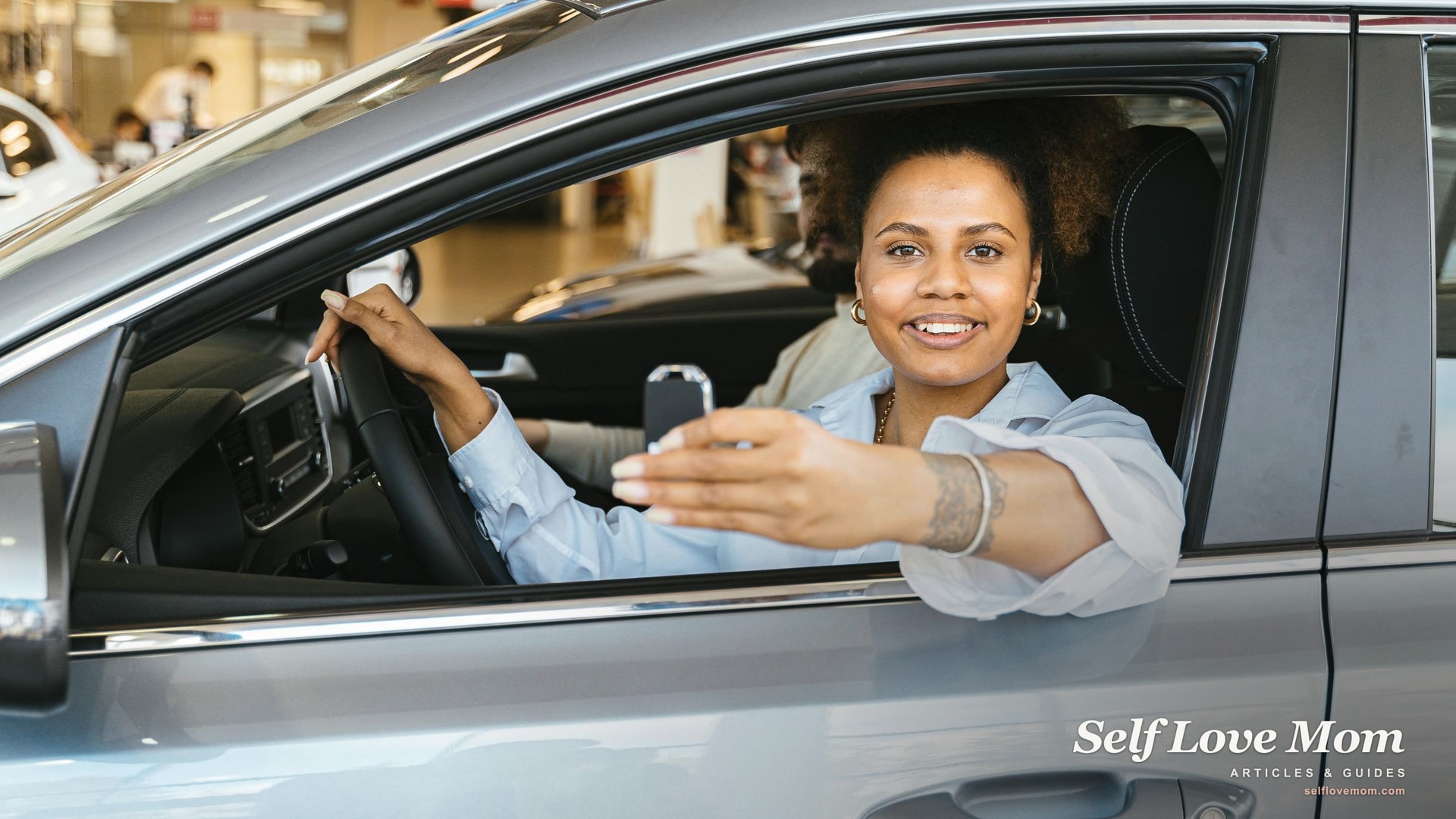
A smiling single mother leans out of her car window holding the keys, the moment of receiving a free car from a nonprofit donation program changes daily life for a working single mom.
If you are a single mom looking for a free car, the good news is that real programs exist and have given away tens of millions of dollars in vehicles. The harder truth is that demand massively outstrips supply, and most national applications take 90 to 180 days to reach a match. Knowing which programs to apply to, and in what order, doubles your odds.
This guide ranks every active free-car program a single mom can apply to in 2026 by realistic acceptance odds, average timeline, and the kind of single-mom situation each program is built for. For the broader funding picture (loans, repair grants, state TANF transportation help), pair this with our car grants for single mothers guide. All program details verified against the operating nonprofits and the National Consumer Law Center as of May 2026.
| Headline figure | What it covers | Source |
|---|---|---|
| $70M+ | lifetime vehicle value gifted to working families by 1-800-Charity Cars since 1996 | 1-800-Charity Cars, 2026 |
| ~1,000 | Community Action Agencies nationwide, the referral route to nonprofit free-car and low-cost car programs | Community Action Partnership, 2026 |
| 90 to 180 days | typical application-to-handoff timeline for the major national programs | Aggregated program data, 2026 |
What you need to know first
- "Free" usually means $0 vehicle cost, not $0 total, you still pay for title, tags, emissions, and your first year of insurance, budget roughly $300 to $700 for these
- The five most realistic free-car paths for single moms in 2026 are 1-800-Charity Cars, Vehicles for Change, local 211 referrals, Catholic Charities partner programs, and Goodwill Wheels to Work
- Most programs require verifiable employment, a job offer, or a documented path toward work, the vehicle is positioned as the bridge that lets you keep a job, not as a stand-alone benefit
- The single biggest predictor of success is applying to multiple programs in parallel, not waiting on one big national application to come through
- For more on stacked car funding (loans, repair grants, and TANF supportive services), see the umbrella guide linked in the lede above
What "free" actually means, the four real $0 paths
Free-car programs for single moms fall into four buckets, and most posts on this topic blur the lines. Understanding the difference saves weeks of misdirected applications.
The first bucket is the donated-vehicle giveaway, where a nonprofit accepts a donated car, completes basic safety inspection, and gives it directly to a qualifying recipient at zero recipient cost. This is the truest "free car" model and is what 1-800-Charity Cars runs at national scale.
The second bucket is donated-vehicle plus low-interest financing. The car is donated, the recipient pays a low upfront cost (around $950) plus a low-interest monthly loan to cover refurbishment. Vehicles for Change is the canonical example. The car is effectively free over a 2 to 4 year period, but it is not $0 day one.
The third bucket is local-nonprofit one-off awards. Catholic Charities, St. Vincent de Paul, and Salvation Army chapters in many cities run their own donated-car pipelines, usually serving 1 to 5 recipients per month per chapter. These are the highest acceptance odds for the right candidates but are entirely city-specific.
The fourth bucket is workforce-tied free-car programs like Goodwill Wheels to Work, which require participation in a training program before vehicle award. The "free" car is the reward at the end of a 6 to 12 week program completion.
1-800-Charity Cars, the largest national pipeline
1-800-Charity Cars (also branded Free Charity Cars) is the most-cited and largest free-car nonprofit in the United States. Since founding in 1996, it has gifted more than $70 million in vehicle value to single-parent households, families transitioning off public assistance, veterans, military families, and survivors of domestic violence.
Applying is free and is done entirely through the online vehicle request form. You document your need (income, employment status, hardship), upload supporting documents, and wait for a match. The catch most applicants miss: 1-800-Charity Cars uses community votes to surface high-need applications, so sharing your application page with your network is part of the process.
Realistic odds and timeline: this is a high-demand pipeline. Most applicants wait 6 to 12 months for a match, and only a fraction of applicants are matched in any given cycle. The strategy here is treat it as a long-running parallel track, not your primary application.
1-800-Charity Cars eligibility: US resident · valid driver license · single moms eligible · domestic violence survivors prioritized · means to pay tags + title + insurance · apply at Free Charity Cars vehicle request
Vehicles for Change, refurbished with low monthly payment
Vehicles for Change is the standout in the "donated plus low-interest financing" bucket. Working families pay a recipient cost of about $950 plus a low-interest loan of roughly $90 per month to cover refurbishment. The program guarantees the loan regardless of credit history.
To qualify you must have a verifiable job offer or be working at least 30 hours per week, hold a valid driver's license, carry insurance, and not already own a working vehicle. Vehicles for Change operates primarily in Maryland, Virginia, and the broader Mid-Atlantic, with partner agencies in select other states.
Applications are routed through partner social-service agencies (the Department of Social Services, local workforce boards, refugee resettlement agencies), not directly to Vehicles for Change. Step one is to ask your case manager whether your agency is a Vehicles for Change partner.
Vehicles for Change: ~$950 recipient cost + ~$90/mo loan · job or job offer 30+ hrs · partner-agency referral required · primarily MD, VA, partner states · learn more at Vehicles for Change
Local 211, Catholic Charities, and the small-program path
The fastest path to a free car for most single moms runs through local nonprofits that operate under the radar. 211 is the United Way referral line you dial from any US phone. The 211 operator will give you 2 to 5 transportation-program referrals in your county, usually including local Catholic Charities, Salvation Army, and St. Vincent de Paul programs you would never find by searching online.
These local programs typically serve 10 to 30 recipients per year per chapter, which means high acceptance rates relative to national programs but low total volume. Reach out to multiple chapters even if you do not match the first.
211 referral line: dial 211 from any US phone · free transportation referrals · operator gives 2 to 5 local program leads · best first call for any car assistance need
Local nonprofit free-car programs: Catholic Charities, Salvation Army, St. Vincent de Paul · serve 10 to 30 recipients per year per chapter · usually require local residency + documented need · apply through your local chapter (211 connects you)
Goodwill Wheels to Work and workforce-tied programs
Goodwill Wheels to Work programs operate in select metropolitan areas (Detroit, Indianapolis, Greensboro, and others) and award refurbished vehicles to graduates of Goodwill's workforce training programs. The car is the completion reward, not the entry point. To qualify, you typically enroll in a 6 to 12 week training track in a high-demand field, complete it successfully, and meet the program's employment milestones.
This path appeals to single moms who are willing to invest the training time and want the dual benefit of a credentialing program plus a car at the end. It is not the right path for moms who need transportation tomorrow morning. If childcare is the bottleneck holding back training enrollment, our state grants guide for Missouri walks through Child Care Subsidy eligibility that explicitly counts training as a qualifying activity.
Goodwill Wheels to Work: training completion required · 6 to 12 week program · refurbished vehicle at graduation · varies by Goodwill region · find your local Goodwill at Goodwill program locator
Free-car programs for domestic violence survivors
If you are leaving an abusive partner and need a vehicle to relocate or maintain employment, several programs prioritize or exclusively serve domestic violence survivors. 1-800-Charity Cars publicly lists DV survivors as a priority demographic. Many state coalitions against domestic violence operate their own donated-car networks through partner shelters.
The advocacy office in your state can connect you faster than a national application. Call the National Domestic Violence Hotline at 1-800-799-7233 and ask specifically about transportation assistance in your state. Your local DV advocate's referral often shortcuts the standard 90-180 day timeline.
DV survivor priority pipeline: 1-800-Charity Cars priority demographic · state DV coalitions operate donated-car programs · call 1-800-799-7233 (NDVH) for state-specific transportation referrals
What makes a strong free-car application
Reviewers of free-car applications are looking for one specific story: this car will materially change the recipient's ability to hold a job, support kids, and become self-sufficient. The strongest applications make that connection explicit and document it.
Three details consistently move the needle. First, a specific employment context, naming the employer, hours, and what current transportation looks like (3 buses, 90 minutes each way). Second, documented kids in the household, including ages and any special needs that drive specific transportation requirements. Third, a realistic cost analysis showing you can sustain the vehicle (insurance budget, fuel, maintenance reserve).
What hurts an application: vague hardship language, missing documents, no employment context, or sounding like you want a car instead of needing one for a specific job-or-kid reason.
After approval, the hidden costs you still pay
The day a free car is awarded is not the day all your transportation costs end. Plan for $300 to $700 in first-month costs: state title transfer fees ($25 to $90 depending on state), tags ($30 to $200), emissions or safety inspection ($25 to $50), and your first month of insurance ($80 to $200 for a single-mom liability-only policy).
Ongoing costs are real too. Budget $150 to $300 per month for fuel, $80 to $150 for insurance, and a $50 monthly maintenance reserve for the first year. Programs reject candidates who cannot demonstrate they can carry these costs, so showing up to the application with a realistic budget is essential. A flexible side hustle often covers the maintenance line item without disrupting your primary job schedule.
First-month total after free-car approval: $300 to $700 (title + tags + inspection + first insurance) · keep this budget visible on your application · for help with the insurance line item, ask 211 about state-specific reduced-rate auto insurance programs
What is the easiest free car program for a single mom to get?
The highest-odds path in our research is a local 211 referral to a Catholic Charities, Salvation Army, or St. Vincent de Paul chapter in your county. These programs typically serve 10 to 30 recipients per year and prioritize residents of their service area, which means individual applications have meaningfully better odds than the major national programs. Dial 211 from any US phone to get started.
How long does it really take to get a free car?
Plan for 90 to 180 days from first application to vehicle handoff for most national programs (1-800-Charity Cars, Vehicles for Change). Local 211-routed programs can be faster, with some donated cars matched within 30 to 60 days, but supply is unpredictable. Domestic violence survivors working through a state coalition often see the fastest match, sometimes within 4 to 8 weeks.
Do I have to repay anything for a "free" car?
True donated-vehicle programs like 1-800-Charity Cars do not require repayment. You still pay state-mandated fees (title, tags, inspection) and your own insurance. Donated-plus-financing programs like Vehicles for Change require a small recipient payment ($950) plus a low-interest monthly loan to cover refurbishment, which is closer to "deeply subsidized" than fully free.
Can I get a free car if I don't have a job yet?
Most programs require employment or a verifiable job offer. The exceptions are 1-800-Charity Cars (which considers single parents transitioning off public assistance toward work, not just currently employed) and some domestic violence survivor programs. If you are between jobs, the strongest approach is to apply once you have a written job offer in hand, even if the start date is 30 to 60 days out.
What if my application is rejected?
Rejection is common (most national programs reject the majority of first-time applicants). Three steps: ask for the specific rejection reason in writing, fix the gap (usually missing employment documentation or unclear hardship narrative), then apply to a different program.
Do not re-apply to the same program within 6 months unless it explicitly invites re-application after a status change like a new job or a move. Our donated cars application playbook covers the application craft that turns most rejections into approvals on the second try.
Sources
- 1-800-Charity Cars, eligibility and how to apply · retrieved 2026-05-24
- 1-800-Charity Cars homepage, lifetime $70M+ vehicle value gifted figure · retrieved 2026-05-24
- Vehicles for Change car award program · retrieved 2026-05-24
- National Consumer Law Center, Working Cars for Working Families directory (offline, archived copy) · directory closed, last live capture 2025-06-16 · checked 2026-08-23
- Community Action Partnership, find your local agency · retrieved 2026-08-23
- Goodwill Industries job and training program locator · retrieved 2026-05-24
- National Domestic Violence Hotline, 1-800-799-7233 transportation referrals · retrieved 2026-05-24
- 211, United Way referral line for local transportation assistance · retrieved 2026-05-24
✻ Share this article
✻ About the contributor · Folio N°.205

Written by Subha
Psychologist and writer covering the topics that matter most to single moms, money, mental health, and the small daily rituals that keep a family running. Every article is research-backed and edited four times before publish.
- Articles
- 205
- Desks
- 05
- Edited
- 4×
More from this writer
✻ Edited four times before publish