Donated Cars for Single Moms in 2026 (Application Guide)
Donated car application playbook for single moms: how the pipeline works, what documents you need, what gets rejected, and what to do after approval.

 Click to zoom
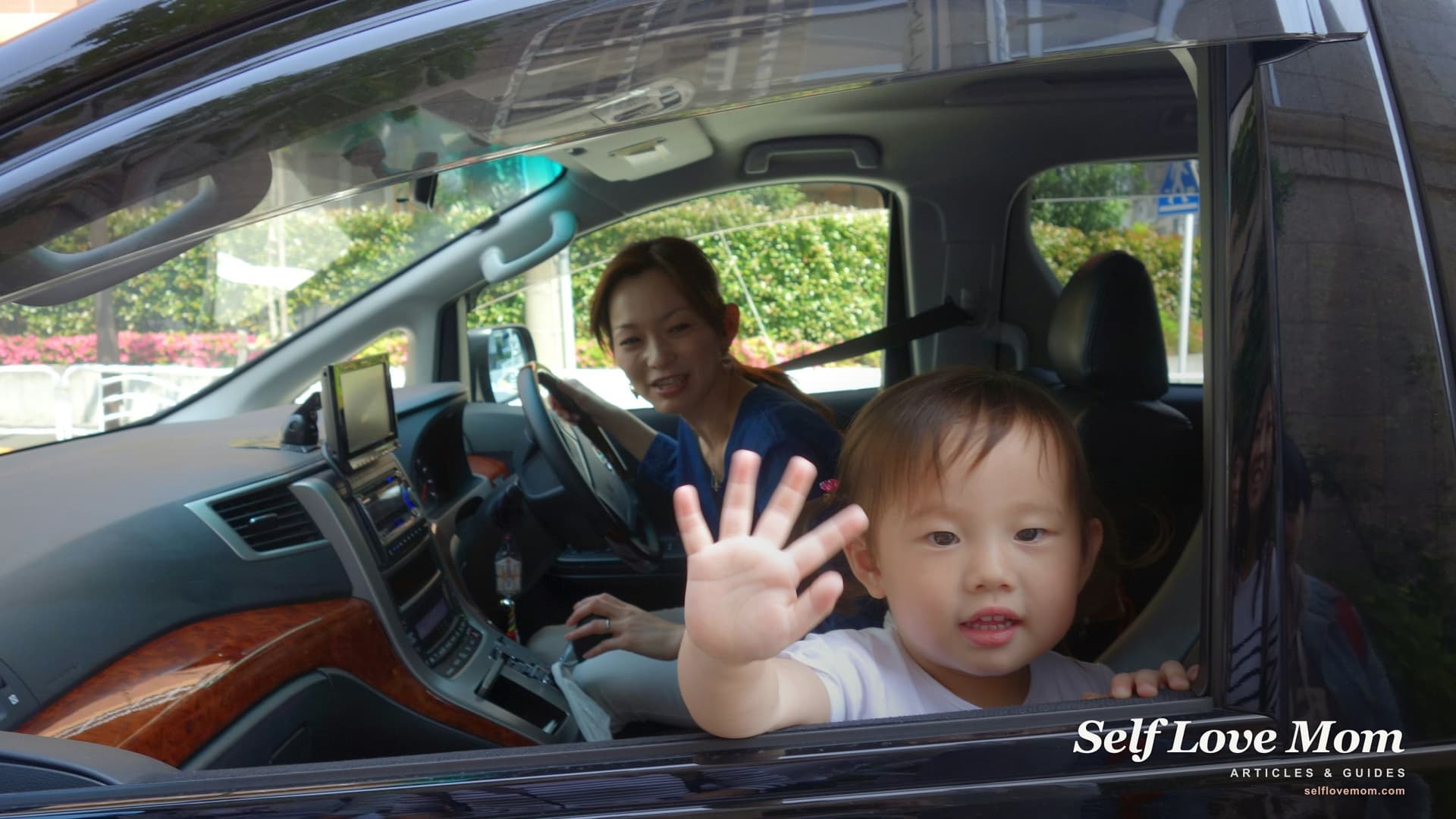
A single mother sits in the driver seat as her young child waves from the passenger window, the small everyday outcome of a donated-car program that connects working single moms with reliable transportation.
Donated-car programs sit between two worlds for a single mom. They sound simple ("nonprofit gives you a car"), but the application path is genuinely complex, and the difference between an approved application and a rejected one usually has nothing to do with how badly you need the car. It has to do with how well you can document the need in the specific way reviewers want to see.
This guide walks through how donated-car programs actually work, who qualifies, what makes a strong application, what to do after approval, and what to do if you are rejected. All program details verified against the operating nonprofits as of May 2026.
| Headline figure | What it covers | Source |
|---|---|---|
| $0 to $950 | typical recipient cost range, from fully free donated programs to refurbished-with-low-financing models | Vehicles for Change, 2026 |
| 30+ hrs/wk | verifiable employment most national donated-car programs require (Vehicles for Change; Wheels of Success raises to 32+) | Vehicles for Change, 2026 |
| ~1,000 | Community Action Agencies nationwide, the referral route to nonprofit donated-vehicle programs | Community Action Partnership, 2026 |
What you need to know first
- Donated cars are not lottery wins, they are matches, you have to fit the recipient profile each program is built to serve, no amount of need overrides a profile mismatch
- The strongest applications document specific job hours, specific kids, specific transportation gaps, not general hardship
- Most programs require verifiable employment or a written job offer, applying without one is the single most common reason applications are rejected
- Plan for $300 to $700 in first-month costs after approval, title, tags, inspection, insurance, these are not covered by the donation
- For the umbrella view of all car-funding paths including loans, repair grants, and TANF supportive services, see our car grants for single mothers guide
How donated-car programs actually work, the pipeline
Understanding the pipeline upstream of you helps you write a better application. A donor (often a corporation rotating its fleet, sometimes an individual upgrading) donates a vehicle to a nonprofit and claims a tax deduction. The nonprofit inspects, repairs, and certifies the vehicle. Then it matches the vehicle to a recipient from its active applicant pool.
The matching is not first-come-first-served. Each donated vehicle has constraints (age, mileage, location of donor) that narrow the eligible recipient list. A 2014 Honda Civic donated in Maryland will not be shipped to a recipient in Oregon. A pickup truck will not be matched to a recipient who applied for a sedan.
This is why "I applied 8 months ago and have not heard anything" usually means "no matching vehicle has come in for your specific profile yet." It is not the program ignoring you. The right strategy is to stay on the active applicant list (refresh as required) and apply to multiple programs in parallel.
Who qualifies for donated cars as a single mom
Most donated-car programs target a specific recipient profile: working low-income, in active job training, transitioning off public assistance, or in a documented hardship situation that prevents access to standard auto financing. Single moms fit several of these profiles, but the program needs to see the specific fit, not assume it.
Common eligibility filters across the major programs include verifiable employment of at least 30 to 32 hours per week, household income below the program's threshold (varies, typically 200% to 250% FPL), a valid driver's license, no current working vehicle in the household, and the ability to carry insurance, registration, and ongoing maintenance. If you are between jobs, our side hustles for single moms covers part-time work that can meet the 30-hour bar quickly enough to apply this quarter.
Single-mom-specific qualifying angles: active job + verifiable hours · kids in household with ages documented · current transportation that is failing (broken car, 90+ minute commute, bus route eliminated) · domestic violence survivor status (priority pipeline at 1-800-Charity Cars and many state coalitions)
The application, what you need to prepare
Before you start any application, gather a documents folder. Almost every program asks for the same core items, and having them ready cuts application time from a week to an afternoon.
Required for nearly every program: most recent pay stub (or job offer letter), driver's license, proof of residency (utility bill or lease), recent tax return or W-2, statement of household (number of kids, ages, custody status), and a brief hardship narrative (1 to 2 paragraphs explaining the transportation situation).
Common additional asks: letter of recommendation from caseworker, employer, or clergy; copy of insurance quote showing you have arranged coverage; and for survivors, documentation from a DV advocate or shelter.
Documents checklist: pay stub or job offer · driver license · utility/lease for residency · tax return · household statement · 1-2 paragraph hardship narrative · letter of recommendation · insurance quote · (survivors) DV advocate documentation
National donor programs ranked by acceptance odds
Among the national programs, 1-800-Charity Cars has the largest pipeline (more than $70 million in lifetime vehicle value gifted) and accepts single-parent households as a priority demographic. Realistic timeline is 6 to 12 months for a match.
Vehicles for Change serves Maryland, Virginia, and partner-agency referrals in select other states. Recipient cost is about $950 plus a low-interest loan around $90 per month. Faster timeline (4 to 8 weeks once routed through a partner agency) but narrower geographic reach.
Wheels of Success serves Florida only and goes up to 250% of the federal poverty level. Requires 32+ hours of weekly employment and a monthly pay-it-forward fee plus 3 service hours per month.
Goodwill Wheels to Work programs operate in select metros (Detroit, Indianapolis, Greensboro, others) and award refurbished vehicles to graduates of Goodwill's 6 to 12 week workforce training programs.
Acceptance-odds-by-program (single moms): 1-800-Charity Cars (low odds, high volume, 6-12 mo) · Vehicles for Change (higher odds via partner agency, 4-8 wk, MD/VA primary) · Wheels of Success (FL only, 32+ hr employment) · Goodwill Wheels to Work (training-tied, completion-based award)
Local donated-car networks, the highest-odds path
Local nonprofits route the highest percentage of single moms to donated cars, but they are the hardest to find. The single best starting point is dialing 211 from any US phone and asking the operator for transportation assistance referrals in your county.
Catholic Charities, Salvation Army, and St. Vincent de Paul chapters operate donated-car programs in many cities. Volume is low (10 to 30 recipients per year per chapter) but acceptance odds are meaningfully higher than national programs because the applicant pool is bounded by geography. Call multiple chapters in your service area, not just the closest one.
State-specific aid often stacks on top of a donated vehicle. Our Missouri grants guide and New York grants guide walk through state-level TANF transportation supports that pair well with a donated car.
Local donated-car routing: dial 211 (United Way) · ask for transportation referrals in your county · call Catholic Charities, Salvation Army, St. Vincent de Paul chapters in your service area · best for moms in mid-size and small cities where national programs do not reach
What happens after approval, title, tags, insurance
The day of approval starts the most expensive 30 days of the donated-car experience. Plan for $300 to $700 in first-month costs: title transfer fees ($25 to $90 by state), tags ($30 to $200), state-mandated emissions or safety inspection ($25 to $50), and your first month of insurance ($80 to $200).
Title transfer is usually completed at your local DMV within 30 days of receiving the vehicle. Bring the signed title from the donor program, your driver's license, and proof of insurance. Several states (notably California, New York, and Texas) require emissions or safety inspection before title issuance, so call ahead to know what is required.
Insurance is the trap most single moms walk into. Liability-only coverage is the minimum legal requirement in most states but does not protect you if the donated car is damaged or stolen. If the car is worth more than $5,000, talk to your insurer about a low-deductible policy or full coverage even if it costs $40 to $60 more per month.
The summer cooling side of utility budgets (covered in our LIHEAP cooling guide) is the other monthly cost that often gets forgotten in a post-approval budget. Build both insurance and utilities into the monthly number you show on the application, not just the loan repayment.
First-month cost breakdown: title transfer $25 to $90 · tags $30 to $200 · inspection $25 to $50 · first month insurance $80 to $200 · totals $300 to $700 (keep this budget on your application so the program sees you can carry it)
Common application mistakes that get rejected
Most rejections come from a small set of avoidable mistakes. The single most common is applying without employment documentation. Programs need to see verifiable hours, pay stubs, or a written job offer with a start date. "I am looking for work" with no concrete prospect almost always results in rejection.
The second most common is vague hardship language. "I am struggling and need help" is weaker than "My current job is 18 miles away, my current car is unreliable, I have missed 4 shifts in the past 6 weeks due to breakdowns, and I have an oldest child in 4th grade who needs to be picked up by 3:30 PM."
The third is missing documents. Reviewers see this as a signal of follow-through. If you cannot turn in a complete application, they reasonably assume you may not turn up to scheduled inspections, paperwork, or insurance setup.
Top rejection reasons: no employment documentation · vague hardship narrative · missing documents · unrealistic post-approval budget · applying outside the program's geographic service area · trying to qualify for a program you are not the target demographic for
If you are rejected, what to do next
Rejection is common across all national programs. The right response is not to give up but to debug. Three steps: ask for the specific rejection reason in writing, fix the gap, and apply to a different program before re-applying to the same one.
If the rejection cited insufficient employment documentation, the fix is to wait until you have 60 to 90 days of consistent pay stubs (or a written offer letter from a new employer) before re-applying. If it cited vague hardship, rewrite the narrative with specific numbers (hours, miles, missed shifts, kids' ages and school pickup times).
While you wait, parallel-apply to local 211-routed programs (Catholic Charities, St. Vincent de Paul). These often have better acceptance odds and can match faster. Our ranked free car programs guide covers the comparative odds and timelines for each.
What is the difference between "free" and "donated" car programs?
"Donated" describes how the car got into the program (a donor gave it). "Free" describes the recipient cost. Most truly free programs are donated (the car was given to the nonprofit, the nonprofit gives it to you). Some donated programs charge a small recipient cost ($950 at Vehicles for Change) plus a low-interest loan for refurbishment, which is closer to "deeply subsidized" than fully free.
Do I have to pay anything for a donated car?
For state-mandated fees, yes. Even fully donated programs (1-800-Charity Cars, most Catholic Charities chapters) do not cover title transfer, tags, inspection, or your insurance. Budget $300 to $700 in first-month costs. For donated-plus-financing programs (Vehicles for Change, similar models), add the recipient cost ($950) and the monthly loan payment (~$90) on top.
How long is the average wait between applying and receiving a donated car?
National programs: 90 to 180 days as a rule of thumb, with 1-800-Charity Cars often longer (6 to 12 months). Vehicles for Change via partner agency: 4 to 8 weeks. Local Catholic Charities or St. Vincent de Paul: 30 to 90 days, depending on chapter volume. Domestic violence survivor pipelines (state coalitions): sometimes 4 to 8 weeks.
What documents do I actually need to apply?
Across nearly every program: a current pay stub (or written job offer), driver's license, proof of residency (utility bill or lease), most recent tax return or W-2, statement of household (number of kids and ages), and a 1 to 2 paragraph hardship narrative. Additional documents sometimes asked: caseworker recommendation letter, insurance quote, DV advocate documentation for survivors.
Will I need to repay anything for a donated car?
True donated programs (1-800-Charity Cars, most Catholic Charities chapters) require no repayment. Donated-plus-financing programs (Vehicles for Change, similar) require a recipient cost of about $950 plus a low-interest monthly loan. State TANF supportive services attached to a vehicle do not typically require repayment but may have work-participation requirements.
Sources
- 1-800-Charity Cars, eligibility and how to apply · retrieved 2026-05-24
- Vehicles for Change car award program (recipient cost + monthly loan model) · retrieved 2026-05-24
- Wheels of Success eligibility guidelines (Florida, 250% FPL, 32+ hours) · retrieved 2026-05-24
- National Consumer Law Center, Working Cars for Working Families directory (offline, archived copy) · directory closed, last live capture 2025-06-16 · checked 2026-08-23
- Community Action Partnership, find your local agency · retrieved 2026-08-23
- Nutmeg State Financial Credit Union, Working Wheels Car Ownership Program (CT) · retrieved 2026-05-24
- Goodwill Industries job and training program locator · retrieved 2026-05-24
- 211, United Way referral line for local transportation assistance · retrieved 2026-05-24
- National Domestic Violence Hotline, transportation referrals for survivors · retrieved 2026-05-24
✻ Share this article
✻ About the contributor · Folio N°.185

Written by Subha
Psychologist and writer covering the topics that matter most to single moms, money, mental health, and the small daily rituals that keep a family running. Every article is research-backed and edited four times before publish.
- Articles
- 185
- Desks
- 05
- Edited
- 4×
More from this writer
✻ Edited four times before publish