How Long Does Burnout Last? A Realistic Recovery Timeline
How long does burnout last? Mild burnout eases in 2 weeks to 3 months, severe can take 1 to 3 years. See the recovery timeline, the 5 stages, and how to heal.

 Click to zoom
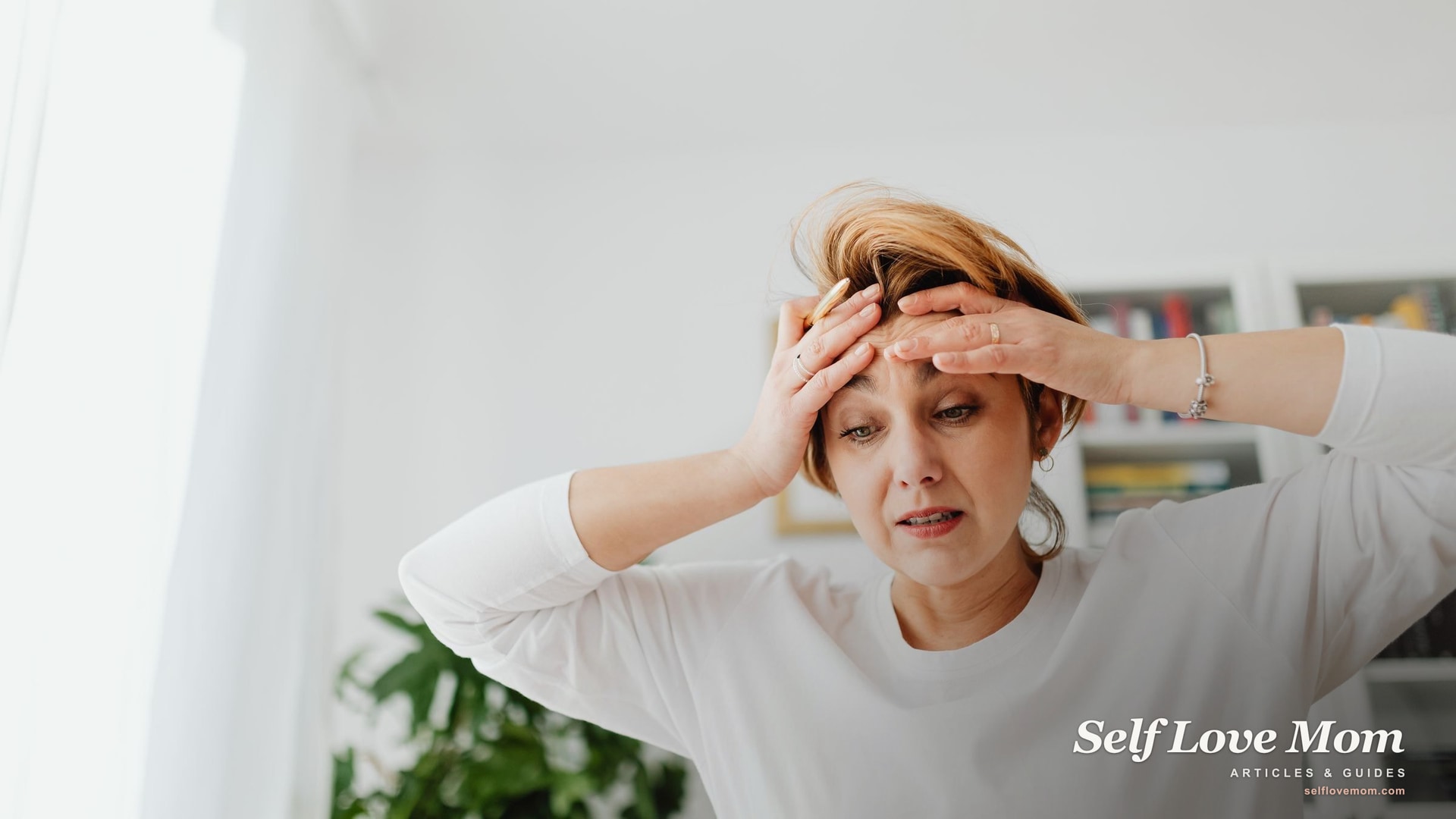
An exhausted mother holds her head in overwhelm at home, the kind of chronic stress that builds into burnout.
How long does burnout last? Anywhere from a couple of weeks to a few years, and the single biggest factor is whether you actually change what caused it. Catch it early and rest, and recovery is fast. Push through and stay in the same overloaded life, and it drags.
For mothers, the odds of hitting that wall are high. In 2024 the U.S. Surgeon General found that 48% of parents say their daily stress is completely overwhelming, and roughly 8 to 9% of U.S. parents reach full clinical burnout (42-country study). Knowing the timeline helps you recover on purpose instead of just waiting.
This guide covers how long burnout really lasts, the five stages, how to recover, the signs you are healing, and when exhaustion is actually something that needs treatment.
| Mild burnout | Moderate burnout | Severe burnout |
|---|---|---|
| 2 weeks to 3 months caught early, with real rest |
3 to 6 months once exhaustion has set in |
1 to 3 years long-ignored or with depression |
The short version
Burnout recovery tracks with severity: mild eases in about 2 weeks to 3 months, moderate in 3 to 6 months, and severe or long-ignored burnout can take 1 to 3 years (UnityPoint Health). The clock only starts once you reduce the load. Rest gives a temporary lift, but real recovery needs the stressor eased, sleep rebuilt, and often support. If low mood or numbness lasts beyond two weeks no matter what, that is depression territory, not just burnout.
How long does burnout last?
There is no fixed number, but clinicians group recovery by severity. Mild burnout tends to lift in 2 weeks to 3 months, moderate burnout in 3 to 6 months, and severe burnout in 1 to 3 years (UnityPoint Health). The deciding factor is not willpower; it is whether the underlying overload actually changes.
Time off helps, but a long weekend does not cure real burnout. If you rest and then return to the exact same load, the exhaustion comes straight back. Recovery speeds up when you reduce the stressor, protect sleep, and add support. It stalls when you stay in survival mode. So how long does burnout last, honestly? As long as the cause lasts, plus the time your nervous system needs to reset.
What are the 5 stages of burnout?
Burnout is not a single moment; it builds through five recognized stages, and knowing where you are tells you how far back you have to climb. The model traces from early enthusiasm to entrenched exhaustion (INTEGRIS Health). The earlier you catch it, the shorter the recovery.
- 1. Honeymoon. High energy and optimism, often with early warning signs you brush off. Common in the newborn or new-job phase.
- 2. Onset of stress. Some days feel harder. Sleep, focus, and patience start to dip.
- 3. Chronic stress. Stress becomes the norm. Irritability, fatigue, and missed deadlines pile up.
- 4. Burnout. Exhaustion turns physical. Cynicism, numbness, and a sense of "I cannot keep doing this" set in.
- 5. Habitual burnout. Symptoms are baked into daily life, often with anxiety or depression. This is the stage that takes the longest to reverse.
How do you recover from burnout?
Knowing how to recover from burnout is less about a spa day and more about lowering the load your body has been running on. The most reliable step is reducing or removing the stressor; without it, every other fix is temporary (Mental Health America). Stack these, do not just pick one.
- Ease the load first. Cut, delegate, or delay what you can. Even a 10% drop in demands changes the trajectory.
- Rebuild sleep. Burnout runs on a depleted nervous system, and sleep is the fastest repair. Protect it before anything optional.
- Set one firm boundary. Say no to a single recurring drain this week. Boundaries are what keep recovery from unraveling.
- Move and connect. Gentle daily movement and real contact with people who refill you both buffer stress. See our guide to stress management for moms.
- Get support. A therapist, group, or even a shared load at home speeds things up. Our guide to therapy for moms covers finding affordable help.
What are the signs you are recovering from burnout?
Recovery is rarely a straight line, so it helps to know the markers. You are healing when energy returns in the morning, small tasks stop feeling impossible, and you can care about things again. Mental Health America notes that returning interest and steadier mood are key signals (Mental Health America).
- Mornings feel lighter. You wake with a little more in the tank instead of dread.
- Patience comes back. The short fuse and mom rage ease, and small things stop tipping you over.
- You care again. Interest in people, hobbies, and work returns after the numb, cynical stretch.
- Your body settles. Headaches, tension, and gut trouble calm as the stress response winds down.
Why does mom burnout hit differently?
Parental burnout has its own research, and it is common. Roughly 8 to 9% of U.S. parents meet the threshold for clinical parental burnout (42-country study), driven by relentless caregiving with no off switch. Clinicians even have an informal name for the exhausted end of it: depleted mother syndrome.
The catch for moms is that the stressor, your kids, cannot be quit or delegated the way a job can. That is why mom burnout so often slides into the longer end of the timeline. Recovery leans harder on shared load, boundaries, and support. If yours is rooted in the stay-at-home grind, see our guide to stay-at-home mom burnout, or take the mom burnout quiz to gauge where you are.
When is burnout more than burnout?
Burnout and depression overlap, but they are not the same, and the difference decides your next step. Burnout usually eases when the load lifts. When low mood, hopelessness, or numbness stays for more than two weeks no matter what changes, that points to depression or anxiety that needs treatment, not just rest.
Reach out today, not next month, if you have thoughts of harming yourself, cannot function, or feel disconnected from reality. The 988 Suicide and Crisis Lifeline is free and available 24/7 by call or text. Our guides to therapy for overwhelmed moms and everyday self-care for mothers cover the next steps. If your burnout started with a new baby, see how to find a therapist for new moms.
Frequently Asked Questions
How long does burnout last on average?
Most people recover in about three months to a year, but it ranges widely. Mild burnout can lift in 2 weeks to 3 months, while severe or long-ignored burnout can take 1 to 3 years (UnityPoint Health). The timeline shortens sharply when you actually reduce the stressor that caused it.
How long does it take to fully recover from burnout?
Full recovery, meaning steady energy, mood, and motivation, usually takes 3 to 6 months for moderate cases and up to a few years for severe ones. Rest gives a quick lift, but lasting recovery needs the underlying load eased, sleep rebuilt, and often therapy or support alongside it.
What is the 42% rule for burnout?
The 42% rule is a popular rule of thumb, not a clinical standard: it suggests spending about 42% of your day, roughly 10 hours, on rest and recovery, including sleep. The point is simple. If almost none of your day is truly restorative, burnout has room to grow and little room to heal.
Can burnout last for years?
Yes. Severe or repeatedly ignored burnout, especially when it tips into habitual burnout with anxiety or depression, can last one to three years or longer if the underlying stress never changes. Staying in a chronically overloaded life without boundaries or support is what makes burnout persist or keep returning.
What does severe burnout feel like?
Severe burnout feels like running on empty with no reserve: deep physical exhaustion, numbness or cynicism, trouble functioning, and often physical symptoms like headaches or a churning gut. It commonly overlaps with anxiety or depression, which is why severe burnout usually needs professional support to fully resolve.
Sources
- UnityPoint Health, "What Does Burnout Feel Like and How to Recover," unitypoint.org (recovery timeline by severity, retrieved 2026-07-10).
- Mental Health America, "Burnout: Signs, Causes, and How to Recover," mhanational.org (recovery steps and signs, retrieved 2026-07-10).
- INTEGRIS Health, "What Are the 5 Stages of Burnout?," integrishealth.org (Freudenberger five-stage model, retrieved 2026-07-10).
- Office of the U.S. Surgeon General, "Parents Under Pressure: A Surgeon General's Advisory," hhs.gov (48% of parents overwhelmed, 2024, retrieved 2026-07-10).
- Roskam, I., Aguiar, J., Mikolajczak, M. et al., "Parental Burnout Around the Globe: a 42-Country Study," Affective Science (US parental-burnout prevalence 8.9%, 2021, retrieved 2026-07-10).
✻ Share this article

✻ About the contributor · Folio N°.180

Written by Subha
Psychologist and writer covering the topics that matter most to single moms, money, mental health, and the small daily rituals that keep a family running. Every article is research-backed and edited four times before publish.
- Articles
- 180
- Desks
- 05
- Edited
- 4×
More from this writer
✻ Edited four times before publish