Resume for Stay-at-Home Moms: Format + Sample for 2026
Build a stay-at-home mom resume that wins interviews in 2026: the right format by gap length, section-by-section structure, a full sample, and the mistakes to avoid.

 Click to zoom
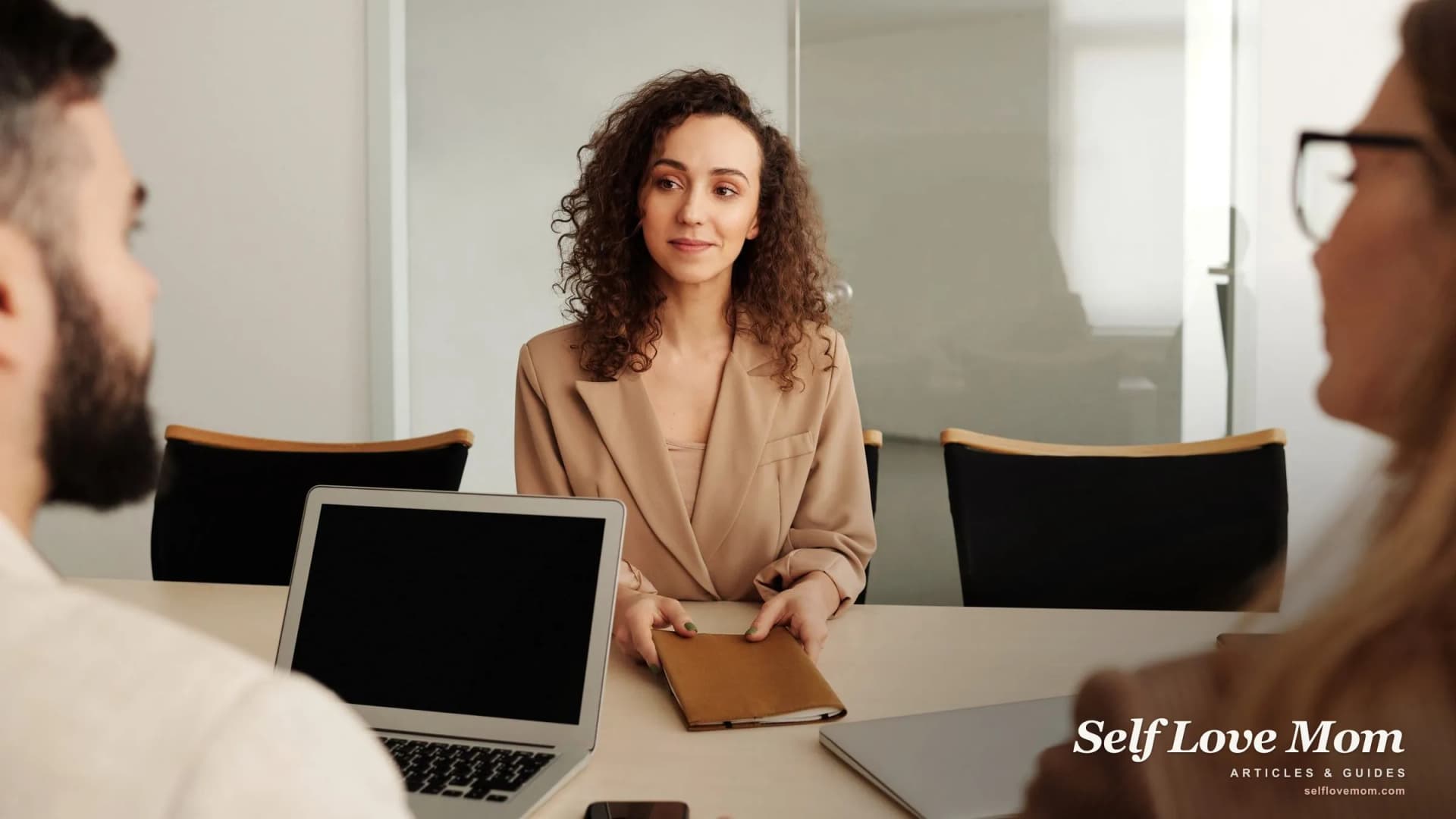
A stay-at-home mom interviews for a new job after updating her resume, facing the hiring panel with confidence.
A career gap from raising kids is not the dealbreaker it feels like. The job market expects it: in 2025, 73.9% of U.S. mothers with children under 18 were in the labor force (Bureau of Labor Statistics), so returning to work is the norm. Your resume just has to frame the gap with confidence instead of apology.
This guide walks single moms through the whole resume, the right format for your situation, what goes in each section, a full sample you can copy, and the mistakes that get a resume skipped. Get the structure right and the gap stops being the headline.
| Your situation | Best format | Why it works |
|---|---|---|
| Gap under 1 year | Chronological | Recent dates still read clean |
| Gap of 1 to 3 years | Hybrid | Leads with skills, dates second |
| Gap over 3 years | Functional | Groups by skill, downplays timeline |
| Switching to a new field | Hybrid + summary | Pivots on transferable skills |
The short version
List your time at home as a real role with dates, not a blank space. Pick a format by gap length: chronological under a year, hybrid for one to three years, functional beyond that. Lead with a skills summary, quantify every bullet, and tailor keywords to each job, since 45% of companies have dropped degree requirements for some roles (Intelligent, 2024) and now hire on skills. Never apologize for the gap.
Can a stay-at-home mom put the gap on a resume?
Yes, and you should. Hiding a gap reads as evasive, while naming it reads as honest and organized. With 73.9% of mothers working or job-hunting in 2025 (Bureau of Labor Statistics), recruiters see caregiving gaps constantly and think nothing of them when they are framed well.
Treat the at-home period as a job entry with a title and dates, then add two or three quantified bullets. LinkedIn even added a "Career Break" option in 2022 to normalize this. The gap is not the problem you think it is. Vague wording and a blank timeline are.

Which resume format should you use?
Choose by how long you have been out and where you are heading, using the table above. A chronological resume lists jobs newest first and suits gaps under a year. A hybrid (also called combination) opens with a skills summary before the timeline, which is the safest pick for most returning moms.
A functional resume groups everything by skill and pushes dates to the bottom, useful after a long gap or with little paid history. One caution: some hiring systems struggle to read strict functional layouts, so a hybrid usually scans better while still leading with strengths. When in doubt, go hybrid.
What sections go on the resume?
Five core sections cover it, plus an optional one. Keep the layout simple and consistent so both a recruiter and an applicant tracking system can parse it in seconds. Lead with contact details and a punchy summary, then prove the summary with skills and experience.
- Header: name, phone, email, city, and LinkedIn URL
- Professional summary: two or three lines naming your target role and top strengths
- Skills: 6 to 10 relevant skills, matched to the job posting
- Experience: past jobs plus your at-home role, each with dates and bullets
- Education and certifications: degrees, plus any recent courses
- Optional: volunteer work, languages, or community leadership
For the full list of home-based skills and the exact corporate phrases they map to, use our companion guide on stay-at-home mom skills for a resume. It hands you copy-ready lines for the skills and experience sections.
How do you write the experience section with a gap?
Give the gap a job title, a date range, and quantified bullets, exactly like any other role. Title it "Household Manager" or "Primary Caregiver," then describe the work in professional terms: budgets managed, schedules coordinated, people cared for. Numbers turn vague duties into measurable wins a recruiter can scan.

A strong entry looks like this: Household Manager, 2021 to 2025, with bullets such as "Managed a household budget of $55,000 a year, cutting recurring costs 12%" and "Coordinated schedules, medical care, and education for three children." Include volunteer and freelance work here too, since it all counts as real experience.
What does a finished resume look like?
Here is a short sample for a mom returning to an administrative or coordinator role after a few years home. Copy the structure and swap in your own details. Notice how the at-home period sits in the work history as a titled role, not a gap to explain away.
Maria Lopez | Austin, TX | maria.lopez@email.com | (512) 555-0148 | linkedin.com/in/marialopez
Professional summary: Organized operations and family manager returning to administrative work, with proven budgeting, scheduling, and coordination skills. Reliable, detail-focused, and quick to learn new systems.
Key skills:
- Budget and expense management
- Scheduling and calendar coordination
- Vendor and appointment communication
- Google Workspace and basic spreadsheets
Experience:
- Household Manager, 2021 to 2025: Ran a $55,000 annual budget, cut recurring costs 12%, and coordinated care and schedules for a family of five.
- Administrative Assistant, Bright Office Co., 2018 to 2021: Managed calendars, booked travel, and processed invoices for a 12-person team.
Education: Associate of Arts, Austin Community College. Google Project Management Certificate, 2025.
Should you include a cover letter?
Yes, attach one whenever the application allows it. A short cover letter is where you address the gap in one calm sentence and pivot straight to value. Keep it to three short paragraphs: why this role, what you bring, and a confident close. Do not repeat the resume word for word.
A clean gap line sounds like this: "After several years managing my household full time, I am excited to bring my organization and budgeting skills back to an administrative team." That is all the explanation a gap needs. Then spend the rest of the letter on the employer's needs, not your timeline.
What resume mistakes should you avoid?
The biggest mistake is apologizing for the gap, in the resume or in your head. Close behind it: leaving the period blank, using a generic resume for every job, and listing duties with no numbers. Each one quietly tells a recruiter you are unsure of your own value.

Instead, tailor the keywords to each posting, quantify your bullets, and keep formatting clean enough for a tracking system to read. Once the resume is doing its job, line up where to send it with our guide to jobs with no recent experience, degree or not.
- The at-home period is listed as a titled role with dates
- Every bullet has a number, percentage, or headcount
- Keywords match the specific job posting
- One page, clean fonts, no tables or graphics that confuse scanners
- Contact info and LinkedIn are current
- Proofread twice, then once more aloud
Frequently asked questions
How do I explain a 5-year gap on my resume?
List it as a role: "Household Manager, 2020 to 2025," with two or three quantified bullets about budgeting, coordination, and caregiving. A functional or hybrid format helps here, leading with skills before the timeline. One honest sentence in your cover letter is all the further explanation a five-year gap needs.
Should I use a functional or chronological resume?
For a gap under a year, chronological is fine. For one to three years, a hybrid leads with skills while keeping dates. Beyond three years, a functional or hybrid format works best. Most returning moms are safest with a hybrid, since it leads with strengths and still scans cleanly in applicant tracking systems.
What job title do I use for being a stay-at-home mom?
Use a recruiter-friendly title like "Household Manager," "Primary Caregiver," or "Family Operations Manager." Avoid "stay-at-home mom" as the title itself, since tracking systems do not search for it. Pair the title with quantified bullets, and the role reads like any other professional position on your timeline.
Do I need to list every year I was home?
List the full date range as one role rather than year-by-year. A single entry like "2020 to 2025" with strong bullets is cleaner than fragmenting the time. Recruiters care far more about what you did and the skills you kept current than about accounting for every individual month.
How long should the resume be?
One page is ideal for most returning moms, two at most if you have extensive prior experience. Recruiters spend seconds on a first pass, so lead with your strongest material. Cut old or irrelevant roles, keep the at-home entry tight, and let your summary and skills carry the top third.
The bottom line
Your years at home built real, nameable skills, and the right resume puts them front and center. Pick a format by gap length, list the at-home period as a titled role, quantify every bullet, and tailor each version to the job. Build it once this week, then keep a master copy to adjust per application. For where to apply next, see our roundup of work-from-home jobs for single moms.
Sources
- U.S. Bureau of Labor Statistics, "Employment Characteristics of Families, 2025," retrieved 2026-06-18, bls.gov
- Intelligent.com, "Nearly Half of Companies Plan to Eliminate Bachelor's Degree Requirements in 2024," November 2023, retrieved 2026-06-18, intelligent.com
- LinkedIn, "LinkedIn Members Can Now Spotlight Career Breaks on Their Profiles," 2022, retrieved 2026-06-18, linkedin.com
✻ Share this article
✻ About the contributor · Folio N°.180

Written by Subha
Psychologist and writer covering the topics that matter most to single moms, money, mental health, and the small daily rituals that keep a family running. Every article is research-backed and edited four times before publish.
- Articles
- 180
- Desks
- 05
- Edited
- 4×
More from this writer
✻ Edited four times before publish