Budgeting for Moms: 4 Methods and How to Pick One
Compare 4 budgeting methods for moms: 50/30/20, zero-based, envelope, and pay-yourself-first. See which one fits your income and actually sticks.

 Click to zoom
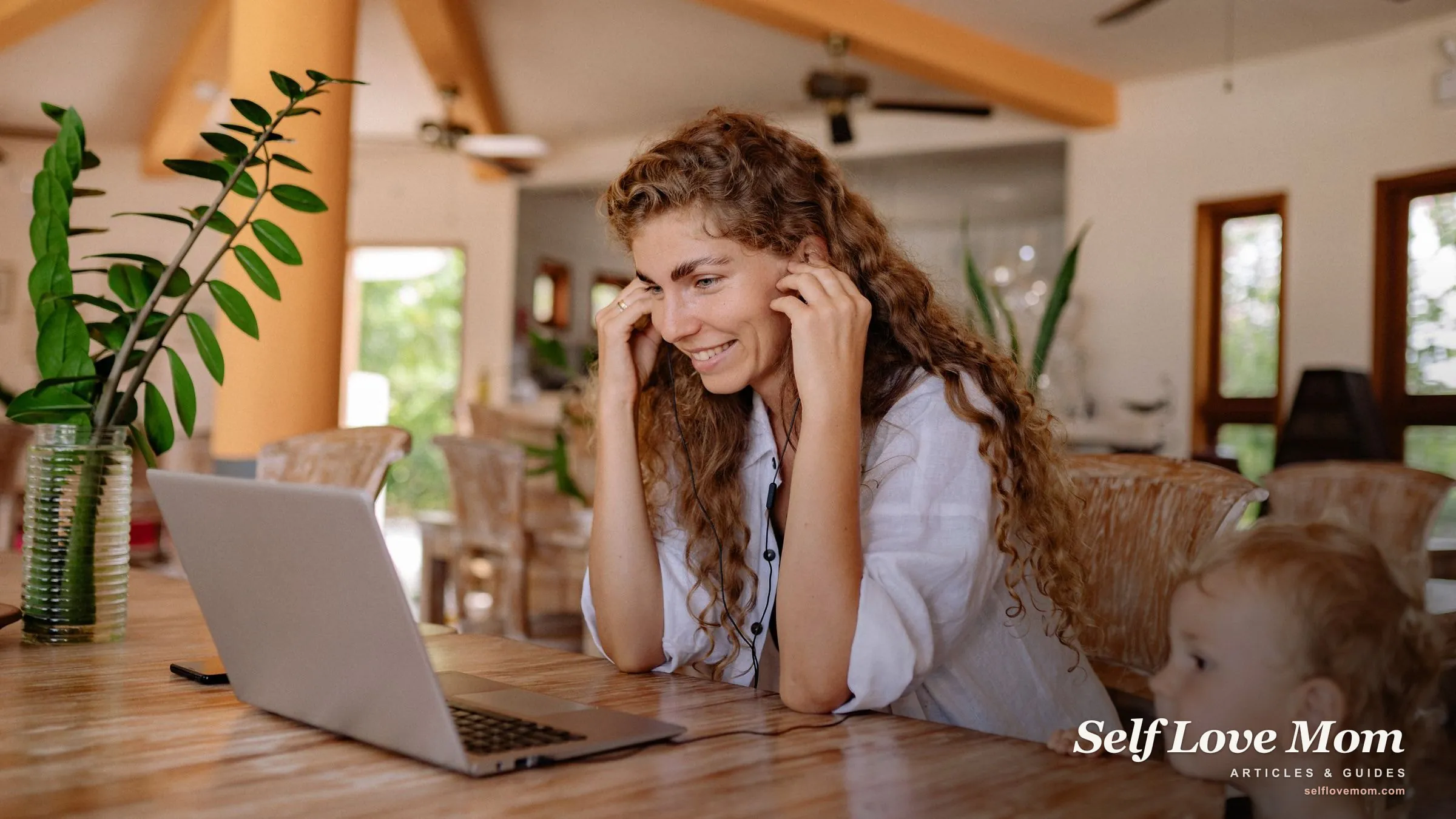
A mom manages her money on a laptop at home while her young child sits nearby.
Most budgets fail for the same reason: the method does not fit the person. A mom with a steady paycheck needs a different system than one juggling tips and child support. Picking the right budgeting method is what turns "I tried budgeting once" into a habit that sticks. This guide compares the four that work best for moms, so you can match one to your real life.
If you have not built a budget yet, start with our step-by-step on how to build a budget for a single mom, then come back here to pick the method that runs it.
| Method | How it works | Best for |
|---|---|---|
| 50/30/20 | Split take-home into needs, wants, savings | Beginners who want simple |
| Zero-based | Every dollar gets a job until you reach zero | Tight budgets, full control |
| Envelope (cash-stuffing) | A set amount per category, in cash or apps | Overspenders who need hard limits |
| Pay-yourself-first | Move savings out first, spend the rest | Steady income, clear goals |
The short version
Four methods cover almost every mom. Use 50/30/20 if you want simple, zero-based if your budget is tight and you want control, the envelope method if you tend to overspend, and pay-yourself-first if your income is steady and savings is the goal. Try one for a full month before judging it, and switch only if it genuinely does not fit.
What are the main budgeting methods for moms?
Four methods do most of the work: 50/30/20, zero-based, envelope (cash-stuffing), and pay-yourself-first. They all start from the same place, your take-home pay, but they differ in how tightly they control spending. The table above lines them up; the sections below show how each one runs day to day.
You do not need to master all four. Read them, pick the one that matches how you actually handle money, and ignore the rest. A method you will keep beats a "perfect" one you abandon by week three.
What is the 50/30/20 method, and who is it for?
The 50/30/20 rule (NerdWallet) splits take-home pay into 50% needs, 30% wants, and 20% savings and debt. It is the easiest method to start, since you only track three buckets instead of a dozen line items.
It fits moms who want structure without spreadsheets. The catch: on a tight single income, needs often eat more than 50%, so treat the split as a target to adjust, not a rule. Shrink the wants slice first, and protect the savings slice as long as you can.

How does zero-based budgeting work?
In zero-based budgeting (Investopedia), every dollar gets a job until income minus all your assignments equals zero. That does not mean you spend everything; savings and debt payments are jobs too. It is the most precise method, which is exactly why it suits a tight budget where no dollar can go missing.
The trade-off is effort: you plan each month before it starts and check in often. Many moms run it inside an app so the math updates automatically. If you want maximum control and can spare a weekly check-in, this is the method that finds the leaks.
What is the envelope or cash-stuffing method?
The envelope method gives each spending category a fixed amount, traditionally cash in labeled envelopes, now often digital envelopes in an app. When an envelope is empty, that category is done for the month. The hard stop is the whole point.
It works best for moms who overspend in specific areas like groceries, dining, or impulse buys. Seeing the cash shrink is a stronger brake than a number on a screen. You do not have to use it for every category, just the few where you tend to leak money.
What is pay-yourself-first budgeting?
Pay-yourself-first flips the order: the moment money lands, you move a set amount to savings or debt, then live on what is left. It guarantees the savings happen instead of hoping for leftovers that rarely appear at month-end.
It fits moms with a steady, predictable income and a clear goal, an emergency fund, a car, a deposit. Automate the transfer for payday so it is effortless. Pair it with a light spending check so the "spend the rest" part does not quietly slide into overspending.

Which budgeting method should a single mom choose?
Match the method to your main money problem. If budgeting feels overwhelming, start with 50/30/20. If money vanishes and you do not know where, use zero-based. If you overspend in clear categories, try envelopes. If you never seem to save, use pay-yourself-first. Most single moms do well starting simple, then tightening up.
- Want the simplest start: 50/30/20
- Need to control every dollar on a tight budget: zero-based
- Overspend in groceries or impulse buys: envelope method
- Struggle to save anything: pay-yourself-first
You can also blend them, for example pay-yourself-first for savings plus envelopes for groceries. To run any method on your phone, see our picks for the best budget apps for single moms, and for money wins beyond budgeting, our financial tips for single moms.
How do you actually stick to a budgeting method?
Consistency beats the method itself. Check in weekly for five minutes, keep one small guilt-free spending category so the plan does not feel like punishment, and expect to adjust for the first two or three months. The FTC's guidance on making a budget stresses the same point: a simple plan you actually keep beats a perfect one you abandon.
If debt payments keep breaking your budget no matter the method, the budget is not the real problem. See our guide to single-parent debt relief, and fit budgeting into the bigger picture with our financial planning roadmap for single mothers.
Frequently asked questions
What is the easiest budgeting method for a busy mom?
The 50/30/20 method is the easiest start, since you only track three buckets: 50% needs, 30% wants, 20% savings and debt. It gives structure without line-by-line tracking, which is ideal when time is short. Once it becomes a habit, you can tighten into zero-based budgeting if you want more control over where the money goes.
Is zero-based or envelope budgeting better for single moms?
It depends on your problem. Zero-based budgeting is better if money disappears and you want every dollar accounted for. The envelope method is better if you overspend in specific categories and need a hard stop. Many single moms combine them, using zero-based for the full plan and envelopes for the few categories where they tend to leak money.
Does the envelope method work without cash?
Yes. Digital envelope apps recreate the system without physical cash, assigning a fixed amount to each category and blocking or warning you when it runs out. The psychology is the same: a visible limit per category. Cash makes the limit feel more real for some moms, but a digital version is more practical for online bills and card spending.
How long before a budgeting method starts working?
Give any method a full month before judging it, and expect two to three months to feel natural. The first month surfaces your real numbers, the second lets you adjust, and by the third it becomes routine. Switching methods every few weeks is the most common reason budgets fail, so pick one and stick with it through the rough start.
Can I switch budgeting methods later?
Yes, and many moms do as their income or goals change. Start simple with 50/30/20, then move to zero-based or pay-yourself-first when you want more control or a savings push. Just avoid switching constantly, since the consistency is what builds the habit. Change methods when your life changes, not when one feels hard in week two.
Sources
- NerdWallet, "Budgeting 101: How to Budget Money (50/30/20 rule)," retrieved 2026-06-19, nerdwallet.com
- Investopedia, "Zero-Based Budgeting (ZBB): Definition and How It Works," retrieved 2026-06-19, investopedia.com
- FTC Consumer.gov, "Making a Budget," retrieved 2026-06-19, consumer.gov
✻ Share this article
✻ About the contributor · Folio N°.180

Written by Subha
Psychologist and writer covering the topics that matter most to single moms, money, mental health, and the small daily rituals that keep a family running. Every article is research-backed and edited four times before publish.
- Articles
- 180
- Desks
- 05
- Edited
- 4×
More from this writer
✻ Edited four times before publish