18 Easy Outdoor Activities for Preschoolers (Ages 3 to 5)
Preschoolers need about 180 minutes of active play a day. Here are 18 easy outdoor activities for ages 3 to 5, most with $0 setup, that single moms can run.

 Click to zoom
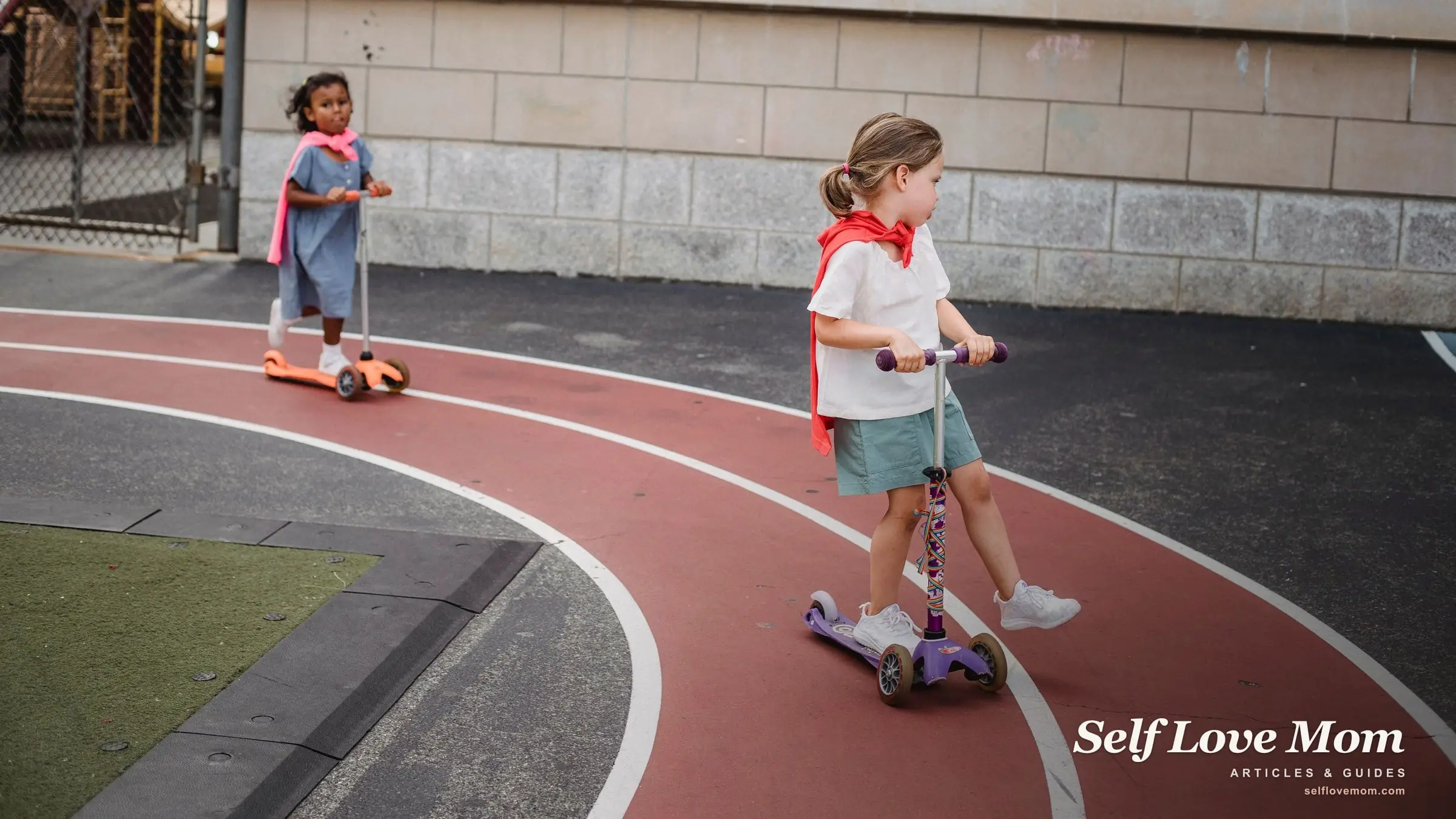
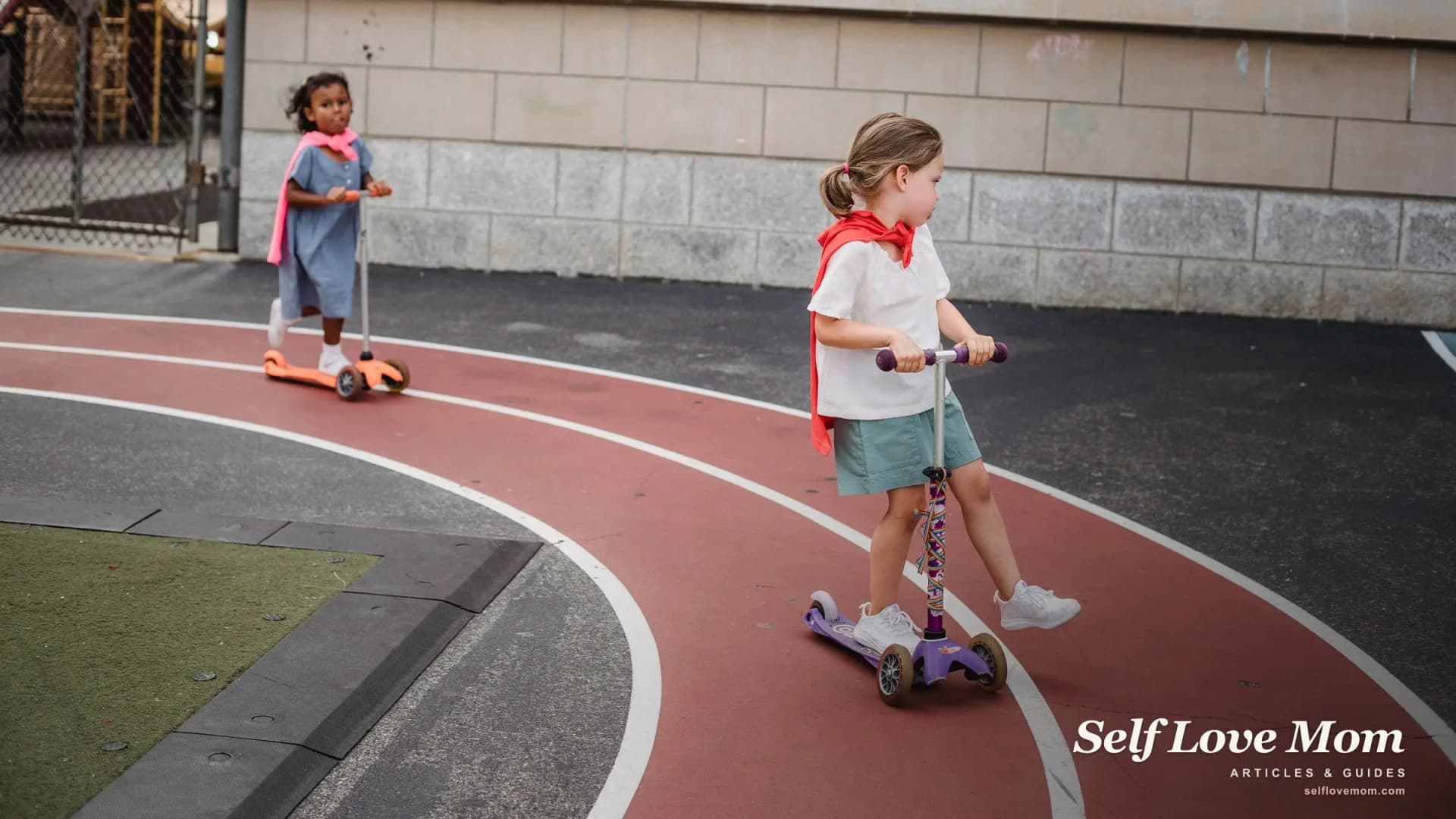
Two preschool girls in red capes ride scooters on an outdoor playground court.
Getting a preschooler outside sounds simple until you are the only adult in the house. There is no second parent to take over, the energy never seems to run out, and the budget for fancy equipment is usually zero. The good news: the activities that help three to five year olds most are free, low setup, and easy to run from a backyard, a balcony, or the nearest patch of park.
This guide rounds up 18 easy outdoor activities for preschoolers, grouped by what they build, from gross motor skills to early letters and numbers. Each one uses things you already have. Got a younger child too? Pair it with our outdoor activities for toddlers.
| Active play needed daily | Activities in this guide | Setup cost |
|---|---|---|
| 180 min recommended for ages 3 to 4 (WHO) |
18 sorted by skill, ages 3 to 5 |
$0 most use what you own |
The short version
Preschoolers aged three to four need about 180 minutes of physical activity a day, and outdoor play is the easiest way to hit it. The 18 activities below cover gross motor games, nature exploration, social play, and early learning. Almost all are free, take under five minutes to set up, and work in small spaces. Short bursts count, so ten minutes here and there adds up.
Why does outdoor play matter so much for preschoolers?
Outdoor play is how preschoolers build their bodies and brains at the same time. The World Health Organization recommends that children aged three to four get at least 180 minutes of physical activity every day, including 60 minutes of energetic play (World Health Organization, 2019). Outside is where that movement happens most naturally.
The benefits go past burning energy. The American Academy of Pediatrics says outdoor play builds curiosity, creativity, and critical thinking, and improves focus, mood, and behavior (HealthyChildren.org, AAP). Time outdoors even protects eyesight. Research links more outdoor time in childhood to a lower risk of nearsightedness later on (Lingham et al., Scientific Reports 2021).
For a solo parent, that is reassuring. You do not need a plan or a budget to give your child a real developmental boost. You just need to get them outside and let them move.
What are the best gross motor outdoor activities for preschoolers?
Gross motor games build the big muscles preschoolers use to run, jump, climb, and balance, and they burn energy fast. These five need almost no setup and turn a backyard or park into an obstacle-filled adventure. They are the quickest way to reach that 60 minutes of energetic play a day, and our gross motor activities for toddlers scale them down for little ones.

- Obstacle course adventure. Line up cushions, hula hoops, and a laundry basket. Have them crawl, hop, and weave through. Rearrange it to keep it fresh.
- Freeze tag. Chase and freeze. It builds running, balance, and listening, all at once. Great for two or more kids or a parent who can play along.
- Bean bag toss. Aim bean bags or rolled socks into a bucket. Step back a pace each time they land one to build aim and arm strength.
- Bubble chase. Blow bubbles and let them stomp and pop. Simple, joyful, and surprisingly tiring for little legs.
- Water play station. A basin, cups, and a few toys. Pouring and splashing builds coordination on warm days.
What nature and exploration activities work for ages 3 to 5?
Nature play feeds a preschooler's curiosity while quietly teaching science. At this age, children learn by touching, collecting, and asking questions, so the yard becomes a classroom. These activities cost nothing and slow the pace down, which is a gift on a hectic single-parent day.

- Nature scavenger hunt. Name five things to find: a smooth rock, a yellow leaf, a feather. It builds focus and vocabulary as they search.
- Bug hotel building. Stack twigs, leaves, and bark in a box and watch who moves in. A gentle first lesson in habitats.
- Sensory nature walk. Walk slowly and name what you hear, smell, and feel. Crunchy, rough, cold. It sharpens the senses and language.
- Planting seeds. A cup, soil, and a bean seed. Watering it daily teaches patience and where food comes from.
- Leaf rubbing art. Lay paper over a leaf and rub a crayon on top. The veins appear like magic and the result goes on the fridge.
What team and social games suit preschoolers?
Social games teach the skills preschoolers need for school: taking turns, following rules, and playing fair. Three to five year olds are just learning to cooperate, so these activities build patience and friendship alongside movement. They work with siblings, neighbors, or a playgroup, and you can join in too.
- Duck, duck, goose. A circle classic that teaches turn taking and gives a quick burst of chasing. Needs three or more players.
- Musical statues. Play music, then pause it. Everyone freezes. It builds listening and self control while they giggle.
- Animal relay race. Hop like a frog, waddle like a duck, gallop like a horse to a finish line. Movement plus imagination.
- Parachute play. A bedsheet works fine. Lift it high, shake it low, send a ball rolling across. Teaches teamwork and timing.
- Simon says. The original listening game. It sharpens attention and body awareness with zero equipment.
What creative and learning activities can you do outside?
Outdoor learning sticks because it feels like play, not a lesson. Preschoolers are primed for early letters, numbers, shapes, and colors, and the backyard makes that practice hands on. These five fold reading and math readiness into games your child will ask to repeat.

- Sidewalk chalk. Draw letters, numbers, or a hopscotch grid. Let them trace and name each one. Cheap, big, and endlessly reusable.
- Alphabet hunt. Call out a letter and find something outside that starts with it. Early phonics disguised as a treasure hunt.
- Shape shadow matching. Trace shadows of toys or hands on paper, then match them back. A surprising intro to shapes and light.
- Color matching game. Hand over a paint chip or colored paper and find something outside that matches. Builds color words and observation.
- Storytime relay. You start a story, your child adds the next line as you walk. Language and imagination on the move.
How do single moms fit outdoor play into a busy day?
You do not have to find 180 minutes in one block. The guideline is spread across the whole day, so short bursts count just as much (World Health Organization, 2019). Ten minutes of chalk before breakfast, a scavenger hunt after lunch, and bubble chasing before dinner add up fast.
Keep a small bin by the door with chalk, bubbles, and a ball so going out takes seconds, not planning. Stack play onto things you already do, like a walk to the mailbox that becomes a color hunt. On rainy days, move the energy indoors with our fun things to do at home. A steady rhythm helps too, so see our morning routine for preschoolers.
- Pick one activity from each group so the week stays varied.
- Keep a grab-and-go bin by the door: chalk, bubbles, a ball.
- Aim for short bursts, ten to fifteen minutes, several times a day.
- Let your child lead. Their interest matters more than your plan.
- Join in when you can. You are their favorite playmate.
The bottom line
Outdoor play is one of the few things that is genuinely good for your preschooler and genuinely easy on you. It costs nothing, needs no skill, and meets a real developmental need. You are not behind for keeping it simple. A patch of grass, ten free minutes, and one of these games is more than enough. For more support, our single mom resources hub gathers help in one place.
Start with whichever activity made you smile reading this. Your child will not remember whether the setup was perfect. They will remember that you came outside with them.
Frequently Asked Questions
How much outdoor play do preschoolers need each day?
The World Health Organization recommends children aged three to four get at least 180 minutes of physical activity daily, with 60 minutes of it energetic. Outdoor play is the easiest way to reach that. The time can be spread across the whole day, so several short sessions count just as much as one long one.
What outdoor activities are best for a 3 year old versus a 5 year old?
Younger preschoolers do best with simple, sensory play like bubbles, water stations, and short scavenger hunts. Older preschoolers can handle rules and early learning, such as Simon says, sidewalk chalk letters, and relay races. Most activities here scale to both ages by adjusting how many steps or rules you add.
What are good outdoor activities when you have no money or equipment?
Almost everything preschoolers love is free. Nature scavenger hunts, shadow tracing, freeze tag, animal relay races, and storytime walks need nothing but space. A few dollars of sidewalk chalk or a pack of bubbles stretches a long way. The yard, a sidewalk, or a nearby park is all the equipment you need.
How do I keep my preschooler active outside on my own?
Keep it short and low effort. A grab-and-go bin by the door removes the planning, and stacking play onto errands, like a color hunt on the walk to the car, fits movement into a packed day. Let your child lead the game. Their attention lasts longer when the idea feels like theirs.
Is outdoor play really better than indoor play for preschoolers?
Both matter, but outdoor play offers extras indoor play cannot. It delivers more room for big movement, natural light that supports healthy eyesight, and sensory variety that feeds curiosity. On days you cannot get out, indoor activities keep the energy flowing. The goal is daily movement, wherever it happens.
Sources
- World Health Organization, "To grow up healthy, children need to sit less and play more" (2019, retrieved 2026-07-24). Ages 3 to 4 need at least 180 minutes of physical activity a day, including at least 60 minutes of energetic play, spread throughout the day.
- American Academy of Pediatrics, "Playing Outside: Why It's Important for Kids" (retrieved 2026-07-24). Outdoor play promotes curiosity, creativity, critical thinking, and focus, and supports mood and behavior.
- Lingham et al., "Time spent outdoors in childhood is associated with reduced risk of myopia as an adult," Scientific Reports (2021, via PMC/NCBI, retrieved 2026-07-24). More childhood time outdoors was associated with lower adult myopia risk.
✻ Share this article
✻ About the contributor · Folio N°.180

Written by Subha
Psychologist and writer covering the topics that matter most to single moms, money, mental health, and the small daily rituals that keep a family running. Every article is research-backed and edited four times before publish.
- Articles
- 180
- Desks
- 05
- Edited
- 4×
More from this writer
✻ Edited four times before publish