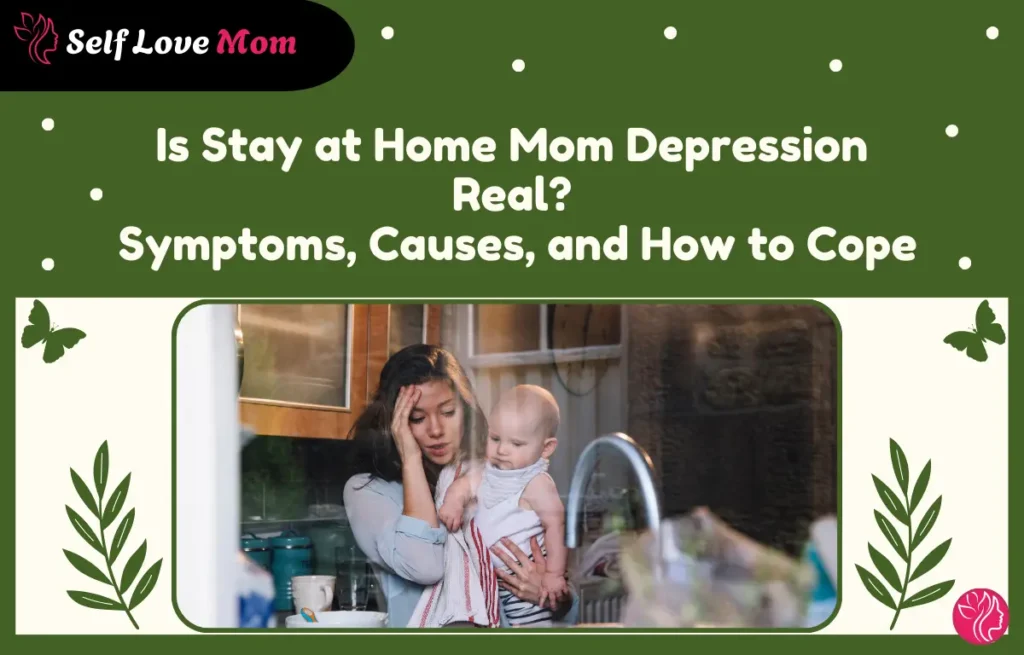

Motherhood brings so much joy to families all around the world every single day. You see your small one develop and rejoice with every major step with all your heart. Yet full-time caregiving at home can also result in profound exhaustion and a sense of fierce loneliness, as well. People do not talk enough openly about the challenges of being a stay at home mom.
Have you ever asked yourself, Can being a stay at home mom cause depression? Or wondered what causes depression in stay-at-home moms? If yes, you are not the alone.
This post will examine the truth about stay at home mom depression (SAHMs), explore the most common symptoms, discuss the reasons behind this occurrence, and propose coping strategies and support resources. So, let’s dive in!
What is Stay at Home Mom Depression?
Stay at home mom depression is an emotional and mental health disorder that some mothers face due to the daily challenges that they have to handle in motherhood. It may be a consequence of stay at home mom struggles and isolation, burnout, loss of personal identity, and having to face societal pressures. Some common signs may be sadness, fatigue, and incompetence. Also, it is important to identify these signs to achieve the needed support and treatment.
In short, yes stay at home mom depression and stay at home mom burnout exist. And remember, it is not a symptom of weakness and failure.
Stay at Home Mom Depression Statistics
To understand SAHM depression better, let’s look at some actual numbers. In 2012, a Gallup survey of more than 60,000 women living in the United States revealed that moms who stayed home with their children who were below the age of 18 were much more likely to report sadness, stress, or depression than their working counterparts.
In the same poll, it was found that about 28 percent of stay at home moms who had experienced a depression stage, as compared to 17 percent of working moms and 17 percent of working women who did not have a child.
According to the Pew Research Center, about 26 percent of U.S. mothers choose to stay home full‑time, indicating that a significant portion of all families is potentially exposed to these risks.
In another PMC report, 1 in 10 mothers in the US experiences maternal depression each year and is likely to experience depression on an ongoing basis. Since many SAHMs tend to have higher levels of isolation and pressure than other mothers, this raises important questions about the mental wellbeing of SAHMs in the United States.
Finally, research suggests that stay‑at-home moms often face isolation, loss of adult social interaction, and emotional strain factors that can exacerbate depression and make “stay at home mother depression” a real and serious challenge.
Why Do Stay at Home Moms Get Depressed?
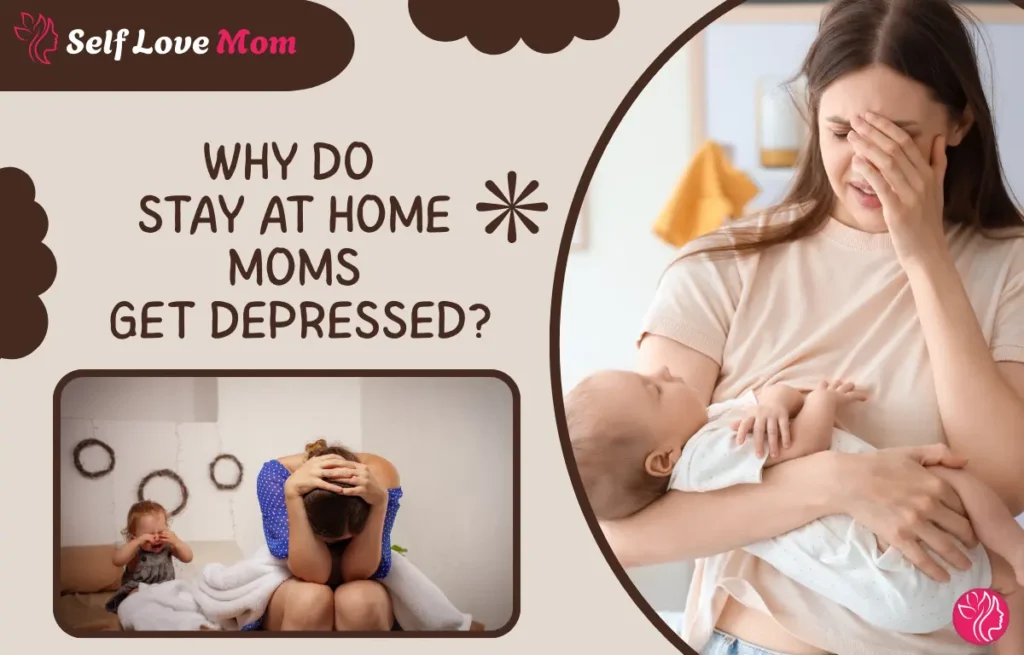
Many things cause stay at home mom depression and anxiety in normal family routines at home. Moms do work that no one sees or thanks them for most of the time. This leads to frustration and quick stay at home mom burnout over short weeks. Here are the top reasons for stay at home mom and depression:
- Isolation: Stay at home moms often feel very alone because they stay inside with the kids all day long. This lowers social chats and starts loneliness that triggers depression fast.
- Lack of Personal Time: Child care and housework take up every minute, with no breaks for yourself. No “me time” links right to stay at home mom depression and total exhaustion.
- Unrealistic Expectations: Big pressure tells stay at home moms to be perfect in all their roles every day. Not hitting these goals brings anxiety and makes depression much deeper soon.
- Financial Stress: Without their personal source of income, stay at home moms worry a lot about bills and more. This builds feelings of not being enough and scares about the future ahead.
- Identity Crisis: When moms stop working outside the home, they lose part of themselves. No job purpose brings on sad thoughts in stay at home mom depression often.
- Hormonal Changes: Hormonal variations, especially after childbirth, may also be a source of mood swings and depression. PPD is a well-known condition among new mothers, and it is even harder to cope with when accompanied by the demands of full-time motherhood.
Stay at home Mom Depression Symptoms
But can you know whether what you experience is normal fatigue or something more, a depression? The typical stay at home mom depression symptoms are:
- Most of the day, you are sad or empty inside.
- You lose interest in fun things and hobbies you enjoyed before.
- Very tired feelings take your energy even when you do no hard work.
- Sleep troubles like not sleeping enough or way too much ruin your rest.
- Eating changes make you gain or lose weight with no plan at all.
- It gets hard to focus and make choices because your mind feels foggy.
- You think you are worth nothing and regret how you parent your children every day.
- You cry all the time and get irritable easily, unlike before.
- Mood swings make small problems turn into big emotional messes fast.
- In bad times, thoughts about death or hurting yourself show up out of nowhere.
These signs stay for weeks and mess up how you live each day. Stay at home mom depression is much more than just regular mom tiredness. It damages family bonds and steals the happy times you share. Identify, stay at home mom depression early, so you can start coping well.
How to Know: Is It Mom Burnout or Depression (or Both)?
The terms mom burnout or depression have an overlap, and therefore, it may be difficult to differentiate them. However, by knowing the difference, you could make decisions about what sort of help or change you require.
- Mom burnout is usually associated with chronic stress and burnout, as well as emotional detachment and exhaustion. It usually evolves due to long-term caregiving without taking breaks. You could be disengaged, numb, irritated, and tired.
- Depression (clinical) has many of the symptoms mentioned above. In addition, one experiences nearly constant low mood, loss of pleasure in life, feelings of worthlessness or guilt, and may even experience changes in sleep, appetite, concentration, or even hopelessness. These symptoms are typically temporary, lasting weeks or months, and affect normal functioning.
You might have both of them; burnout may turn into depression when left unattended. When you notice that you suffer from some of the following signs: persistent sadness or emptiness, failure to enjoy anything, even after sleep, pervasive self-criticism, detachment towards children, then it might be time to stay at home mom depression help.
What are Effective Treatments for Stay at Home Mom depression?

Stay at home mom depression treatment brings hope with steps that are easy to try at home. Every mom wants a special mix of ways to feel better each day. The great news is stay at home mom depression gets better when you use good treatment.
Here are the main treatment and coping paths for stay at home moms and depression:
1. Self-Help and Lifestyle Changes
For light stay at home mom depression, habit changes help a lot in a short time. These may seem small when you feel low, but tiny steps add up fast.
- Good sleep hygiene: Establish a routine sleep and wake-up schedule, minimize pre-sleep distractions, and get rest when you have the opportunity. One of the popular causes of depression and mood disorders is sleep disruption.
- Proper nutrition and water: A healthy diet and water can help the body maintain overall health and brain energy, thereby supporting mood and the ability to cope.
- Self-care routines: You can have a warm bath, read a book, garden, meditate, or do other little things; they can help a mom get out of emotional imbalance and give her a sense of self beyond being a mom.
- Exercising outdoors or in nature: Walking around in nature and getting some sunshine has been proven to increase mood and mental health.
- Creative activities or hobbies: Hobbies or minor creative pursuits can help you reconnect with yourself and feel less stuck.
These easy steps beat stay at home mom depression in smart, simple ways.
2. Professional Therapy and Counseling
When lifestyle modifications and self-care are not sufficient, or the symptoms are moderate to severe, therapy can be highly beneficial. The following methods have proved to be effective:
- Talking therapies, including cognitive-behavioral therapy (CBT) or interpersonal therapy, can be employed to correct the negative thought patterns, construct coping mechanisms, and redefine the sense of guilt and worthlessness, and hopelessness.
- Guided self-help in milder cases of depression, supervised self-help by taking structured self-help courses (either online or workbook-based) can be successful. These programs usually take several weeks.
- Supportive psychotherapy in which the therapists offer listening, emotional support, and practical problem-solving based on your life as a parent.
Related stay at home mom depression problems, such as anxiety, burnout, loss of identity, or stress, can also be treated with the help of therapy, which is also common among SAHMs.
3. Medication (When Needed)
In moderate to severe symptoms or where therapy and lifestyle changes are insufficient, antidepressants may be given. These help to redress the brain chemistry that may still be contributing to low mood or depressive symptoms.
If you are breastfeeding, you should talk with your doctor or psychiatrist about most of the antidepressants that are safe during breastfeeding. When used together with therapy or counseling and healthy lifestyle changes, medication is most likely to result in the most positive long-term outcome.
4. Build a Support Network — Emotional and Social Support
The feeling of isolation often brings about stay at home mom depression. With the help of connection and support, the isolation can be considerably mitigated, which makes a considerable impact on improved wellbeing. Some approaches for exhausted stay at home mom include:
- Be open with your partner, family, or friends and show your emotions. Get them to see what you are going through and what might help you, even as simple as having someone just listen.
- Attend support groups in person or online. The sense of belonging and loneliness may be reduced through listening to other moms who have experienced the same plights. It is also proper to know that you are not alone.
- Peer support or group therapy: Being part of a community offers emotional venting and realistic perspectives, and, in some cases, may lead to friendship or shared coping strategies.
- Define limits and seek assistance: It is alright to assign other people the responsibility for doing the housework or looking after the children once in a while, so they can rest and rejuvenate. Accept help when it’s offered.
5. Combine Treatments and Self-Awareness
A combination approach most effectively treats depression; these are physical, emotional, environmental, and social, which in most cases combine. Through a combination of therapy, medication (where deemed necessary), self-management, social support, and lifestyle changes, patients have the best chances of recovery and long-term mental wellbeing.
In addition, it is also required to be aware of yourself: learn when you are bad, when you have stress, when you need a break, or help. It is possible to monitor mood, sleep, energy, and triggers to identify what works best for you and your therapist.
Why Treatment (and Help) Matters
- Stay at home mom depression does more than make you sad for a little while only. It changes how you take care of kids and starts long-term body problems, too.
- No help leads to bad rest and chances of hurting yourself as well. Getting help shows you have real strength and a deep love for your family.
- Right help brings back your power, who you are, and what you want to do. Good family times are ahead, with more laughs and close bonds.
Where to Find Support for Stay at Home Mom Depression?

When you read this and then think to yourself, “This is me. You are not alone, and there are people you can go to and seek help now. The following are the reliable support services and resources that provide counselling, peer support, or just someone to talk to.
- National Maternal Mental Health Hotline: Call or text 1-833-TLC-MAMA (1-833-852-6262) 24/7 confidential support, resources, and referrals to stay at home mom depression and all maternal mental health problems.
- 988 Suicide & Crisis Lifeline: Dial 988 or text TALK to 741741 to be connected with an emotional support source whom you can talk to immediately, free and 24/7, even about depression and suicidal thoughts.
- Parents Helping Parents Parent Stress Line: 24/7 support made-for-parent assistance, 1-800-632-8188: ideal support provided to mothers experiencing stress, burnout, or depression as a stay at home mom.
- Online Support Meetings, Postpartum Support International (PSI): Free perinatal mood disorder virtual groups. Select between more than 50 weekly meetings at: https://postpartum.net/get-help/psi-online-support-meetings/
- NAMI (National Alliance on Mental Illness) Help Line: Call 1-800-950-NAMI (6264) or text HelpLine to 62640 for information, resources, and local support groups such as NAMI Connection.
- Postpartum Resource Center of New York: Toll-free helpline 855-631-0001 – provides pregnancy and postpartum depression/anxiety support groups on a statewide basis.
- SAMHSA (Substance Abuse and Mental Health Services Administration). See what treatment is available to you and obtain free resources at https://www.samhsa.gov/.
- Family Helpline (Parents Anonymous of NJ): 24-hour helpline featuring parents calling for caring help about postpartum depression, stay at home mom anxiety, parenting stress, etc.
You do not have to face stay at home mom depression alone. One call or text can be the first step back to feeling like yourself again. You deserve help – reach out today.
Final Thoughts on Stay at Home Mom Depression
Yes, the stay at home mom depression actually exists, and it is generally ignored. Permanent caregiving, constant pressure, and isolation may lead to deep emotional contradictions. The initial process towards recovery of the depressed stay at home mom is to embrace these feelings, and there are many coping strategies. Balancing and being happy in your life can be achieved through self-care, professional support, and support networks.
If you or someone you know is struggling with stay at home mom stress or depression, do not wait; call today. You need assistance, and you do care about your state of being. Now make the first step to healing!