15 Motherly Qualities That Shape Confident, Secure Kids
What are the real motherly qualities? About 2 in 3 kids form a secure bond through warm, steady care. Here are the 15 traits that matter, and how to grow them.

 Click to zoom
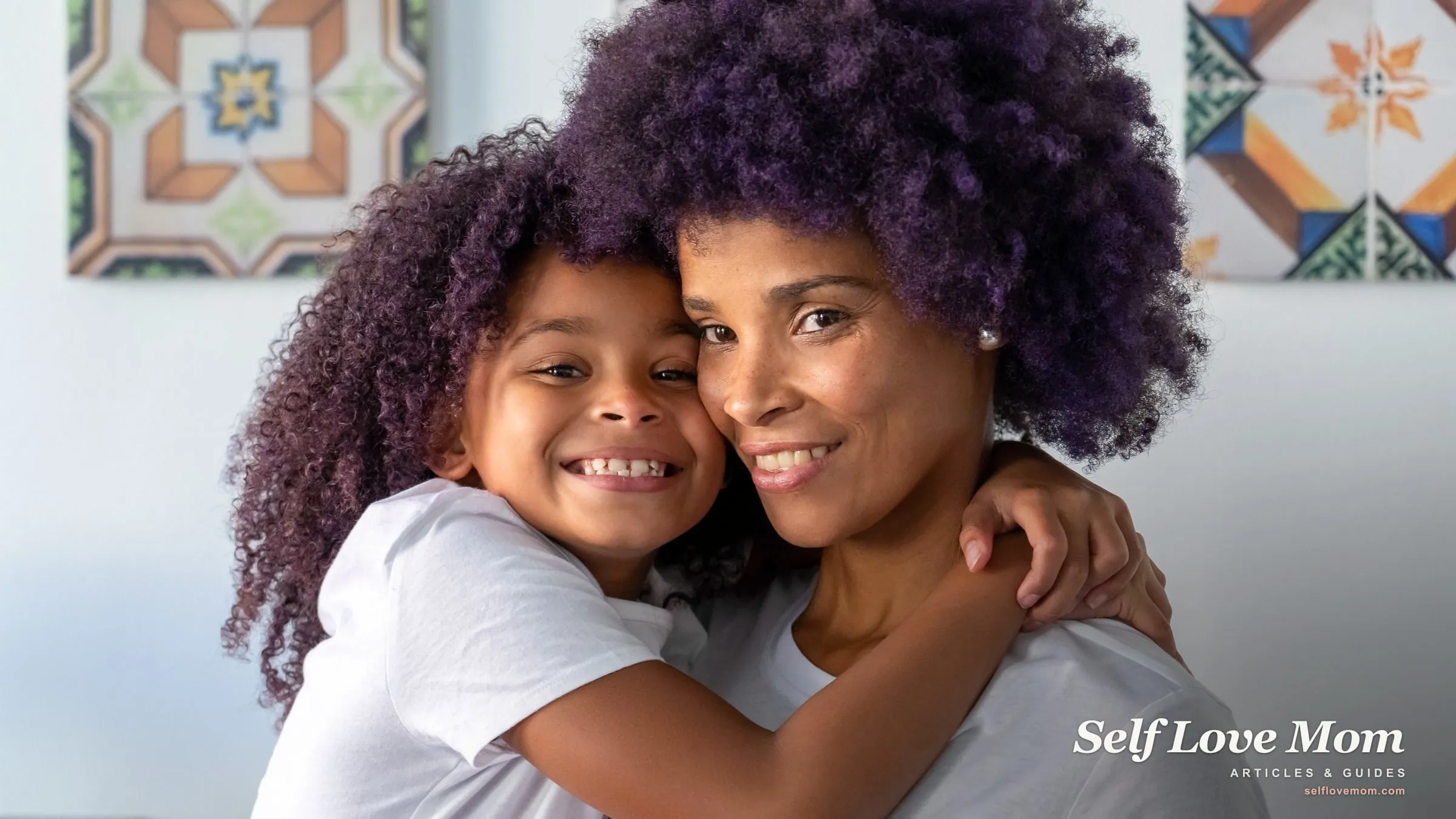
A mother and daughter share a warm cheek to cheek hug, the unconditional love at the heart of motherly qualities.
Every mother wonders if she has what it takes. The reassuring truth is that good mothering rests on a handful of learnable qualities, not on being perfect. Warmth, patience, and consistency shape a child far more than a spotless house or a packed schedule. These traits are not fixed gifts you either have or lack. They grow with practice, and you almost certainly have more of them than you think.
This guide breaks down the 15 motherly qualities that research links to confident, secure kids. For each one you get a plain definition and a simple way to strengthen it. If you want the daily habits that put these traits into action, see our companion guide on how to be a good mother. For a longer checklist written as an honest self-assessment, read the 20 qualities of a good mother.
| What shapes a child most | The number | Why it matters |
|---|---|---|
| Children who form a secure attachment | about 2 in 3 | Warm, steady care is enough |
| Parents who report burnout | 57% | A mother's self-care is a real quality |
| US mother-only families | 7.3 million | Many build these traits solo |
| The two traits that matter most | warmth + consistency | Everything else grows from them |
The short version
Good mothering comes down to a few learnable qualities, led by warmth and consistency. Since about two-thirds of children form a secure bond through ordinary, responsive care (NICE), you do not need to be perfect to raise a secure child. The 15 traits below are skills you can practice, and protecting your own energy is one of them.
What actually makes a good mother?
Her qualities, not her perfection. About two-thirds of children form a secure attachment through warm, responsive care (NICE, children's attachment guideline), which means steady love matters far more than getting every day right. A good mother shows up, repairs after the hard moments, and keeps trying. The 15 traits in this guide are the building blocks of exactly that.
Treat these qualities as skills, not a test you pass or fail. Every one can be strengthened with small, repeated choices, and no mother has all 15 in full measure. The goal is not a perfect score. It is steady growth in the traits that help your child feel safe, seen, and loved.
What are the emotional qualities every child needs?
The ones that make a child feel safe and seen. In a 2025 report, the Harvard Graduate School of Education found children who feel they matter do better in school and life, and that feeling grows through everyday emotional connection, not grand gestures. These four qualities form the warm core of mothering.
- 1. Unconditional love: Love that is not earned by grades or good behavior. Say it and show it plainly, especially on the hard days.
- 2. Patience: The pause before reacting. Take one breath before you respond, and the calm you model slowly becomes theirs.
- 3. Emotional availability: Being present, not just nearby. Put the phone down for ten minutes and give them your full attention.
- 4. Empathy: Naming what they feel before fixing it. "That sounds frustrating" teaches them their feelings make sense.

Which qualities give a child stability?
The steady, predictable ones. Consistent routines are linked to better behavior and development in children (Selman, 2024), because structure feels like safety to a young mind. These four qualities turn warmth into a dependable rhythm a child can lean on every day.
- 5. Consistency: Predictable rhythms and follow-through. A steady morning routine is an easy place to start.
- 6. Good communication: Listening at their level and reflecting their words back so they truly feel heard.
- 7. Healthy boundaries: Kind, firm limits with the reason explained. A clear boundary is a form of care, not coldness.
- 8. Positive discipline: Teaching, not punishing. Correct the behavior while keeping the child's dignity intact.
What qualities help a child grow into themselves?
The ones that hand a child the wheel a little at a time. Children learn more from what they see than what they are told, modeling a parent's behavior as their first template (Michigan State University Extension). These five qualities help a child build confidence, character, and independence.
- 9. Encouragement: Praising effort over results. "You worked hard on that" builds more resilience than "you're so smart."
- 10. Being a role model: Living the values you want to see. Your child copies what you do long before they follow what you say.
- 11. Encouraging independence: Letting them try, struggle, and learn. Your role shifts slowly from doer to guide.
- 12. Instilling values: Naming what your family stands for, then living it out in small daily choices.
- 13. Flexibility: Adjusting as your child grows. What a toddler needs is not what a teen needs.

The quality mothers forget: protecting your own energy
Your own wellbeing, which is a quality, not a reward you earn later. With 57% of parents reporting burnout (Ohio State University, 2024), a depleted mother cannot give what she does not have. Protecting your energy is part of good mothering, especially across the 7.3 million US homes where a mom is doing it solo (U.S. Census Bureau, 2023).
- 14. Protection: Keeping a child safe in body and mind, online and off, without smothering their independence.
- 15. Self-care and growth: Refilling your own cup so your patience lasts. Real self-care for single moms models healthy limits for your kids.
If you are raising kids alone, leaning on support is itself a sign of these qualities, not a gap in them. Asking for help protects every other trait on this list. For the mindset side of solo parenting, see our guide on the real single mother challenges and how to meet them.
Are there biblical or faith-based motherly qualities?
Yes, and they echo the same traits. Many faith traditions describe a good mother through love, patience, kindness, wisdom, and selflessness, the very qualities research ties to secure, confident kids. If faith is part of your home, these values can give the traits above a deeper sense of purpose.
- Love and selflessness: Putting a child's needs first while still tending your own wellbeing.
- Patience and kindness: Gentle responses, even when the day has worn you thin.
- Wisdom and faithfulness: Showing up with steady, dependable presence over time.
How do you know you already have these qualities?
You look for the quiet signs, not a flawless record. The qualities on this list rarely feel impressive in the moment. They show up in small, ordinary ways, and most mothers carry far more of them than they ever give themselves credit for.
- Your child comes to you when they are hurt or scared.
- You apologize after you lose your temper.
- There is laughter in your home most days.
- You worry about being a good mother, which itself shows you care.
The 15 motherly qualities at a glance
- Unconditional love, patience, emotional availability, and empathy.
- Consistency and good communication your child can count on.
- Healthy boundaries and positive, teaching-based discipline.
- Encouragement of effort and being a steady role model.
- Encouraging independence and instilling clear family values.
- Flexibility as your child grows and changes.
- Protection of body and mind, plus your own self-care and growth.
Frequently Asked Questions
What are the most important qualities of a good mother?
Warmth and consistency lead the list. About two-thirds of children form a secure attachment through ordinary, responsive care (NICE), so steady love and reliability matter most. Patience, empathy, healthy boundaries, and encouragement build on that warm, dependable base. No single trait makes a good mother; it is the everyday mix that counts.
Can motherly qualities be learned, or are you born with them?
They are learned far more than they are inborn. Every quality on this list, from patience to positive discipline, is a skill that grows with small, repeated practice. Children even learn by watching you build them (Michigan State University Extension). If a trait feels weak today, it is something you can strengthen, not a permanent flaw.
What are the qualities of a good single mother?
The same traits, plus the strength to ask for help. There are 7.3 million mother-only families in the US (Census Bureau, 2023), and children in them thrive on warmth and stability, not on household size. Self-care and a support network are core qualities here, because protecting your energy protects every other trait.
What are biblical qualities of a good mother?
Faith traditions tend to highlight love, patience, kindness, wisdom, faithfulness, and selflessness. These overlap closely with the traits research links to secure, confident children. If faith shapes your home, these values can anchor the everyday qualities, giving warmth, consistency, and patience a deeper sense of meaning and purpose.
How can I become a more patient, present mother?
Start with one small habit and repeat it. Take a single breath before responding, and put the phone down for ten focused minutes a day. Protecting your own rest helps too, since 57% of parents report burnout (Ohio State University, 2024) and a rested mother is a more patient one. Small, steady practice compounds.
- NICE, "Children's attachment: attachment in children and young people," via NIH NCBI Bookshelf. ncbi.nlm.nih.gov (retrieved 2026-06-26)
- Ohio State University College of Nursing, "Pressure to be perfect causing parental burnout," 2024. nursing.osu.edu (retrieved 2026-06-26)
- Selman, S. B., et al., "Routines and child development: A systematic review," Journal of Family Theory & Review, 2024. onlinelibrary.wiley.com (retrieved 2026-06-26)
- Harvard Graduate School of Education, "When kids feel they matter, they do better in life," 2025. gse.harvard.edu (retrieved 2026-06-26)
- U.S. Census Bureau, "National Single Parent Day," one-parent households, 2023. census.gov (retrieved 2026-06-26)
- Rymanowicz, K., "Monkey see, monkey do: model behavior in early childhood," Michigan State University Extension, 2015. canr.msu.edu (retrieved 2026-06-26)
✻ Share this article
✻ About the contributor · Folio N°.180

Written by Subha
Psychologist and writer covering the topics that matter most to single moms, money, mental health, and the small daily rituals that keep a family running. Every article is research-backed and edited four times before publish.
- Articles
- 180
- Desks
- 05
- Edited
- 4×
More from this writer
✻ Edited four times before publish