How to Find the Best Therapist for Moms: A Complete Guide
About 1 in 5 US women face a maternal mental health condition and 75% go untreated. How to find a therapist for moms, what to ask, and what it really costs.

 Click to zoom
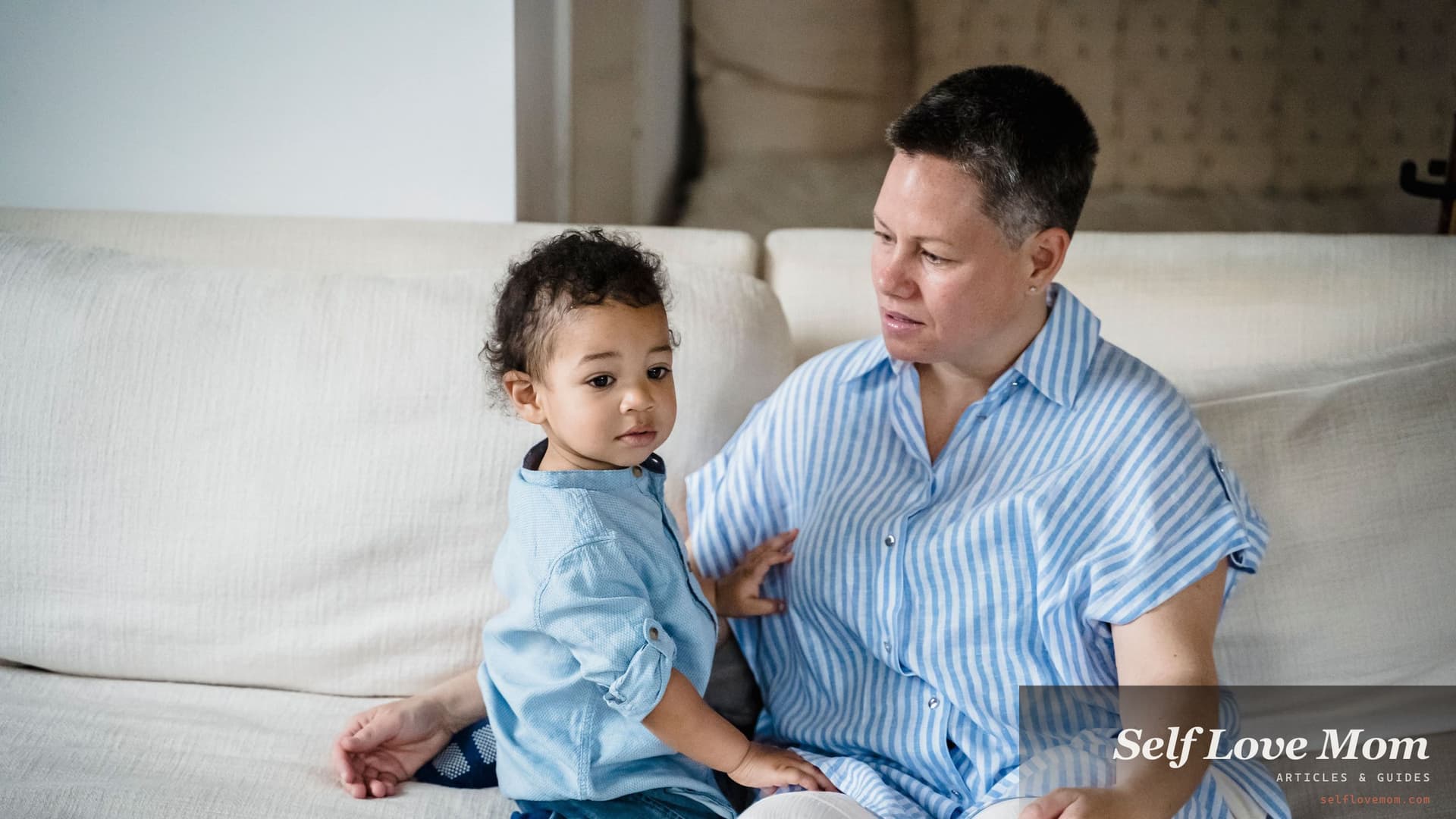
A therapist taking notes while listening to a mother in session, the fit a good therapist for moms is built on.
Finding a therapist for moms is a different problem from finding a therapist. You are not only looking for someone good. You are looking for someone who will not treat your exhaustion as a personality trait, and who knows the difference between a hard week and a perinatal mood disorder.
This guide covers the credential that actually signals that expertise, what therapy costs when you are paying yourself, where to look, and what to ask before you commit to a stranger with your worst thoughts.
| US women affected by a maternal mental health condition | Of those, the share who go untreated | PMH-C perinatal certifications issued |
|---|---|---|
| 1 in 5 | 75% | 8,179 |
The short version
About 1 in 5 US women experience a maternal mental health condition, and roughly 75% get no treatment. The single most useful filter when choosing a therapist for moms is the PMH-C credential, with 8,179 certifications issued, because it is the one that specifically requires perinatal training and experience. Cost is the real barrier, not willingness, and there are verified routes below that cost well under the usual rate.
Why does maternal mental health need a specialist?
Because it is common, serious, and routinely missed. About 1 in 5 US women experience a maternal mental health condition during pregnancy or the year after birth, and roughly 75% of them remain untreated.
Worldwide, the World Health Organization puts it at about 10% of pregnant women and 13% of women who have just given birth experiencing a mental disorder, primarily depression. In developing countries those figures are higher, at 15.6% during pregnancy and 19.8% after birth.
Anxiety is the part most often waved through. A 2019 meta-analysis of 26 studies found that 20.7% of women, about one in five, meet criteria for at least one anxiety disorder in the peripartum period, slightly more often during pregnancy than after. A 2024 diagnostic-interview study found the peak sits in early pregnancy, at 25.5%.
None of this is baby blues, which affect most new mothers and pass within about two weeks. Lasting symptoms point at something a general therapist may not recognize, and that is the case for finding someone who works in this area specifically.
How serious can it get?
Serious enough that it is the leading cause of death. Mental health conditions, primarily suicide and overdose, account for 27.7% of pregnancy-related deaths in the US, ahead of cardiovascular causes and hemorrhage.
Among those deaths, 45.4% are suicide and 51.4% are overdose or poisoning. And 85.7% of all pregnancy-related deaths are considered preventable, which is the number that should make this feel urgent rather than merely sad.
Separately, and this is a different statistic that is often incorrectly welded to the one above: Black women die of pregnancy-related causes at roughly 3.5 times the rate of white women, 50.3 against 14.5 per 100,000 live births. That disparity is about maternal mortality overall, not about mental health specifically.
What credential should you actually look for?
PMH-C. If you take one thing from this guide about choosing a therapist for moms, take those five characters, because they do the filtering that "specializes in women's issues" on a profile page does not.
PMH-C is the Perinatal Mental Health Certification, granted by Postpartum Support International and accredited by the NCCA. It requires at least 20 hours of perinatal-specific training, two years of experience in the field, and a proctored exam. By the end of 2025, 8,179 certifications had been issued.

That number is worth sitting with. It is small against a country where a fifth of mothers are affected, which means a certified therapist for moms may not exist within driving distance of you. This is the strongest argument for taking online sessions seriously rather than treating them as the compromise option.
Everything else on a profile is self-declared. Anyone may write "postpartum" in a specialties list. PMH-C is the one claim that had to be earned and can be checked.
What does it cost?
This is the real barrier, and vague reassurance about it helps nobody. Without insurance, GoodRx puts a session at $100 to over $200. A 2023 Milliman analysis of 2021 self-pay costs put the average at about $174.
- Check your insurance first, then check again. Plans that cover therapy often cover perinatal care specifically. Ask about out-of-network reimbursement, which people routinely leave on the table.
- Open Path Collective. A nonprofit network charging $40 to $70 per session, with a one-time $65 membership. It is the most concrete low-cost route that exists.
- Ask about a sliding scale directly. Many therapists operate one and almost none advertise it. The question is not rude, and the worst answer is no.
- Check your employer. An EAP usually covers a handful of free sessions, which is enough to find out whether therapy helps you before you pay for it.
Two free routes exist right now, and neither requires insurance. The National Maternal Mental Health Hotline is 1-833-TLC-MAMA, staffed around the clock. Postpartum Support International runs a helpline on 1-800-944-4773, which also takes texts. Peer support costs nothing either: our guide to single mom support groups lists what runs online and near you.
Where do you actually look?
Start with the place that maintains the credential. Searching for a therapist for moms works best from the directory that verifies the claim. Postpartum Support International lists PMH-C holders and is the only directory here where the filter means something verified.

General directories are useful for volume rather than vetting, and that distinction matters. A listing on a large directory is a paid placement, not an endorsement or a credential check, so treat those profiles as advertisements you are allowed to interrogate.
SAMHSA maintains a free national treatment locator, which is the better starting point if cost is the binding constraint. Our guides to therapy for moms and therapy for single mothers cover what treatment looks like once you are in the room.
What should you ask before booking?
Four questions, asked in the free consultation most therapists offer. A good one will expect them. You are interviewing them, which is a reframe most mothers need permission to hear.
- Do you hold PMH-C, or what perinatal training do you have? A confident, specific answer is the signal. Vagueness here is the answer.
- Have you worked with intrusive thoughts? If you have them, this is the question. A therapist who reacts badly to them is dangerous rather than merely unhelpful, and the right one will explain why they are common.
- What does a session look like? Structured with homework, or open and exploratory. Neither is better. One will suit you.
- What do you charge, and do you have any lower-fee slots? Ask in the first conversation, not the fourth.

One more thing, on intrusive thoughts specifically, because it keeps women out of treatment. Frightening thoughts about harm coming to your baby are a recognized and common symptom, not evidence that you are dangerous. A therapist for moms who knows the field will treat that as ordinary clinical information.
What if the first one is wrong?
Leave. Fit between you and a therapist is a real predictor of whether therapy works, and staying with someone who does not get it out of politeness is a way to conclude that therapy does not work when what happened is that one person did not.
Give it two or three sessions before judging, because the first is always awkward and largely administrative. But if you find yourself managing their reaction, or explaining motherhood from scratch each time, that is information rather than a personal failure.
And if you cannot find a certified therapist for moms nearby, take the online one. A PMH-C clinician on a screen beats a well-meaning generalist in the room, given how specific this field is and how few people are trained in it.
Frequently Asked Questions
What is a PMH-C and why does it matter?
It is the Perinatal Mental Health Certification from Postpartum Support International, accredited by the NCCA. It requires 20 hours of perinatal training, two years of experience, and a proctored exam, and 8,179 certifications had been issued by the end of 2025. It is the only claim on a therapist's profile that had to be earned rather than typed.
How much does a therapist for moms cost?
Without insurance, expect $100 to over $200 a session, with an average around $174 per a Milliman analysis of 2021 self-pay costs. Open Path Collective is the clearest low-cost route at $40 to $70 per session plus a one-time $65 membership. Ask any therapist directly about a sliding scale, because many run one and few advertise it.
Is what I am feeling just baby blues?
Baby blues affect most new mothers and clear within about two weeks. If it has lasted longer, or you are having panic, intrusive thoughts, or cannot function, that is a different thing. About 1 in 5 US women experience a maternal mental health condition, and roughly 75% of them get no treatment at all.
I have frightening thoughts about my baby. Can I tell a therapist?
Yes, and a therapist trained in this field will not be alarmed by them. Intrusive thoughts are a recognized symptom rather than an intention, and the fear you feel about having them is itself the clearest sign of that. This is exactly what perinatal training is for.
What if I cannot afford therapy at all right now?
Two free lines exist and neither needs insurance. The National Maternal Mental Health Hotline is 1-833-TLC-MAMA, staffed 24/7. Postpartum Support International's helpline is 1-800-944-4773 and accepts texts. If you are having thoughts of harming yourself, the 988 Suicide and Crisis Lifeline is free and answers by call or text.
Sources
- Maternal Mental Health Leadership Alliance, "Maternal Mental Health Conditions and Statistics" (retrieved 2026-07-17). 1 in 5 mothers are affected, around 800,000 families a year; roughly 75% remain untreated. Prevalence rests on Fawcett et al. (2019) and Gavin et al. (2005); the treatment gap on Byatt et al., Obstetrics & Gynecology 126(5):1048-1058 (2015), which found that with no intervention in place, an average of just 22% of depression-screen-positive women had even one mental health visit.
- World Health Organization, "Perinatal mental health" (retrieved 2026-07-17). About 10% of pregnant women and 13% of women who have just given birth experience a mental disorder, primarily depression; 15.6% and 19.8% respectively in developing countries.
- Fawcett, E.J., Fairbrother, N., Cox, M.L., White, I.R., and Fawcett, J.M., "The Prevalence of Anxiety Disorders during Pregnancy and the Postpartum Period: A Multivariate Bayesian Meta-Analysis," Journal of Clinical Psychiatry 80(4):18r12527 (2019), doi:10.4088/JCP.18r12527 (retrieved 2026-07-17). 26 studies; 20.7% of women met criteria for at least one anxiety disorder in the peripartum period, marginally higher during pregnancy than postpartum.
- Ayers, S., Sinesi, A., Meades, R., et al., "Prevalence and treatment of perinatal anxiety: diagnostic interview study," BJPsych Open 11(1):e5 (2024), doi:10.1192/bjo.2024.823 (retrieved 2026-07-17). 403 diagnostic interviews; anxiety prevalence 19.9% overall with a peak of 25.5% in early pregnancy. UK sample.
- Maternal Mental Health Leadership Alliance, "Key Takeaways from the Latest CDC Data on Pregnancy-Related Deaths", analyzing CDC Maternal Mortality Review Committee data for 2022 (retrieved 2026-07-17). Mental health conditions led at 27.7% of pregnancy-related deaths; 45.4% of those were suicide and 51.4% overdose or poisoning; 85.7% of all pregnancy-related deaths were preventable. The 22.7% figure for 2017 to 2019 is from Trost et al., CDC, 36 states.
- Hoyert, D.L., "Maternal Mortality Rates in the United States, 2023," NCHS Health E-Stats (February 2025), doi:10.15620/cdc/174577 (retrieved 2026-07-17). Maternal mortality 50.3 per 100,000 live births for Black women against 14.5 for white women, a ratio of roughly 3.5. Overall maternal mortality, not mental-health-related deaths.
- Postpartum Support International, "Perinatal Mental Health Certification" (retrieved 2026-07-17). PMH-C is NCCA-accredited and requires 20 hours of perinatal training, two years of experience, and a proctored exam; 8,179 certifications issued as of December 31, 2025. PSI HelpLine 1-800-944-4773.
- GoodRx, "How Much Does Therapy Cost Without Insurance?" (retrieved 2026-07-17): $100 to over $200 per session. The $174 average is from Milliman's Access Across America analysis for Inseparable (December 2023, measuring 2021 self-pay costs). Open Path Collective fees ($40 to $70 per session plus a one-time $65 membership) from openpathcollective.org, US pricing, retrieved 2026-07-17.
✻ Share this article

✻ About the contributor · Folio N°.180

Written by Subha
Psychologist and writer covering the topics that matter most to single moms, money, mental health, and the small daily rituals that keep a family running. Every article is research-backed and edited four times before publish.
- Articles
- 180
- Desks
- 05
- Edited
- 4×
More from this writer
✻ Edited four times before publish